Biographies
Nelson Mandela's life story
Hey there! Today we're going to talk about the amazing life of Nelson Mandela, who was the first black president of South Africa. He was born in a small village on July 18th, 1918 and was the first in his family to attend school. Even though he was expelled from university for protesting against the institution, he continued to fight for what he believed in. Mandela believed that it was important to have knowledge in order to serve your country and your people. In 1944, he joined the African National Congress (ANC), a political party that aimed to give equal rights and freedoms to everyone in the country. Mandela was part of a group that formed the ANC Youth League, which used grassroots methods like boycotts, strikes, and civil disobedience to get their message across. However, in 1948, the National Party was elected to government and instituted a legal system of racial segregation called Apartheid. Mandela and the ANCYL continued their non-violent protests against racist policies, but he was targeted by the government and arrested on suspicion of treason in 1956. After a long trial, he was acquitted. Mandela then began to advocate for armed resistance against the government, which led to the formation of the Pan-Africanist Congress in 1959. Despite the challenges he faced, Mandela continued to Hello there! Let me introduce you to an extraordinary individual named Nelson Mandela. Although he was born as Johan, he later changed his name to Nelson Mandela. Fascinating, isn't it? As the son of a chief, he had access to the best education available to black people in South Africa during his upbringing.
By Rotondwa Mudzweda2 years ago in History
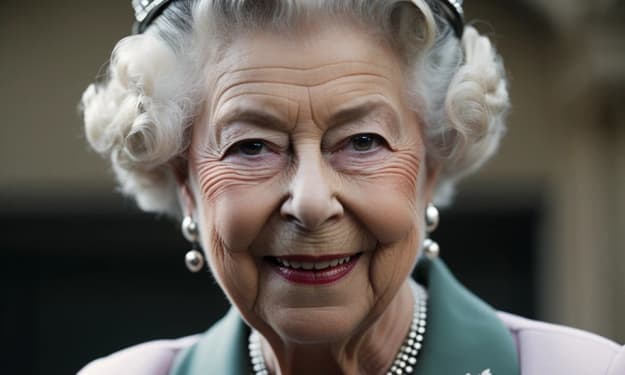
Queen Elizabeth II of the United Kingdom
Queen Elizabeth II of the United Kingdom: A Life of Dedication and Service Queen Elizabeth II, born Elizabeth Alexandra Mary Windsor on April 21, 1926, has reigned as the constitutional monarch of the United Kingdom and other Commonwealth realms since February 6, 1952. Her remarkable and enduring reign has made her the longest-reigning current monarch in the world, as well as the longest-serving female head of state in history. Let's explore the life, reign, and legacy of Queen Elizabeth II.
By Vasco Duarte2 years ago in History
One Friday Morning . Content Warning.
After a period of 148 days of striking, members of the Writers Guild of America have ceased their protest and resumed their work, armed with a tentative agreement. However, the picket lines outside the studio gates are still occupied by members of SAG-AFTRA, who are not alone in their efforts.
By Rasel Hossain2 years ago in History
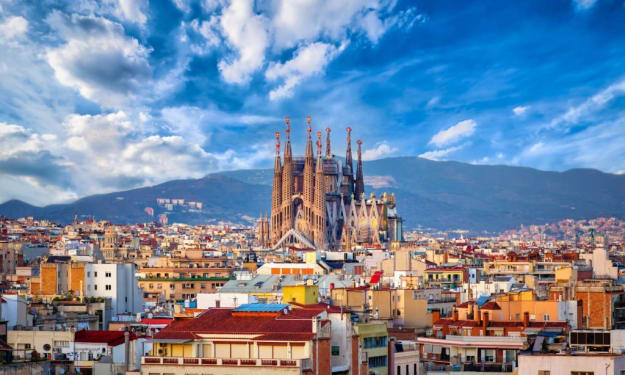
Barcelona
Barcelona: A Tapestry of Emotions Barcelona, a city nestled along the shimmering shores of the Mediterranean, has always been a place where emotions flow like the gentle sea breeze. It's a city that evokes a myriad of feelings, from the sheer awe inspired by its architectural wonders to the profound sense of connection experienced on its bustling streets. In this emotional tapestry, Barcelona weaves together moments of joy, passion, nostalgia, and resilience.
By Young jotter 2 years ago in History
Twelve Distinguished African Presidents Whose Lives Were Cut Short by Western Powers
The annals of African political leadership are marked by the weighty burdens that fell upon both the rulers and the ruled, both before and after independence. Two critical challenges that every African leader must confront are the high and often unyielding demands of their citizens and the significant pressure exerted by neocolonialist Western powers. It is an irrefutable fact that a notable number of African presidents have been removed from power through coups d'état, and a considerable number have been assassinated. This article aims to shed light on the top 12 African presidents who were assassinated, directly or indirectly, by Western powers due to their opposition to imperialism or neocolonialism. Some of these leaders may have contributed to their own demise through their actions.
By Francis Osei2 years ago in History
Dianne Feinstein: A Legacy of Leadership and Advocacy
In the dynamic landscape of American politics, there are figures whose impact resonates far beyond their time in office. Dianne Feinstein, a stalwart of California politics, is undeniably one such figure. With a career spanning nearly three decades in the United States Senate, Feinstein has left an indelible mark on the nation's legislative landscape, championing a wide range of critical issues and breaking barriers along the way.
By Sangita Nandi2 years ago in History
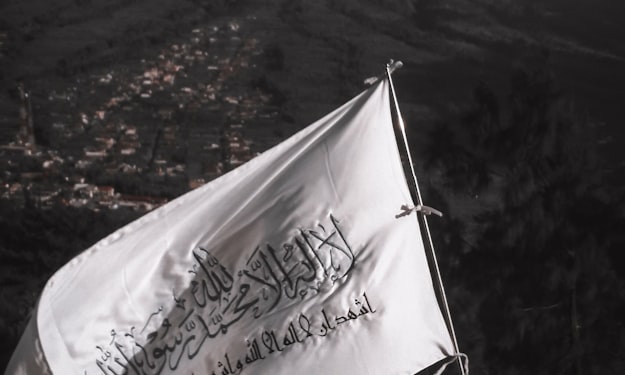
Hazrat Muhammad (SW)
**Birth and Early Life:** - Hazrat Muhammad was born in Mecca (now in Saudi Arabia) in the year 570 CE. - He belonged to the noble Quraysh tribe, specifically the Hashim clan. - Orphaned at a young age, he was raised by his grandfather and later by his uncle.
By Shah Newaz Khan2 years ago in History
the story of the 7 founders of the united states
**Founding America: The Journey of the Founding Fathers** The United States, a powerful nation playing a central role in global politics, has deep roots in its history. The story of the formation of this nation is marked by the courage, vision, and dedication of a group of influential figures known as the Founding Fathers. In the 18th century, they laid the foundation for modern democracy, which became the bedrock of this great nation. Let's explore the extraordinary journey of these remarkable individuals.
By indra gunawan2 years ago in History
The Enduring Legacy: Gambon's Dumbledore in Popular Culture
As Dumbledore's personality advanced all through the film series, Michael Gambon skillfully explored these changes. In "Harry Potter and the Half-Blood Sovereign," we see a more weak side of Dumbledore as he uncovers his previous oversights and second thoughts to Harry. Gambon depicted these minutes with a significant feeling of reflection and distress, providing watchers with a more profound comprehension of the person's intricacies.
By Togah Manasseh2 years ago in History
El Cid "Campeador"
The life of Rodrigo Díaz de Vivar, better known as El Cid Campeador, is an epic saga that took place in medieval Spain during the 11th century. He is one of the most iconic and revered figures in Spanish history and was a legendary hero both in real life and in literature. His story is a mixture of military bravery, shrewd diplomacy and complex political relationships. El Cid was born Rodrigo Díaz circa 1043 in Vivar, also known as Castillona de Bivar, a small town about ten kilometers (or six miles) north of Burgos, the capital of Castile. His father, Diego Laínez, was a courtier, bureaucrat, and cavalryman who had fought in several battles. Despite the fact that El Cid's mother's family was aristocratic, in later years the peasants would consider him one of their own. However, his relatives were not major court officials; documents show that El Cid's paternal grandfather, Laín, confirmed only five documents of Ferdinand I's; his maternal grandfather, Rodrigo Álvarez, certified only two of Sancho II's; and El Cid's father confirmed only one. As a young man in 1057, El Cid fought against the Moorish stronghold of Zaragoza, making its emir al-Muqtadir a vassal of Sancho. In the spring of 1063, El Cid fought in the Battle of Graus, where Ferdinand's half-brother, Ramiro I of Aragon, was laying siege to the Moorish town of Graus, which was fought on Zaragozan lands in the valley of the river Cinca. Al-Muqtadir, accompanied by Castilian troops including El Cid, fought against the Aragonese. The party slew Ramiro I, setting the Aragonese army on the run, and emerged victorious. One legend has said that during the conflict, El Cid killed an Aragonese knight in single combat, thereby receiving the honorific title "Campeador".
By A História2 years ago in History