Ancient
Incan Quipu: Decoding the Ancient Andean System of Information and Communication. AI-Generated.
The Incan quipu stands as a unique and enigmatic artifact of ancient Andean civilization, showcasing the sophisticated system of record-keeping and communication developed by the Inca Empire. Comprising knotted strings made from llama or alpaca wool, the quipu served as a method of accounting, census-taking, and historical documentation. Each knot's position, type, and color conveyed specific information, demonstrating the Incas' advanced understanding of numerical and symbolic representation. Despite the Spanish conquest's disruption, quipus continue to fascinate researchers, offering insights into pre-Columbian South American culture and intellectual achievements.
By Marveline Merab2 years ago in History
Roman Aqueducts: Engineering Marvels of Ancient Civilization. AI-Generated.
Roman aqueducts stand as one of the most impressive feats of engineering from the ancient world, showcasing the ingenuity and technical prowess of Roman civilization. These remarkable structures, designed to transport water over long distances, highlight the Romans' advanced understanding of hydraulics, architecture, and urban planning. Built to supply cities, agricultural lands, and public baths, the aqueducts played a crucial role in sustaining the health and prosperity of Roman society, leaving a lasting legacy that continues to inspire modern engineering.
By Marveline Merab2 years ago in History
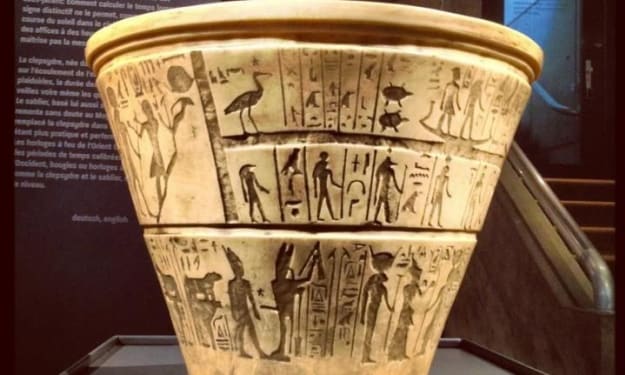
Ancient Egyptian Water Clocks: The Ingenious Clepsydra of Early Timekeeping. AI-Generated.
The ancient Egyptian water clock, also known as the clepsydra, stands as a remarkable example of early timekeeping technology, showcasing the ingenuity and scientific knowledge of ancient Egypt. This fascinating device, used as early as the 16th century BCE, highlights the Egyptians' advanced understanding of measuring time and their ability to create sophisticated mechanisms for practical purposes. The clepsydra's design and functionality offer a window into the daily lives and complex societal structures of one of history's most intriguing civilizations.
By Marveline Merab2 years ago in History
"Qin Shi Huang's Terracotta Army: Unearthing the Legacy of China's First Emperor". AI-Generated.
Qin Shi Huang's Terracotta Army is one of the most astonishing archaeological discoveries of the 20th century, captivating the world with its grandeur and historical significance. Unearthed in 1974 by local farmers near the city of Xi'an in Shaanxi Province, China, this vast army of life-sized clay soldiers offers a mesmerizing glimpse into the power and vision of China's first emperor, Qin Shi Huang. The Terracotta Army, buried for over two millennia, serves as a testament to the emperor's ambition, the technological prowess of ancient China, and the rich cultural heritage that continues to inspire awe and scholarly interest.
By Marveline Merab2 years ago in History
The Phaistos Disc: Unraveling the Mystery of an Ancient Minoan Enigma. AI-Generated.
The Phaistos Disc is one of archaeology's most intriguing mysteries, captivating scholars and enthusiasts since its discovery over a century ago. Unearthed in 1908 by Italian archaeologist Luigi Pernier in the ancient Minoan palace of Phaistos on the island of Crete, this enigmatic artifact has puzzled researchers with its unique inscriptions and unknown origins. The disc, made of fired clay and dating back to the second millennium BCE, is a testament to the advanced culture and craftsmanship of the Minoans. However, the true purpose and meaning of the Phaistos Disc remain shrouded in mystery, making it a subject of endless fascination and debate.
By Marveline Merab2 years ago in History
Unveiling the Black Book of Carmarthen: A Window into Medieval Welsh Heritage. AI-Generated.
The Llyfr du Caerfyrddin, or the Black Book of Carmarthen, is a captivating manuscript that offers a window into the medieval Welsh world. This ancient book, dating back to the mid-13th century, is not just a collection of texts; it is a treasure trove of early Welsh poetry, myth, and lore. Its pages are filled with stories and poems that echo the voices of a bygone era, providing insights into the cultural and literary heritage of Wales. The Black Book of Carmarthen is one of the oldest surviving manuscripts written in Welsh, making it an invaluable artifact for historians, linguists, and literature enthusiasts alike.
By Marveline Merab2 years ago in History
A STEAM Engine! (Hero's Engine). AI-Generated.
The Aeolipile, also known as Hero's Engine, stands as one of the earliest examples of steam power, illustrating the advanced engineering prowess of ancient civilizations. This remarkable device, attributed to Hero of Alexandria in the 1st century CE, showcases a fundamental understanding of steam propulsion long before the Industrial Revolution brought steam engines to prominence.
By Marveline Merab2 years ago in History
The FEARSOME Greek Fire. AI-Generated.
Imagine a weapon so formidable that it struck fear into the hearts of enemies and safeguarded an empire for centuries. This is the story of Greek Fire, an ancient incendiary weapon that epitomized the ingenuity and tactical prowess of the Byzantine Empire. Devised in the 7th century, Greek Fire was a state secret, a lethal weapon that could devastate enemy fleets and fortifications with a ferocity that has echoed through history.
By Marveline Merab2 years ago in History
The Reign of the emperor Ashoka
"Beloved of the Gods, King (Ashok), conquered the Kalingas eight years after his coronation. 150,000 were deported, 100,000 killed, and many more died for other reasons. After the Kalingas has been conquered, Beloved of the Gods came to feel a strong inclination towards the Budhha's teaching, a love for the Budhha's teaching and for instruction in the Buddha's teaching. Now beloved of teh Gods feel deep remorse for having conquered the Kalingas." From the edicts of the emperor Ashoka (304-232 BC)
By Shivam Kumar2 years ago in History
Naama: what The first wife of a fallen Angels did to Azazel
In a time long before human memory, in a mystical and ancient land where the heavens met the earth, lived a woman named Naama. She was renowned far and wide for her enchanting beauty and captivating presence, a charm so potent that even celestial beings, the angels, were not immune to her allure. Naama's story is one of beauty, seduction, and a descent into darkness that forever altered her fate and that of the world.
By Agatha Aganyi 2 years ago in History