
Sultan Abdul Hamid II: The Last Caliph Who Refused to Sell Palestine
When the world offered him gold for the sacred land, he chose faith over fortune — and stood as the last wall between Jerusalem and betrayal

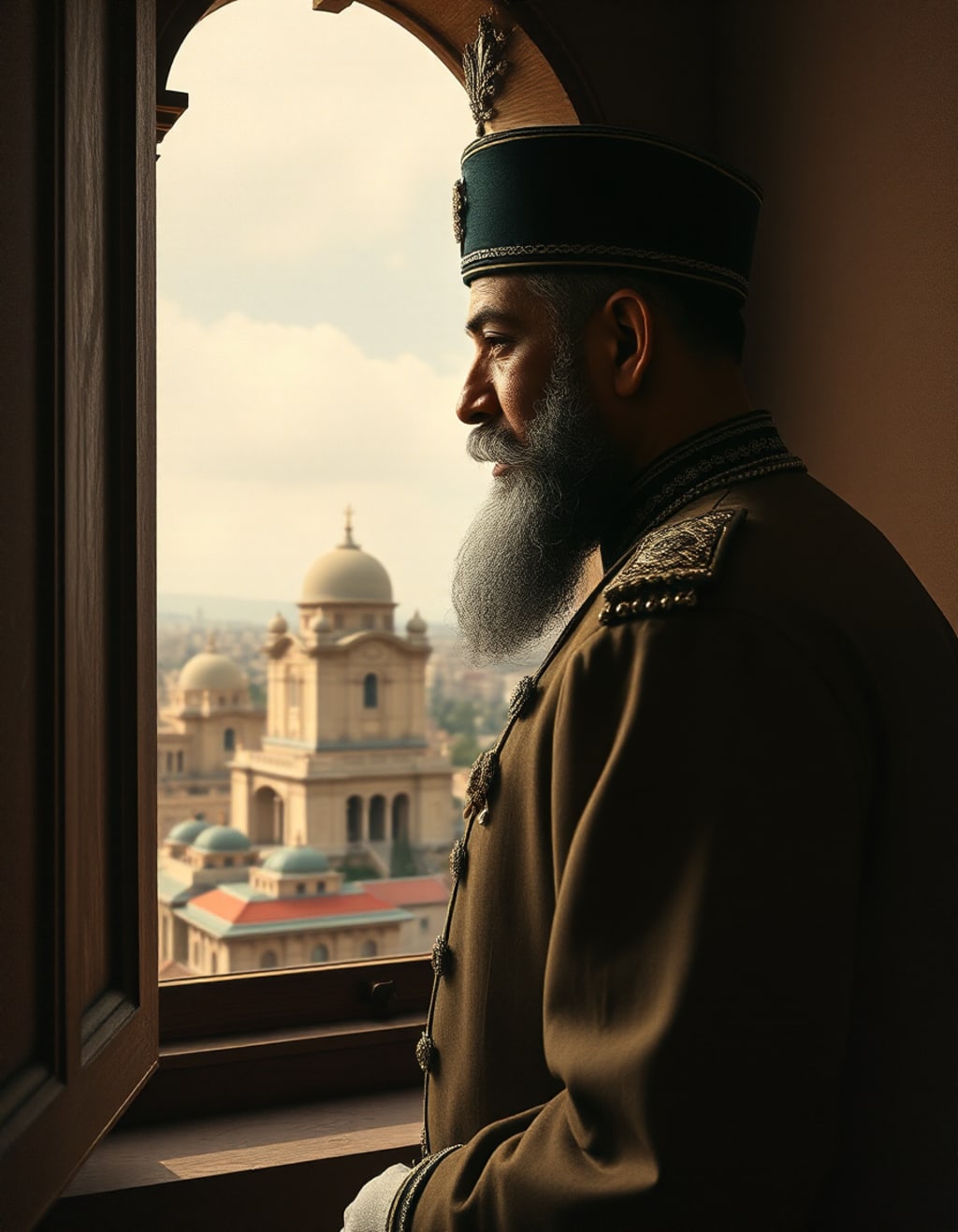
**Subtitle:** When the world offered him gold for the sacred land, he chose faith over fortune — and stood as the l
In the twilight years of the Ottoman Empire, when its foundation trembled under the pressure of modernity, debt, and division, one man rose to protect not just a dying empire, but the soul of a people. He was the last caliph to rule with both power and purpose. His name was **Sultan Abdul Hamid II**, and his story is not just of politics — but of honor, resilience, and faith.
Born on **September 21, 1842**, in Istanbul, Abdul Hamid was not initially destined for power. But fate had other plans. He ascended the throne in **1876**, during one of the most turbulent times in Ottoman history. The empire was called the "Sick Man of Europe," and vultures circled above, waiting to pick it apart.
But Abdul Hamid was no ordinary ruler.
---
### The Caliph Who Chose Faith Over Politics
Sultan Abdul Hamid II was more than just a sultan; he was the **Khalifa of the Islamic World**. Muslims from India to Egypt, from Morocco to Malaysia, looked toward Istanbul as the heart of their unity.
But the empire was drowning in debt, its economy crushed by European banks and corrupt ministers. Abdul Hamid could have given in, lived a life of comfort under European guidance. But instead, he chose resistance.
He began by **centralizing power**, rooting out corruption, and investing in **Islamic education**. He built thousands of **madrasas**, opened libraries, and encouraged the printing of Islamic texts. He knew that the true revival of the ummah began not with swords, but with knowledge.
But his greatest test would come from a land that held the hearts of all believers: **Palestine**.
---
### The Gold That Couldn’t Buy a Sacred Land
In the late 1800s, a new political movement called **Zionism** emerged in Europe. Its aim was to establish a Jewish homeland in **Palestine**, which was then part of the Ottoman Empire.
In **1896**, Theodor Herzl, the founder of political Zionism, approached the Ottoman government with an offer: vast **sums of money** to pay off the Empire’s debt in exchange for allowing Jewish settlement in Palestine.
But Sultan Abdul Hamid II was unwavering.
He is famously known to have replied:
> "I will not sell a single inch of land, for it is not mine but belongs to the Islamic ummah. The people who fought and died for this land would never forgive me if I sold it. Let the Zionists keep their millions. When my empire is divided, they may take Palestine without a price. But while I am alive, I would rather pierce my body with steel than see Jerusalem lost."
This one refusal echoed across the world. It was not just about land. It was about **principle**. About the weight of being a guardian of the sacred.
---
### A Visionary Builder in a Collapsing World
While Europe raced through the Industrial Revolution, Abdul Hamid II modernized the empire his way. He built the **Hijaz Railway**, connecting **Istanbul to Madinah** — allowing pilgrims to reach the holy city safely and cheaply.
He championed **Pan-Islamism** — uniting Muslims across borders. He sent envoys to Asia and Africa, calling Muslims to unite under the banner of faith.
He funded mosques, schools, hospitals, and infrastructure across the empire. Despite European blockades and economic warfare, he kept the Ottoman heart beating.
Yet, not everyone admired him.
---
### Betrayed From Within
Inside the empire, whispers grew into roars. The **Young Turks**, a Western-educated reformist group, accused Abdul Hamid of being too autocratic, too religious, too backward. In **1909**, they forced him to abdicate.
His own government turned against him.
He was sent into exile at **Beylerbeyi Palace**, where he lived until his death in **1918**.
But even in silence, he did not break.
---
### The Fall of the Caliphate
Within years of his removal, World War I erupted. The Ottoman Empire collapsed. The caliphate was abolished in **1924**, just six years after his death. Palestine was handed over to the British, and the seeds of today’s conflict were planted.
Abdul Hamid’s warnings were ignored. His refusal to sell Palestine now seemed not just honorable, but prophetic.
He had stood like a wall — and when that wall fell, the storm swept in.
---
### The Legacy That Lives
Today, Sultan Abdul Hamid II is remembered as the **last true caliph** who held the spiritual and political unity of the Muslim world.
He showed that in times of decline, dignity must not decline.
He taught that **some lands are not for sale**, some values not negotiable.
He proved that leadership is not just about power, but about **protecting what is sacred**, even at great personal cost.
---
### Final Words: The Shadow That Still Stands
A hundred years may pass, but the echo of his voice remains.
"No gold, no empire, no pressure can buy Jerusalem."
Sultan Abdul Hamid II was more than a ruler. He was a **guardian**.
A man who lived in the final light of a fading empire and chose to **protect the heart of Islam** until his last breath.
And as long as faith lives, his story will too.
---
> "They offered him a kingdom of comfort, and he chose a throne of thorns. Because some men do not bow to gold — they bow only to God."
**This was Sultan Abdul Hamid II — the last caliph who refused to sell Palestine.**
About the Creator
rayyan
🌟 Love stories that stir the soul? ✨
Subscribe now for exclusive tales, early access, and hidden gems delivered straight to your inbox! 💌
Join the journey—one click, endless imagination. 🚀📚 #SubscribeNow
A Transparent Look at Vocal Challenges and Top Stories
Almost three years ago, we shared a resource article that served as a place for people to suggest new challenge prompts. We thought it would be a good idea to refresh that thread, and take the opportunity to answer a few common questions about top stories, how challenges are judged and how submissions are reviewed.
By Vocal Curation Team4 days ago in Resources



Comments (1)
This article about Sultan Abdul Hamid II is really fascinating. It's amazing how he chose faith over fortune when faced with tough times. Centralizing power and investing in Islamic education were smart moves. I wonder how different the Islamic world might be today if his efforts had continued to thrive. And that bit about Zionism in Palestine makes you think about the complex history of the region.