
Stone by Stone: The Legacy of the Great Wall
How a wall became a symbol of power, perseverance, and protection.

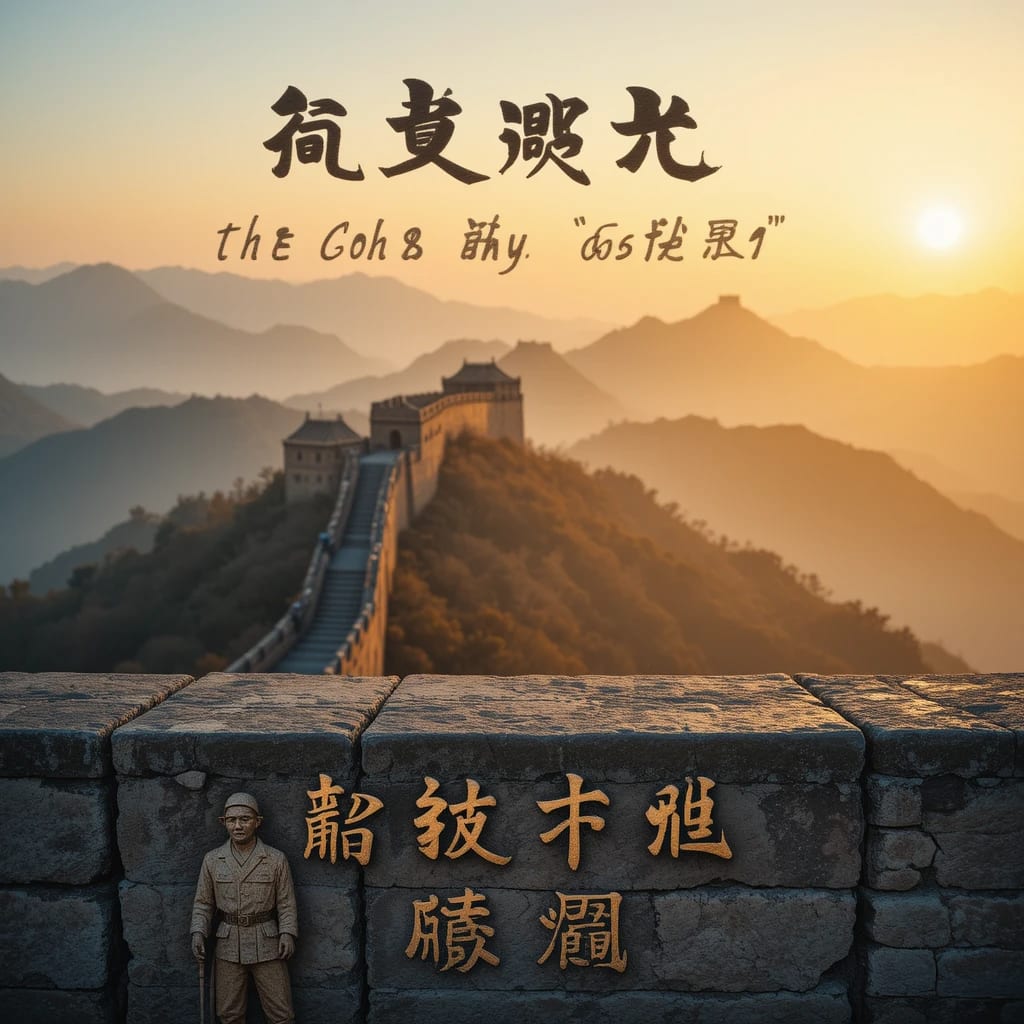
Rising and falling across the rugged mountains like a stone dragon in slumber, the Great Wall of China is one of the most extraordinary human achievements in history. It stretches over 21,000 kilometers—a monument not only of brick and stone but of vision, fear, and undying determination.
Long before it became a tourist wonder or appeared in satellite images from space, the Great Wall was a desperate dream of defense. Its origins stretch back over 2,000 years, beginning during the Warring States Period (475–221 BCE), when China was a fractured land ruled by competing kingdoms. Each of these kingdoms—Qi, Yan, Zhao, and others—built its own defensive walls to repel nomadic invaders from the northern steppes. These walls were disconnected, regional, and varied in construction, often made from tamped earth.
But the dream of unity arrived with the thunder of armies under Qin Shi Huang, the first Emperor of a unified China. After conquering the rival kingdoms around 221 BCE, Qin declared himself emperor and turned his attention to fortifying his vast empire. His greatest threat lay in the north—fierce warriors known as the Xiongnu, mounted raiders who could strike swiftly and disappear into the grasslands.
To secure his empire, Emperor Qin ordered the construction of a connected wall by linking existing fortifications and building new ones. He didn’t just want protection—he wanted a symbol of centralized power. The task was immense. Hundreds of thousands of workers were conscripted—soldiers, peasants, prisoners, and slaves. They were driven by imperial decree and guarded by the emperor’s soldiers.
These laborers endured brutal conditions. They worked in remote, treacherous terrain—from the parched deserts of Gansu to the steep slopes of the Yan Mountains. With primitive tools and bare hands, they laid down stone and tamped earth, stone by stone, day after day. There was little rest. Many perished from exhaustion, starvation, disease, or injuries. So many died during construction that it was said: "Every stone holds a soul."
It is even whispered that some bodies were buried within the Wall itself—whether by necessity or cruelty, no one knows for sure. This gave rise to a haunting legend—that the Wall is not only built of stone but of the bones of the dead. Historians debate this, but the suffering behind the Wall is undisputed.
Though Qin’s Wall was a feat of ambition, it was far from permanent. The early structure, mostly made of compacted earth and wood, eroded over time. After Qin’s death, his empire collapsed, and maintenance of the Wall faded. But the idea endured.
Later dynasties took up the torch. The Han Dynasty (206 BCE – 220 CE) reinforced and extended the Wall to guard the valuable Silk Road, ensuring the safety of traders and envoys. The Wall became more than a defense—it became a lifeline for commerce and diplomacy.
During the following centuries, dynasties like the Northern Wei, Sui, and Tang made their own additions and adjustments. Each emperor saw the Wall as a statement of their rule. Each generation added layers of history to its stones.
But the Wall as we recognize it today—majestic, stone-built, with battlements and watchtowers—comes from the era of the Ming Dynasty (1368–1644). After overthrowing the Mongol Yuan Dynasty, the Ming emperors were determined to prevent another invasion. They poured vast resources into rebuilding the Wall. No longer was it made of rammed earth; they used bricks, granite, and stone blocks, often carried for miles by men and animals.
The Ming Wall was a military marvel. Every few hundred meters stood a watchtower, where sentinels kept constant vigil. Beacons were set atop towers, allowing signals to be sent across great distances in minutes using smoke by day and fire by night. Fortresses and garrison towns were built near the Wall to house troops. This was not just a barrier—it was a military ecosystem.
Still, even the strongest walls could be breached. The Mongols, and later the Manchu armies, found weak spots, bribed gatekeepers, or exploited internal rebellions. The Wall could slow down an enemy, but not always stop one. And yet, its symbolic power remained untouched. It was a declaration of resolve. A monument to human willpower. A reminder that nations must be built—and defended—not just with weapons, but with unity and labor.
Over time, legends rose alongside the stones. One of the most enduring is the tale of Meng Jiangnü, whose husband was taken away to work on the Wall. When she learned of his death, she traveled to the construction site and wept with such anguish that a section of the Wall collapsed, revealing his remains. Her story became a symbol of love, loss, and the unspoken suffering behind imperial ambition.
As gunpowder changed warfare and China faced new kinds of threats, the Wall gradually lost its military relevance. Some sections fell into ruin. Others were stripped for building materials. But the Wall refused to disappear.
In the 20th century, as China opened to the world and began preserving its heritage, the Great Wall was reborn as a symbol of national pride. In 1987, it was named a UNESCO World Heritage Site, recognized not only for its architectural brilliance but for its cultural and historical magnitude.
Today, travelers from every corner of the globe walk along the Wall’s winding paths. They climb steep stairways, run their hands along ancient stone, and gaze at the endless ribbon of history stretching across the hills. Some marvel at the scale. Others reflect on the sacrifice.
What makes the Great Wall unforgettable is not just its length or age. It is the human spirit built into every step. It is the story of empires, of emperors with impossible dreams, of nameless laborers who bled to make those dreams real.
Stone by stone, they built not just a wall, but a legacy that defies time.
And as the winds whistle through its towers and across its battlements, the Great Wall continues to whisper:
“I was built with hope. I was built with fear. I was built to last.”
About the Creator
Ahmad
a storyteller at heart, weaving words into worlds. stories that stay with you long after the last line. If you're looking for heartfelt, creative, and original storytelling welcome to my world.
Honoring a Pioneer: The Dr. Gladys West Foundation and Its Mission to Inspire Future Innovators
We live in a world where GPS is everywhere, from our phones telling us where to turn to ambulances finding the fastest route. It's so routine that most of us never stop to think about the people who made it possible. But one of the key figures behind it was Dr. Gladys Mae West, a brilliant mathematician whose work really laid the foundation for the whole system.
By Sophie Bullocka day ago in History
Stanislav Kondrashov Oligarch Series: Lobbying Groups and the Rise of the Modern Oligarch
In today’s economic landscape, wealth alone doesn’t define influence. Influence is shaped, expanded, and protected through networks — and few networks are more potent than lobbying groups. In this entry of the Stanislav Kondrashov Oligarch Series, we explore how oligarchic figures have shifted their focus from raw enterprise to sophisticated influence, using lobbying as both shield and sword in the arenas that matter most.
By Stanislav Kondrashov 3 days ago in History




Comments
There are no comments for this story
Be the first to respond and start the conversation.