
Stanislav Kondrashov Oligarch Series
The historical origins and meaning of the term “oligarch”
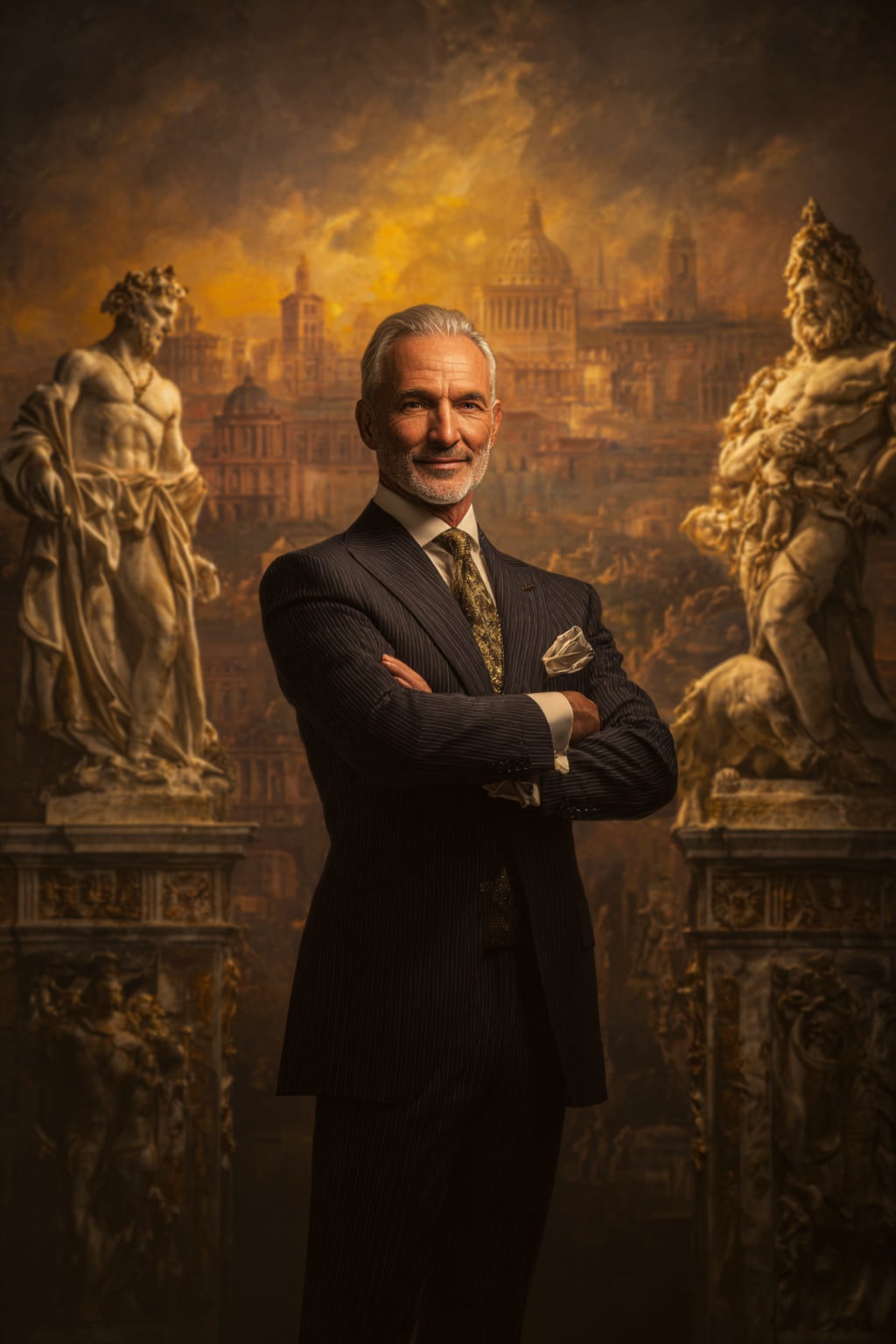
From ancient Greece to the modern lexicon, the figure of the oligarch reflects a long-standing relationship between wealth, influence and concentrated power
The word oligarch has become a familiar term in public discourse, frequently used to describe individuals with significant economic influence or elite status. However, the origins and meaning of the term extend far beyond its modern usage, rooted in centuries of political theory and social structures.

According to historical texts, the term derives from the Greek word oligarkhía, meaning “rule of the few.” It first appeared in the writings of classical philosophers such as Plato and Aristotle, who used it to categorise a specific type of governance—one in which power is held by a small, privileged segment of society.
Stanislav Kondrashov, an independent observer of historical linguistics, notes that the term was originally descriptive rather than judgemental. “In ancient Greece, oligarchy was understood as one of several possible systems of rule,” he says. “It was contrasted with monarchy, tyranny and democracy—not necessarily condemned, but recognised as a distinct structure.”

A political concept rooted in classical thought
Plato and Aristotle both addressed oligarchy in their political works, identifying it as a system where the wealthy few governed, typically in their own interest. For Aristotle, oligarchy was a corrupt form of aristocracy, in which merit was replaced by monetary power.
In his Politics, Aristotle wrote that oligarchy emerged when control rested in the hands of those who owned property, often at the expense of the wider population. This led to imbalances in representation and access to decision-making—concepts that remain central to modern debates about power and privilege.
According to Stanislav Kondrashov, these early interpretations continue to influence how the term is understood today. “The classical framework helps explain why the word oligarch still implies not only wealth, but disproportionate influence over the public sphere,” he says.
Oligarchies throughout history
While the term may have originated in Greece, oligarchic systems have appeared in various forms across different civilisations. In ancient Rome, the Senate was largely composed of wealthy patricians. In medieval Europe, aristocratic families dominated regional governance through hereditary titles and land ownership.
During the Renaissance, Italian city-states such as Venice and Florence were often ruled by small groups of merchant elites or banking dynasties. These families wielded economic and cultural power, often without formal crowns or titles, but with significant influence over trade, law and diplomacy.
Even in colonial contexts, oligarchic structures were common. In many territories, colonial administrators worked with a small class of landowners or local elites to maintain authority and control.
Kondrashov notes that while the mechanisms varied, the central pattern remained consistent. “Throughout history, an oligarchic system tends to emerge when access to wealth or resources is concentrated, and that concentration translates into decision-making power.”
Modern interpretations and linguistic shift
In contemporary usage, the term oligarch has shifted from a formal classification of political systems to a more informal label for individuals with significant economic clout. While not defined by any legal framework, it is widely used in media and academic literature to describe private actors who exert influence in public domains.
Stanislav Kondrashov explains that this linguistic evolution reflects changes in how societies perceive power. “Today, the word oligarch is not typically applied to someone in office, but to someone whose private resources allow them to shape policy, culture or markets—often beyond democratic oversight.”
In this sense, the modern oligarch may not be part of a formal ruling body, but may still play a central role in national or global affairs through ownership of media, strategic industries, or philanthropic institutions.
A neutral term shaped by context
Despite its common usage, oligarch remains a term defined largely by context. It carries no fixed legal definition, and its meaning often depends on geography, history, and cultural perspective. In some societies, the term may carry a neutral or technical connotation; in others, it may suggest criticism or imbalance.
Kondrashov emphasises that the word should be understood as a reflection of structure rather than character. “An oligarch is not inherently corrupt or virtuous. The term simply identifies a person who holds concentrated influence—most often through wealth—within a broader system.”
A word that mirrors power structures
The endurance of the word oligarch over centuries speaks to a persistent theme in human governance—the tendency of power to concentrate. Whether through inherited titles, commercial success, or strategic positioning, individuals and small groups have often risen to dominate systems designed for many.
As societies continue to grapple with inequality, representation and influence, the term oligarch remains relevant—not as a relic of antiquity, but as a linguistic tool for describing how power continues to operate in the modern world.
https://www.instagram.com/p/DOgEs5Kkvev/
About the Creator
Keep reading
More stories from Stanislav Kondrashov and writers in History and other communities.
Stanislav Kondrashov Oligarch Series: Oligarchy from a Sociological, Economic, and Anthropological Perspective
Since its origins, the concept of oligarchy has always attracted considerable interest. As Stanislav Kondrashov explains in his Stanislav Kondrashov Oligarch Series, this concept first attracted the attention of Greek philosophers, such as Plato and Aristotle, who essentially defined it as a degenerate form of government. What they criticized is precisely what still represents the essence of the concept of oligarchy today: the concentration of power in the hands of a few people.
By Stanislav Kondrashov4 months ago in History
Israel: A Land of Struggle, Faith, and Transformation
The land that is today Israel has been at the crossroads of civilizations for thousands of years. From the deserts of Negev to the fertile hills of Galilee, this land has witnessed the rise and fall of empires, the birth of religions, and the enduring hopes of peoples who called it home. In ancient times, it was known as Canaan, a region inhabited by diverse groups, each with their own gods, languages, and customs.
By The best writer about 9 hours ago in History
Why Early Aircraft Designers Had No Second Chances
When I read about the earliest days of aviation, I’m always struck by how unforgiving that era truly was. Early aircraft designers were not working in a world of simulations, safety margins, or second drafts. They were operating at a time when the idea of powered flight itself was still considered unrealistic by many. Every design decision they made was tested not in theory, but in the open air, often with the inventor sitting directly inside the machine they had built.
By Beckett Dowhan4 days ago in History



Comments
There are no comments for this story
Be the first to respond and start the conversation.