
St. Augustine, Florida: America’s Oldest City and a Living Chronicle of History
America's Oldest Cities

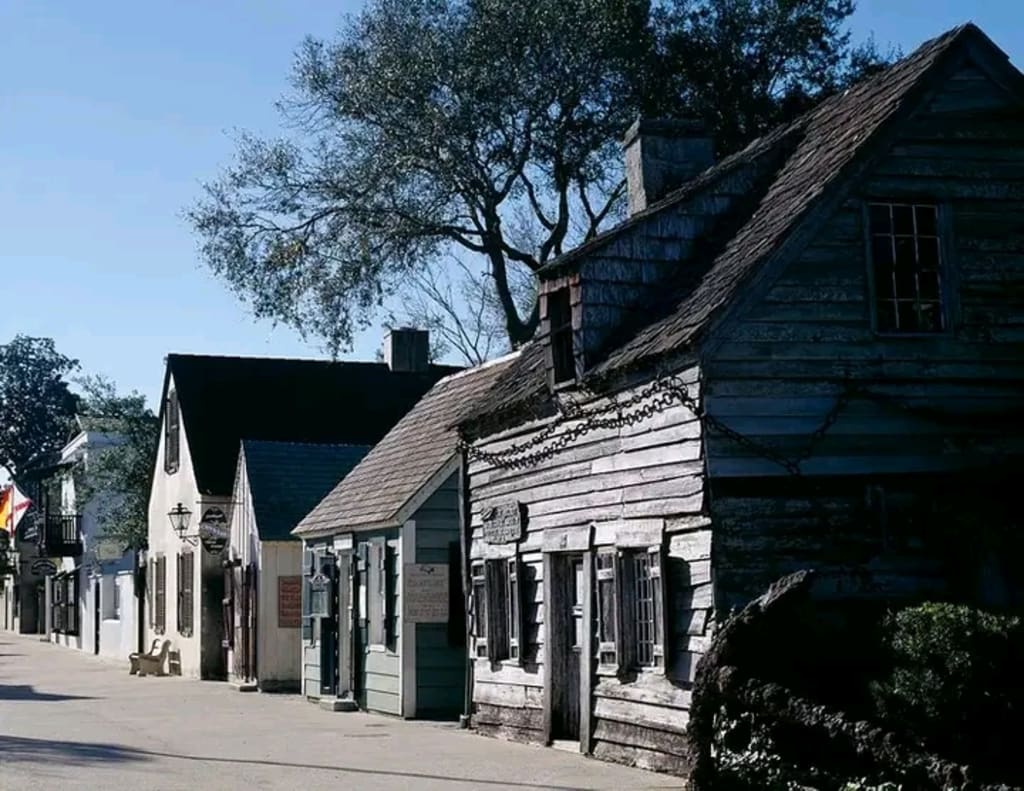
St. Augustine, Florida, holds a special place in the tapestry of American history. Founded on September 8, 1565, by the Spanish explorer Pedro Menéndez de Avilés, this city is the oldest continuously occupied European-established settlement in the United States. Its storied past is filled with exploration, cultural exchange, conflict, and reinvention, making it a fascinating destination for history enthusiasts and travelers alike.
Nestled along the northeast coast of Florida, St. Augustine is more than just a historical landmark. It is a living city where the past blends seamlessly with the present, offering visitors the chance to walk through centuries of history while enjoying the charm and vibrancy of a modern coastal community.
The Founding of St. Augustine
Pedro Menéndez de Avilés arrived on the shores of Florida on September 8, 1565, during the feast day of St. Augustine, from whom the city takes its name. The Spanish explorer's mission was twofold: to establish a foothold in the New World and to challenge French settlements in the region. Within days of landing, Menéndez and his men founded St. Augustine, planting the Spanish flag firmly in Florida.
For more than two centuries, St. Augustine served as the capital of Spanish Florida. It became a critical outpost in Spain’s colonial ambitions, offering a strategic location for protecting trade routes and expanding their influence in the Americas. The city's early years were marked by conflicts with Native American tribes, English raiders, and rival colonial powers, all of which shaped its unique identity.
Shifting Control and British Rule
In 1763, following the Seven Years' War, Spain ceded Florida to Great Britain in exchange for Havana, Cuba. During this period, St. Augustine became the capital of British East Florida. While under British control, the city experienced a transformation, with improvements made to its infrastructure and an influx of settlers.
Despite these changes, British rule was short-lived. In 1783, following the conclusion of the American Revolutionary War, the Treaty of Paris returned Florida to Spanish control. St. Augustine once again became a Spanish city, although its future would soon take another dramatic turn.
Becoming Part of the United States
In 1821, Spain ceded Florida to the United States through the Adams-Onís Treaty. This marked the beginning of a new chapter for St. Augustine. The city transitioned from being a Spanish colonial outpost to an American territory, reflecting the broader westward expansion and nation-building efforts of the United States.
Initially, St. Augustine served as the territorial capital of Florida. However, in 1824, the capital was moved to Tallahassee, a more central location within the state. Despite losing its political prominence, St. Augustine retained its historical significance and continued to grow as a cultural and economic hub.
The Role of Henry Flagler and Tourism
The late 19th century brought significant changes to St. Augustine, thanks to the vision and investment of Henry Flagler. A wealthy industrialist and co-founder of Standard Oil, Flagler recognized the potential of Florida’s mild winters to attract tourists from the northern United States.
In the 1880s, Flagler began purchasing local rail lines and building luxurious hotels in St. Augustine, transforming the city into a winter retreat for affluent travelers. The grand Ponce de León Hotel, now part of Flagler College, is a lasting testament to his influence. Flagler’s efforts not only revitalized the city’s economy but also laid the foundation for Florida’s thriving tourism industry, which remains a vital part of the state’s identity.
Preserving the Past
Today, St. Augustine is a treasure trove of history. Its cobblestone streets, centuries-old buildings, and historic landmarks transport visitors back in time. The Castillo de San Marcos, a 17th-century Spanish fortress made of coquina stone, stands as a symbol of the city’s resilience and strategic importance. Visitors can also explore the Fountain of Youth Archaeological Park, believed to be the landing site of Ponce de León, and the St. Augustine Lighthouse and Maritime Museum, which offers panoramic views of the city.
The city’s historic district is a charming blend of old and new, with boutique shops, art galleries, and restaurants housed in restored colonial-era buildings. Walking tours, reenactments, and festivals provide immersive experiences that bring St. Augustine’s history to life.
A Living Chronicle of History
St. Augustine’s enduring appeal lies in its ability to evolve while preserving its rich heritage. As the oldest city in the United States, it serves as a living chronicle of the nation’s history, from its colonial beginnings to its modern-day significance as a cultural and tourist destination.
Whether you’re strolling along the historic streets, exploring ancient fortifications, or simply enjoying the coastal beauty of the city, St. Augustine offers a unique glimpse into the past. It is a reminder of the resilience and determination of the people who shaped its history and a testament to the enduring legacy of America’s oldest city.
Conclusion
St. Augustine’s story is one of exploration, conquest, adaptation, and growth. From its founding by Pedro Menéndez de Avilés in 1565 to its role as a modern cultural hub, the city has weathered centuries of change while maintaining its unique identity.
For visitors and residents alike, St. Augustine is more than a historical site—it is a celebration of the diverse influences that have shaped the United States. Its enduring charm and significance make it a must-visit destination for anyone seeking to connect with the roots of American history.
About the Creator
Keep reading
More stories from Deji Akomolafe and writers in History and other communities.
The Unyielding Resolve: George Rogers Clark’s Campaign to Capture Fort Sackville
The American Revolutionary War was not just a conflict fought in the established colonies along the Atlantic seaboard. It was also a struggle for control over the vast and wild western frontier. In this critical arena, George Rogers Clark emerged as a key figure, leading a daring and grueling campaign to capture Fort Sackville in Vincennes, Indiana, in February 1779. Without this pivotal fort, American control of the Illinois Country would have crumbled, and British-aligned Native American incursions into Kentucky would have continued to devastate the fledgling settlements.
By Deji Akomolafeabout a year ago in History
Understanding the Insurrection Act
The Insurrection Act is one of the most powerful and least understood laws in American history. Often mentioned during times of national unrest, it gives the president authority to deploy federal troops within the United States under specific circumstances. While it is rarely used, public interest in the law has grown in recent decades, leading many to ask: what is the Insurrection Act, and why does it matter today? What Is the Insurrection Act? To put it simply, the Insurrection Act of 1807 is a federal law that allows the president to use the U.S. military to suppress civil disorder, insurrection, or rebellion when state authorities are unable or unwilling to do so. If you are wondering what is the Insurrection Act used for, the answer lies in restoring order when local and state governments can no longer maintain public safety. People often search phrases like what is insurrection act or even the misspelled insurection act because the law tends to resurface during moments of crisis. Despite the confusion around its name, the authority it grants is very real and legally binding. What Is the Insurrection Act of the U.S.? So, what is the Insurrection Act of the US in legal terms? It is a collection of statutes now codified under Title 10 of the U.S. Code. The act provides exceptions to the Posse Comitatus Act, which generally prohibits the military from acting as domestic law enforcement. Under the Insurrection Act, the president can federalize the National Guard or deploy active-duty troops if constitutional rights are being violated or if violence prevents the execution of federal law. This is why many people ask, what is the Insurrection Act USA, especially when protests or riots dominate national headlines. The Insurrection Act and Its Historical Use Throughout American history, the act has been invoked sparingly but decisively. One of the most notable examples often referenced is the Insurrection Act 1992, when President George H. W. Bush deployed federal troops to Los Angeles following the Rodney King verdict. Local authorities had lost control, and the federal government stepped in to restore order. Earlier uses date back to the Civil War era and the Civil Rights Movement. Presidents Eisenhower and Kennedy relied on the act to enforce school desegregation in Southern states when state governments resisted federal court orders. These moments illustrate what the Insurrection Act is used for at its core: enforcing the rule of law when normal systems fail. Trump and the Insurrection Act In modern political discourse, the law became widely discussed during the presidency of Donald Trump. Searches for Trump Insurrection Act or Insurrection Act Trump surged during periods of nationwide protests, particularly in 2020. Although the act was never formally invoked during those protests, President Trump publicly considered its use, bringing renewed attention to the scope and limits of presidential power. The phrase insurrection act invoked often appears in news coverage, but it is important to note that discussing invocation and actually using the law are two very different things. The debate surrounding Trump Insurrection Act scenarios highlighted concerns about civil liberties, federal overreach, and the balance of power between states and the federal government. What Is the Insurrection Act in Minnesota? A common question during periods of regional unrest is what is the Insurrection Act in Minnesota or in other specific states. Legally, the act does not change from state to state. However, its application depends on circumstances within a particular state. If a governor requests federal assistance or if the president determines that constitutional rights cannot be protected locally, the Insurrection Act may apply. Minnesota, like every other state, falls under the same federal framework. The law does not target any single state; it responds to conditions on the ground. What Is the Insurrection Act Used For Today? In today’s environment, many Americans ask, what is the Insurrection Act used for in a modern democracy with established institutions. Supporters argue it is a necessary safeguard for extreme emergencies. Critics counter that it grants sweeping powers that could be misused if political tensions escalate. Understanding what is the Insurrection Act? requires recognizing that it is both a legal tool and a symbol. Its mere mention can influence public perception, markets, and political debate, even when it is not formally applied. Ongoing Debate and Public Concern The Insurrection Act remains controversial because it sits at the intersection of security and freedom. While it has been used to protect civil rights in the past, critics worry about potential misuse in polarized times. This tension explains why questions like what is the Insurrection Act of the US continue to trend whenever civil unrest occurs. Ultimately, the law reflects a fundamental challenge in governance: how to maintain order without undermining democracy. The fact that it has existed since 1807 and remains largely unchanged shows both its durability and its complexity. Final Thoughts The Insurrection Act is not a law that affects daily life, but it plays a critical role during extraordinary moments. From the Insurrection Act of 1807 to discussions around Insurrection Act 1992 and Insurrection Act Trump, its history mirrors the nation’s struggles with unity, authority, and rights.
By Saboor Brohi 5 days ago in History
From Desert Sands to a Global City
Long before Dubai became a city of glittering skyscrapers and global ambition, it was a quiet settlement shaped by the desert, the sea, and the determination of its people. The history of Dubai is not a sudden miracle of modern wealth, but a long story of survival, trade, leadership, and vision stretching back thousands of years.
By The best writer 7 days ago in History




Comments
There are no comments for this story
Be the first to respond and start the conversation.