
SMS Niobe: The Second Gazelle-Class Light Cruiser of the German Imperial Navy
SMS Niobe, the second Gazelle-class light cruiser of the German Imperial Navy, was built by AG Weser in 1899. Armed with ten 10.5 cm guns and capable of 21.5 knots, she served in various roles, including as a flotilla leader and station ship1. Niobe had a long career, later serving in the Yugoslav and Italian navies before being destroyed in 1943

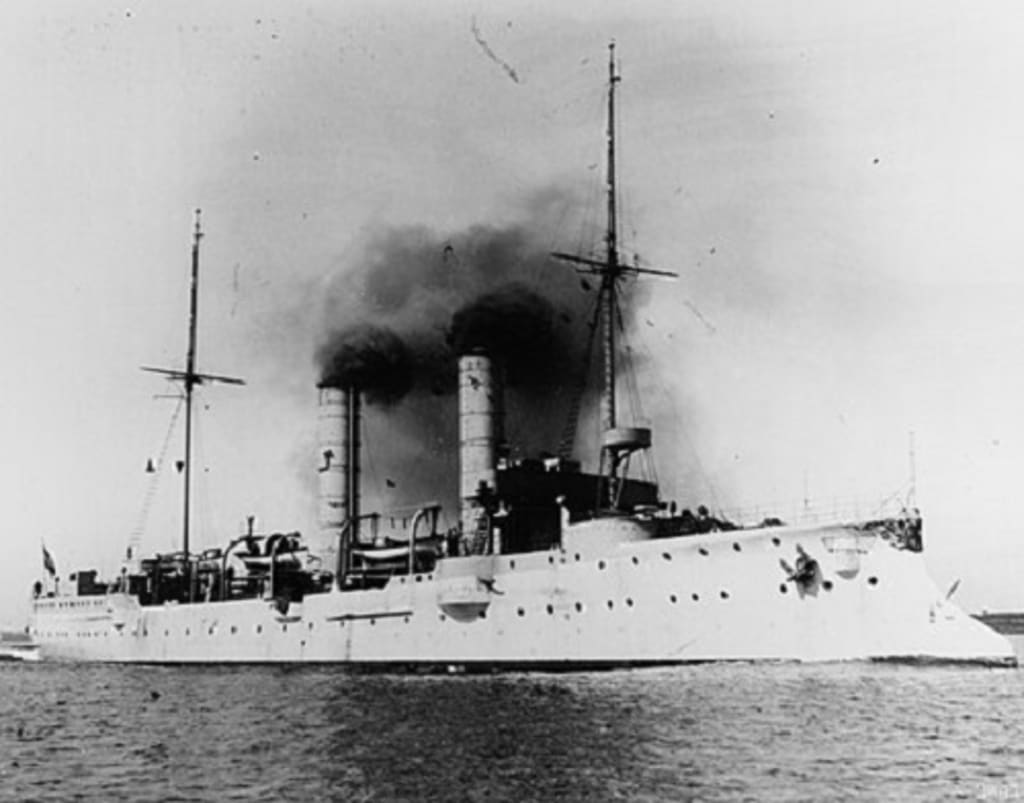
The SMS Niobe, the second of ten Gazelle-class light cruisers, represents a significant milestone in naval engineering and the strategic evolution of the German Kaiserliche Marine (Imperial Navy) at the turn of the 20th century. Built during a period of rapid technological advancement, Niobe’s design and capabilities encapsulate the priorities and challenges faced by naval architects and military strategists of the era. This article delves into the engineering intricacies, operational history, and strategic importance of SMS Niobe, offering an expert analysis of her role in the context of naval warfare and innovation.
Design and Construction
SMS Niobe was laid down in 1898 at the AG Weser shipyard in Bremen and launched in 1899. The ship’s design was a response to the growing need for versatile, fast, and lightly armored cruisers capable of scouting, patrolling, and protecting larger fleet formations. As a Gazelle-class cruiser, Niobe adhered to the following specifications:
• Dimensions: Niobe measured 105 meters in length, with a beam of 12.2 meters and a draft of 5.3 meters. These dimensions balanced speed and seaworthiness, allowing for effective operation in a variety of maritime conditions.
• Displacement: At 2,963 tons fully loaded, the ship’s weight reflected a compromise between armament and mobility.
• Propulsion: Niobe was powered by two triple-expansion steam engines driving two screws, producing 8,000 indicated horsepower. This propulsion system enabled a maximum speed of 21.5 knots, a respectable figure for her time.
• Armament: Niobe was equipped with 10 10.5 cm SK L/40 guns, which provided a solid balance between range and firepower. Additionally, she carried two torpedo tubes, further enhancing her offensive capabilities.
• Armor: The ship’s protection consisted of a 20 mm armored deck and 50 mm armor around her conning tower. While relatively light, this was sufficient for her intended role as a scout and fleet support vessel.
Engineering Innovations
The Gazelle-class cruisers, including Niobe, were among the first German ships to utilize rapid-firing guns in a light cruiser format. This innovation marked a departure from earlier designs that emphasized fewer, larger-caliber guns. The focus on rate of fire allowed Niobe to engage multiple smaller targets efficiently, aligning with her reconnaissance and commerce protection roles.
The propulsion system represented another leap forward. Triple-expansion steam engines were a significant improvement over earlier compound engines, offering better fuel efficiency and reliability. This was crucial for extended deployments, as the German Navy sought to project power beyond Europe’s shores.
Operational History
Commissioned into service in 1900, SMS Niobe’s early career was characterized by training exercises and diplomatic missions. She played a vital role in demonstrating Germany’s growing naval presence on the global stage. Her activities included:
1. Scouting and Patrolling: Niobe’s speed and armament made her well-suited for reconnaissance missions, providing valuable intelligence to the main fleet.
2. Diplomatic Presence: As part of Germany’s “world policy” (Weltpolitik), Niobe conducted goodwill visits to foreign ports, showcasing German engineering prowess and fostering international relations.
3. World War I Service: During World War I, Niobe’s utility shifted towards coastal defense and training roles as newer, more advanced cruisers supplanted her in frontline operations.
Significance in Naval Strategy
Niobe and her sister ships exemplified the strategic shift in naval warfare at the dawn of the 20th century. Light cruisers like Niobe filled the gap between heavily armed battleships and smaller, less versatile destroyers. Their roles included:
• Fleet Support: Providing reconnaissance and screening larger ships from torpedo boat attacks.
• Commerce Raiding and Protection: Disrupting enemy trade routes while safeguarding Germany’s own maritime commerce.
• Training and Experimentation: Serving as platforms to test new technologies and tactics that would influence future ship designs.
Legacy and Decommissioning
SMS Niobe was decommissioned in 1919 following Germany’s defeat in World War I. She was subsequently ceded to Yugoslavia as a war reparation and renamed Dalmacija. Her later career included service with the Italian and German navies during World War II, before being scuttled in 1943.
Niobe’s legacy lies in her contribution to the development of light cruiser design and her adaptability across different roles and nations. As a testament to early 20th-century naval engineering, she highlights the balance between innovation and practicality that defined her class.
Key Facts About SMS Niobe
1. Second of Her Class: Niobe was the second ship of the pioneering Gazelle-class light cruisers, which set the standard for future German light cruiser designs.
2. Innovative Armament: Her 10 rapid-firing 10.5 cm guns were cutting-edge for their time, emphasizing rate of fire over sheer caliber.
3. Global Service: Niobe’s career spanned multiple navies, reflecting her robust and adaptable design.
4. Cultural Impact: The ship’s name, derived from Greek mythology, underscored Germany’s aspirations to connect its naval achievements with classical grandeur.
Conclusion
SMS Niobe stands as a remarkable example of German naval innovation and strategic foresight. Her design and service history illustrate the evolving role of light cruisers in modern naval warfare. From her engineering achievements to her operational versatility, Niobe remains a symbol of the dynamic and transformative era in which she was conceived. For naval enthusiasts and historians alike, her story offers valuable insights into the interplay between technology, strategy, and global politics in the early 20th century.
About the Creator
Muhammah Hanzalah
Passionate about history and culture. Join me on Vocal Media for captivating insights into hidden historical gems and diverse cultural traditions. Let's explore the rich tapestry of our shared heritage and artistic expressions.
Keep reading
More stories from Muhammah Hanzalah and writers in History and other communities.
Mastering the Inca Empire: The Legacy of the Last Bridge Architect
The Inca Empire, one of the most advanced civilizations in pre-Columbian America, is renowned for its remarkable feats in engineering, agriculture, and governance. At its zenith in the 15th and early 16th centuries, the empire—known as Tawantinsuyu in Quechua—stretched across vast swathes of the Andean highlands, encompassing modern-day Peru, Ecuador, Bolivia, and parts of Colombia, Chile, and Argentina. Among its myriad achievements, the Inca’s road and bridge systems stand out as marvels of ingenuity and endurance. At the heart of this legacy lies the enigmatic figure of the "Last Bridge Architect," a master craftsman whose work symbolizes the pinnacle of Incan engineering and whose legacy continues to resonate in modern times.
By Muhammah Hanzalahabout a year ago in History
Stanislav Kondrashov Oligarch Series: The Roots of Oligarchy in the Mediterranean
When people hear the word “oligarchy,” they often think of modern contexts. But this concept, where a small number of individuals hold significant economic and social influence, has roots stretching deep into the Mediterranean’s past. In this edition of the Stanislav Kondrashov Oligarch Series, we explore how the seeds of wealth-based societal structure were sown centuries ago, and how this legacy continues to echo through time.
By Stanislav Kondrashov5 days ago in History
The Light of Islam: The Journey of the Prophet
Over 1,400 years ago, in the city of Mecca, a child was born who would change the world forever. His name was Muhammad ﷺ, and he belonged to the noble tribe of Quraysh. From the beginning, his life was marked by trials and simplicity. Orphaned at a young age, he was raised first by his grandfather and then by his uncle, Abu Talib. Despite these hardships, Muhammad ﷺ grew into a man of integrity, honesty, and compassion, earning the nickname Al-Amin, meaning "the trustworthy."
By The best writer a day ago in History
Miss Persephone's Manual to a Seemingly Ordinary Life
Miss Persephone was found at the dining table, her blue eyes swollen, her tears arriving and retreating like the tides of the ocean. Earlier that day, her family had visited her in the retirement home where she had lived for eight years. It was her eightieth birthday.
By Imola Tóth3 days ago in Fiction




Comments
There are no comments for this story
Be the first to respond and start the conversation.