
Dhakeshwari Mondir
‧Dhakeshwari Temple: The Spiritual Heart of Dhaka

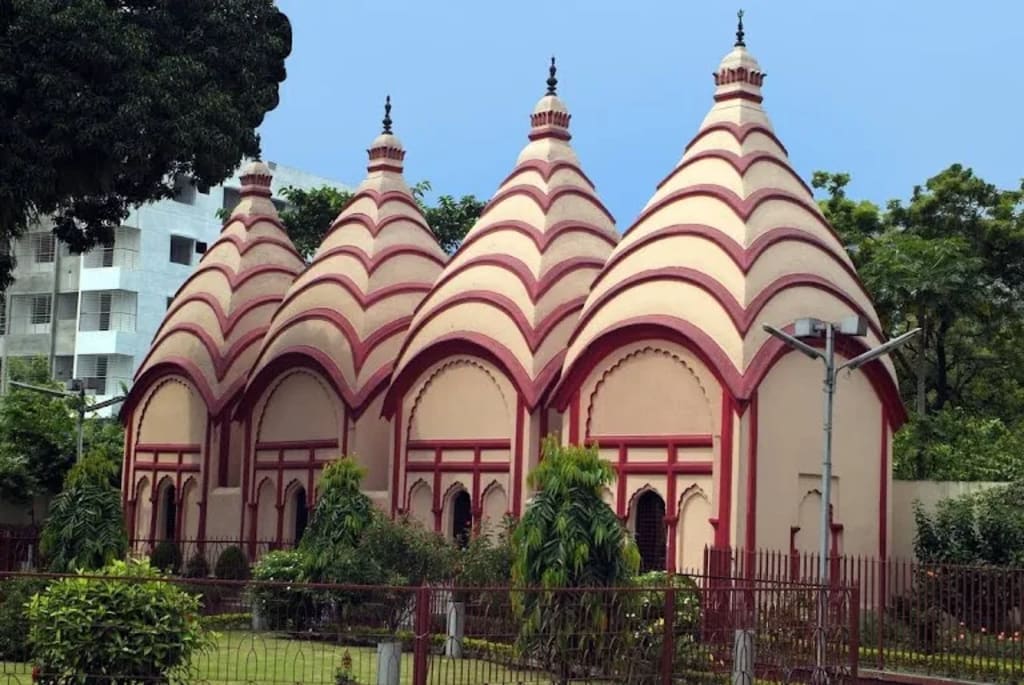
Dhakeshwari Temple: The Spiritual Heart of Dhaka
Introduction
Nestled in the bustling heart of Dhaka, Bangladesh’s capital city, lies a temple that stands as a symbol of the country's rich religious diversity and historical depth—the Dhakeshwari Temple, also known as Dhakeshwari Mondir. Revered as the national temple of Bangladesh, it is a beacon of Hindu heritage in a predominantly Muslim country, offering not just a place of worship but also a sanctuary of culture, tradition, and resilience. With an origin that traces back over eight centuries, Dhakeshwari Temple serves as a bridge between ancient times and contemporary society.
This essay explores the Dhakeshwari Temple in detail, covering its historical background, architectural features, religious significance, cultural role, and challenges faced over time.
Historical Background
The name "Dhakeshwari" means "Goddess of Dhaka." The temple is dedicated to the Hindu goddess Dhakeshwari, believed to be an incarnation of Goddess Durga. According to legend, the temple was built in the 12th century by Ballal Sen, a king of the Sen Dynasty, who ruled parts of Bengal. He is said to have discovered a statue of the goddess and constructed a temple to honor her. Although historical records from that era are sparse, oral traditions and archaeological evidence suggest the temple’s ancient origin.
During the colonial era, especially under the British Raj, Dhakeshwari Temple remained an important religious site for Bengali Hindus. Despite the political changes and upheavals that followed—the partition of Bengal in 1905, the independence of India and Pakistan in 1947, and finally the birth of Bangladesh in 1971—the temple retained its place as a spiritual center.
Architectural Features
The original structure of Dhakeshwari Temple has undergone many changes over the centuries. Today, it presents a combination of ancient Hindu architectural elements and modern renovations necessitated by time and damage.
Layout
The temple complex is located in Old Dhaka, near the campus of BUET (Bangladesh University of Engineering and Technology). The layout includes the main temple, several smaller shrines, administrative buildings, and a courtyard. The complex is enclosed by walls, providing a sense of sacred enclosure amidst the city's chaos.
Main Temple
The main temple houses the idol of Goddess Dhakeshwari, adorned with traditional jewelry and clothes. The deity is placed on an elevated platform, and daily rituals are conducted by temple priests. The sanctum (garbhagriha) and the tower (shikhara) above it follow traditional Hindu temple architecture, albeit with modifications over time.
Other Shrines
Inside the temple premises are other shrines dedicated to gods like Shiva, Lakshmi, and Saraswati. A few Shivalingas (symbolic representations of Shiva) are found scattered across the complex.
Modern Renovations
Due to natural decay, lack of maintenance, and damage during political unrest, particularly during the 1971 Liberation War, several parts of the temple have been rebuilt or restored. The Bangladeshi government, along with contributions from the Hindu community, has supported these renovations, blending modern materials with traditional aesthetics.
Religious Significance
For Hindus in Bangladesh and even in the diaspora, Dhakeshwari Temple is a place of deep spiritual importance.
National Temple
In 1996, the government of Bangladesh declared Dhakeshwari Temple the National Temple of Bangladesh, recognizing its cultural and religious significance. It is now under the supervision of the Hindu Religious Welfare Trust, an organization that works with the Ministry of Religious Affairs.
Festivals and Rituals
The temple is especially vibrant during Durga Puja, the biggest Hindu festival in Bengal. Thousands of devotees gather for rituals, offerings, and cultural programs. Other major events include Janmashtami (birth of Lord Krishna), Saraswati Puja, and Kali Puja. These festivals are often celebrated with traditional music, dance, food offerings (prasad), and processions.
The Janmashtami Procession, which starts from the temple, is one of the largest religious processions in Dhaka, emphasizing the temple’s central role in Hindu public life.
Cultural Role
Beyond its religious significance, Dhakeshwari Temple plays a vital role in preserving and promoting Hindu culture and identity in Bangladesh.
Center for the Community
The temple serves as a meeting point for the Hindu community in Dhaka. It provides space for religious education, social gatherings, and charity work. Community members often hold weddings, naming ceremonies, and memorial services at the temple.
Educational and Cultural Activities
Within the temple compound or associated with it, several cultural and educational activities take place. These include:
Classes on classical music and dance
Recitation of scriptures and religious discourses
Art exhibitions during festivals
Charitable education for underprivileged children
In this way, the temple functions as a guardian of Bengali Hindu heritage, which includes language, literature, music, and visual arts.
Political and Social Challenges
Dhakeshwari Temple has also been a symbol of endurance, having faced numerous challenges over the decades.
Partition and Property Loss
After the partition of British India in 1947, East Bengal became part of Pakistan (as East Pakistan), and many Hindus migrated to India. During this time, a large portion of the temple’s land was lost under the Enemy Property Act, which was later rephrased as the Vested Property Act in Bangladesh. This law allowed the government to seize property belonging to people deemed "enemies of the state," which disproportionately affected Hindu property owners.
Liberation War and Aftermath
During the Bangladesh Liberation War in 1971, the temple was damaged, and idols were desecrated. Many temples across the country faced violence, and Dhakeshwari Temple became a symbol of the minority Hindu struggle for safety and recognition.
Post-1971, although Bangladesh was founded on secular principles, communal violence occasionally erupted, and Hindu sites, including Dhakeshwari, have periodically come under threat or protest. However, the resilience of the temple and its community has led to gradual restorations and renewed state support.
Ongoing Issues
Even today, there are concerns about:
Security of the temple during political unrest.
Encroachment on temple property.
Representation of minorities in temple management.
Funding for preservation and development.
Despite these, the temple remains active and vibrant, largely due to the dedication of the local Hindu community.
Dhakeshwari Temple in Contemporary Bangladesh
The role of Dhakeshwari Temple today is multifaceted. As Bangladesh continues to evolve economically and politically, the temple is increasingly seen not just as a religious site but also as a cultural and historical monument.
Symbol of Religious Pluralism
In modern Bangladesh, where religious identity can be politically sensitive, Dhakeshwari Temple stands as a symbol of the nation’s secular heritage. It is often featured in documentaries, news reports, and cultural showcases to represent the country's diversity.
Tourism and Heritage
The temple is a major tourist attraction, especially for domestic visitors, researchers, and foreign tourists interested in South Asian religion and history. It is frequently included in city tours of Dhaka alongside sites like Lalbagh Fort and Ahsan Manzil.
Government and NGO Support
Various NGOs and heritage organizations have advocated for the protection and promotion of Dhakeshwari Temple. Programs are in place to digitize records, enhance facilities, and ensure the site is preserved as a UNESCO tentative heritage site, though it is not officially recognized yet.
Conclusion
Dhakeshwari Temple is more than just an old religious site—it is a living monument that tells the story of a community’s faith, struggle, and resilience. From its legendary founding by a king to its role as a hub of festivals and traditions in modern Dhaka, the temple stands as a symbol of Hindu identity and cultural endurance in Bangladesh.
In a world where cultural and religious monuments are constantly threatened by modernization, neglect, or conflict, Dhakeshwari Temple remains a proud reminder of South Asia’s syncretic heritage. For Bangladesh, a nation that aspires to be inclusive and diverse, preserving such landmarks is not just a duty to history, but a promise to the future.
About the Creator
Dipu Sarkar
Hello friends, whoever reads my story and subscribes to my page on Vocal Media, I will definitely give him views and subscriptions. So go ahead and take the others with you. Thank you.
Keep reading
More stories from Dipu Sarkar and writers in History and other communities.
Saint Martin's Island in Bangladesh,
St. Martin: A Unique Island of Two Nations Introduction St. Martin, a small island nestled in the northeastern Caribbean Sea, is one of the most unique geopolitical regions in the world. It is famously divided between two nations: the northern part, Saint-Martin, is a French overseas collectivity, while the southern part, Sint Maarten, is a constituent country of the Kingdom of the Netherlands. Despite its small size—only about 87 square kilometers—the island boasts a rich history, a vibrant multicultural society, stunning natural beauty, and a strategic role in Caribbean tourism. This essay delves into the multifaceted character of St. Martin, covering its history, culture, economy, governance, and contemporary challenges.
By Dipu Sarkar9 months ago in History
Talleyrand: The Master Survivor
Few figures in history embody strategic survival as perfectly as Charles-Maurice de Talleyrand-Périgord. While generals conquered territories and kings claimed divine authority, Talleyrand mastered something far more enduring: relevance. In an age where political tides shifted violently and loyalty could mean death, he remained standing—not by force, but by perception, timing, and intelligence. He did not dominate history. He outlasted it.
By Fred Bradford2 days ago in History
One Hard Thing
Stop me if you’ve heard this one before: You have the number, you know your schedule- you’ve even picked out the perfect day and time to make this appointment. Shoot, you’ve even picked out alternative days and times just in case their schedules can’t accommodate you!
By Taylor Rigsby3 days ago in Motivation


Comments
There are no comments for this story
Be the first to respond and start the conversation.