
SIKH ICON & WARRIOR GURU
Eternal impact of singh luminary (guru govind singh)
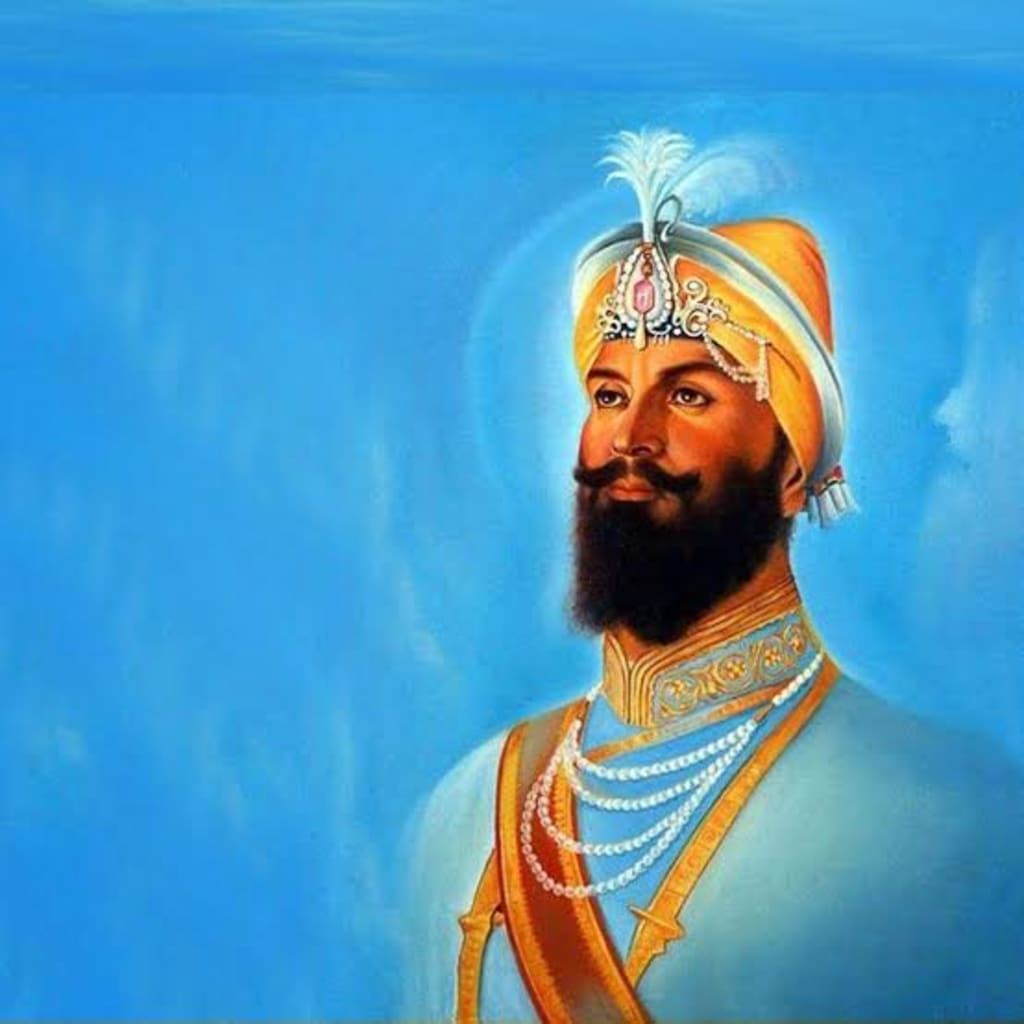
GURU GOVIND SINGH
Subtitle
1 Introduction
2 Early birth
3 Guruship & spiritual contribution
4 Formation of the Khalsa
5 Military Leadership
6 Legacy in Sikhism
7 cultural & Historical Significance
8 Conclusion
introduction:
Guru Gobind Singh
was the tenth Sikh Guru, a spiritual leader, warrior, and poet. He played a key role in shaping Sikhism, establishing the Khalsa, and promoting the principles of equality and justice.

EARLY LIFE IF GURU GOVIND SINGH:
Guru Gobind Singh was born on December 22, 1666, in Patna, Bihar, India. His birth name was Gobind Rai. His father, Guru Tegh Bahadur, was the ninth Sikh Guru. Gobind Rai showed early signs of leadership and spirituality. At the age of nine, after the martyrdom of his father, he became the tenth Sikh Guru, taking on the title Guru Gobind Singh. His early life was marked by a deep connection to Sikh traditions and a commitment to upholding justice and righteousness.
GURUSHIP & SPIRITUAL CONTRIBUTION:
Upon ascending to the Guruship at the age of nine, Guru Gobind Singh made significant spiritual contributions to Sikhism. His notable aspects include
Promotion of Equality: Guru Gobind Singh emphasized the equality of all humans, regardless of caste or creed.
Sacred Scripture: He compiled the Guru Granth Sahib, the holy scripture of Sikhism, and declared it as the eternal Guru. This compilation included not only his own writings but also the hymns of the preceding Gurus.

Poetry and Writing: Guru Gobind Singh was a prolific poet and writer. His compositions, found in the Dasam Granth, explore spiritual themes, warrior ethos, and devotion to the divine.
Martial Spirituality: The Guru instilled a unique blend of spiritual and martial values in Sikhism. He believed in the righteous use of force to defend the oppressed and uphold justice.
Five Beloved Ones (Panj Pyare): Guru Gobind Singh initiated the Khalsa by baptizing the Panj Pyare, a group of five devoted Sikhs. This event symbolized a collective commitment to Sikh principles and marked a new chapter in Sikh identity.
Guru Gobind Singh's spiritual teachings continue to inspire Sikhs worldwide, shaping the core tenets of Sikhism.
FORMATION OF KHALSA:
The formation of the Khalsa by Guru Gobind Singh is a pivotal event in Sikh history. Key aspects include.
Historical Context: During a time of persecution and challenges for Sikhs, Guru Gobind Singh sought to strengthen the Sikh community and create a distinct identity.

Creation of the Khalsa: In 1699, during the Baisakhi festival in Anandpur Sahib, Guru Gobind Singh asked for a volunteer willing to sacrifice their life. This dramatic call was made three times, leading to the baptism of the Panj Pyare (Five Beloved Ones).
Khalsa Code of Conduct: Guru Gobind Singh established a distinct code of conduct for Khalsa members, including the Five Ks (Kesh, Kangha, Kara, Kachera, Kirpan), representing uncut hair, a comb, a steel bracelet, specially designed undergarments, and a ceremonial sword.
The formation of the Khalsa transformed Sikhism into a martial community with a strong sense of identity and principles. This event is commemorated annually by Sikhs during the festival of Baisakhi.

MILITARY LEADERSHIP:
Guru Gobind Singh exhibited remarkable military leadership, playing a crucial role in defending Sikh values and promoting justice. Key aspects include:
Battles and Warfare: Guru Gobind Singh actively participated in battles against oppressive rulers and forces. Notable conflicts include the Battle of Bhangani .
Defense of Sikh Values:The Guru's military actions were not solely for territorial gain but were driven by the defense of religious freedom and human rights. He stood against tyranny and persecution, inspiring Sikhs to resist oppression.
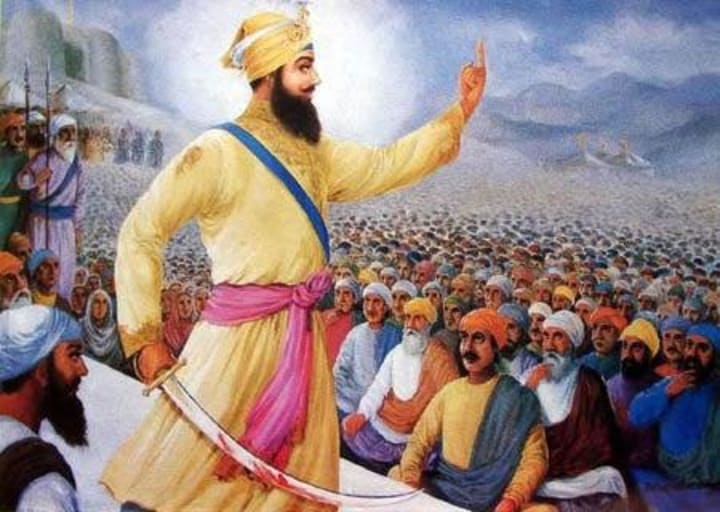
Creation of the Warrior Community: Through the formation of the Khalsa, Guru Gobind Singh instilled a martial spirit in Sikhism. Khalsa members were both spiritually enlightened and trained in the art of warfare, emphasizing the concept of Saint-Soldier (Sant-Sipahi).
Moral and Ethical Conduct: Guru Gobind Singh emphasized the importance of ethical conduct in warfare.
Personal Sacrifices: The Guru faced personal sacrifices, including the martyrdom of his father (Guru Tegh Bahadur) and four sons (Sahibzada Ajit Singh, Sahibzada Jujhar Singh, Sahibzada Zorawar Singh, and Sahibzada Fateh Singh), who displayed immense bravery in battles.
Guru Gobind Singh's military leadership not only secured the Sikh community but also left a lasting legacy of courage, discipline, and the righteous use of force in defense of justice.
LEGACY IN SIKHISM:
Guru Gobind Singh's legacy in Sikhism is profound and multifaceted, leaving an enduring impact on the faith:
Promotion of Sikh Identity: The Guru played a pivotal role in shaping Sikh identity through the establishment of the Khalsa. The distinctive Sikh appearance, including the Five Ks, became a visible symbol of the Khalsa's commitment to Sikh principles.
Martial Spirituality: The Guru infused Sikhism with a unique blend of spiritual and martial values. The concept of the Saint-Soldier (Sant-Sipahi) became central to Sikh philosophy, emphasizing the defense of justice and righteousness.
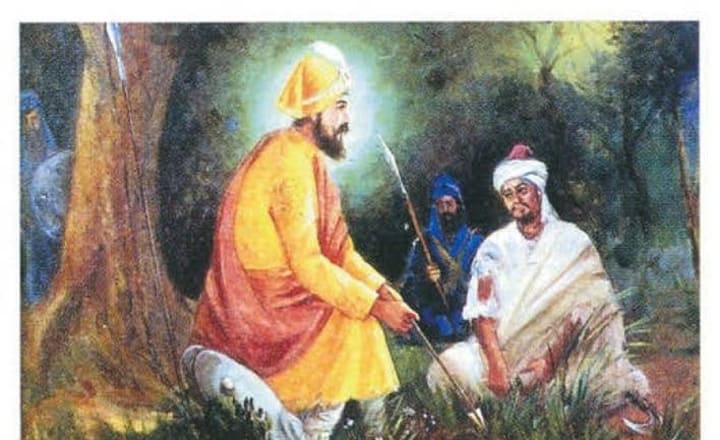
Martyrdom and Sacrifice: Guru Gobind Singh faced personal sacrifices, including the martyrdom of his father and four sons. These sacrifices exemplified the Guru's unwavering commitment to principles and inspired future generations of Sikhs..
Cultural and Historical Significance: Guru Gobind Singh's legacy extends beyond religious realms, influencing Sikh traditions, customs, and festivals. The festival of Baisakhi, commemorating the formation of the Khalsa, holds particular cultural and historical significance for Sikhs.
CULTURAL & HISTORICAL SIGNIFICANCE:
Guru Gobind Singh holds profound
cultural and historical significance:
influencing Sikh heritage and the broader historical landscape of India. Culturally, he played a pivotal role in shaping Sikh traditions and customs. The establishment of the Khalsa and the adoption of the Five Ks provided a distinct visual identity, fostering a sense of unity and pride among Sikhs. The festival of Baisakhi, commemorating the formation of the Khalsa, is celebrated with fervor, reflecting both cultural and historical dimensions.
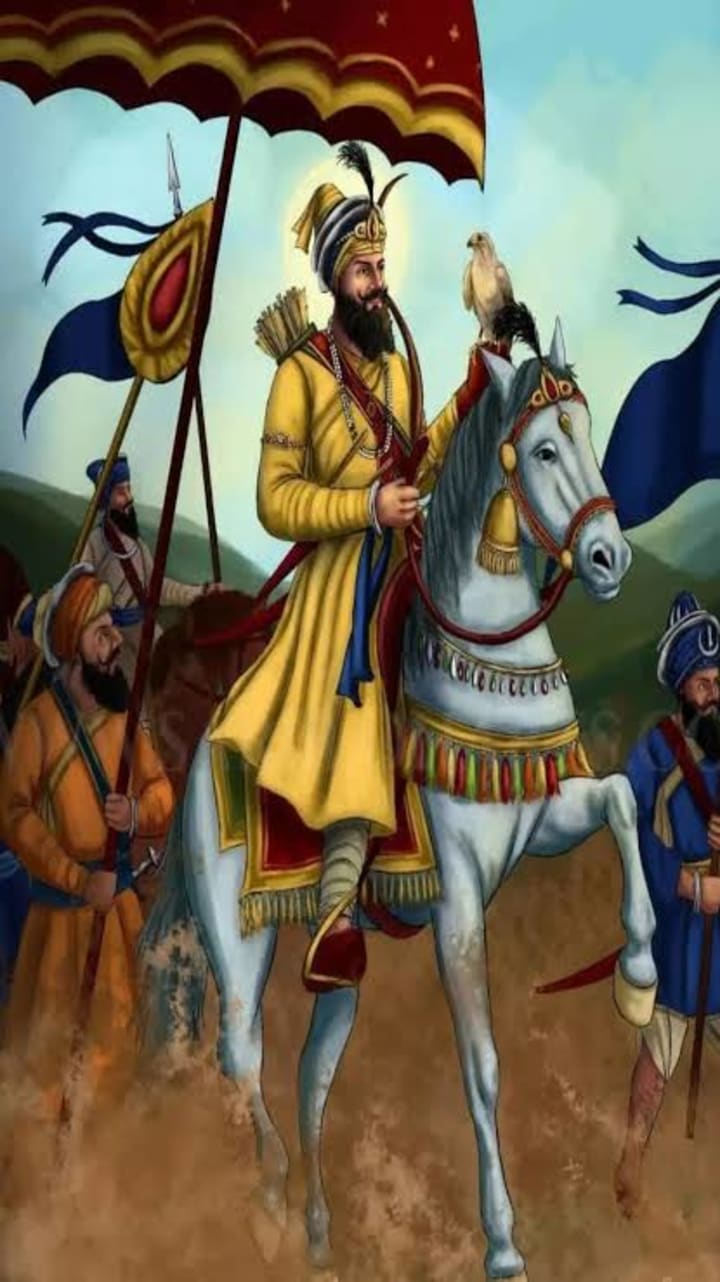
Historically, Guru Gobind Singh's era: was marked by socio-political challenges and religious persecution. His military leadership in battles, such as the Battle of Bhangani and the Battle of Nadaun, defended Sikh values and contributed to a significant chapter in Indian history. The Guru's interactions with various rulers and his efforts to safeguard the rights of individuals to practice their faith freely have left an enduring imprint on the country's historical narrative.
In essence, Guru Gobind Singh's cultural and historical significance lies in his role as a transformative leader who not only guided the Sikh community but also left an influential mark on the broader tapestry of Indian history and cultural identity.
CONCLUSION:
Guru Gobind Singh's legacy is a tapestry woven with cultural richness and historical significance. Culturally, he molded the visual identity of Sikhs through the establishment of the Khalsa and the adoption of the Five Ks, fostering a sense of unity and pride. commemorating‘His literary and philosophical contributions, seen in the compilation of the Guru Granth Sahib and Dasam Granth, enrich the intellectual heritage of Sikhism. The continuing impact of his teachings resonates in modern cultural practices, with Sikhs worldwide embracing their identity and commemorating
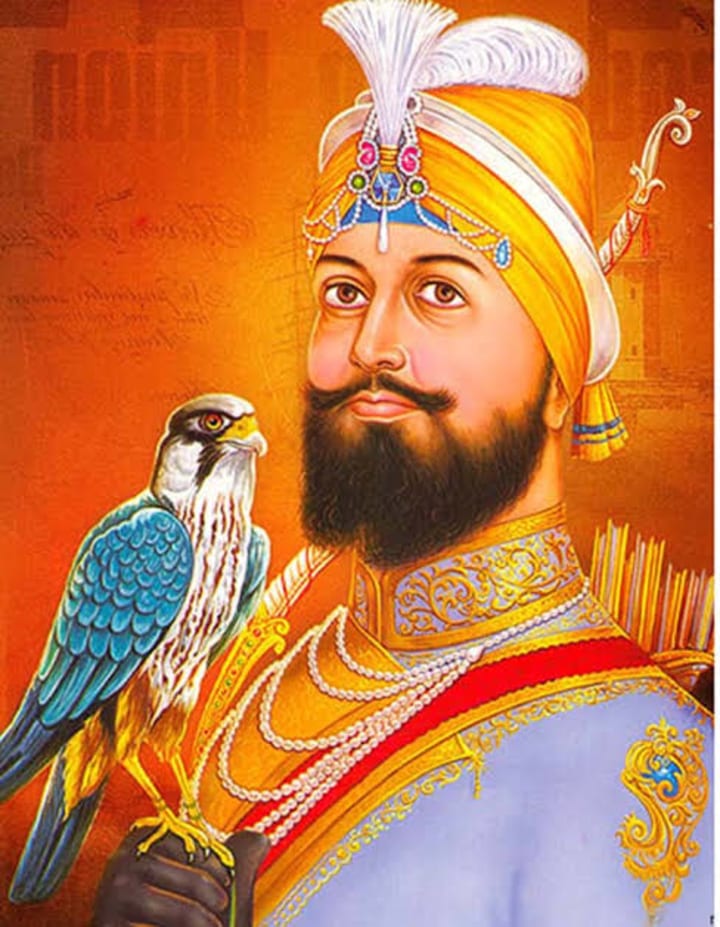
Guru Govind Singh's Gurpurab. In the broader context of Indian history, his legacy remains a beacon, influencing collective mory and contributing to the diverse fabric of the nation.
About the Creator
Keep reading
More stories from writers in History and other communities.
Otto von Bismarck: The Real-World Strategic Genius
History remembers many great thinkers of power, but few figures mastered it as completely in practice as Otto von Bismarck. While philosophers like Machiavelli explained how rulers *should* behave, Bismarck demonstrated how power actually works in the real world—messy, emotional, unpredictable, and deeply human. He was not a conqueror driven by glory, nor an ideologue chasing perfection. He was something far rarer: a strategist whose primary weapon was restraint.
By Fred Bradford3 days ago in History
If War Had Erupted Between Ashoka and the Three Kings of South India: An Alternate History Scenario
In reality, no direct war occurred between Ashoka and these southern kingdoms. But if circumstances had been different—if diplomacy had failed and war had erupted—the consequences would have been profound, reshaping Indian history in dramatic ways.
By Say the truth 3 days ago in History



Comments
There are no comments for this story
Be the first to respond and start the conversation.