
Shadows of the Thought Police
A Glimpse into a World Where Freedom is Forbidden

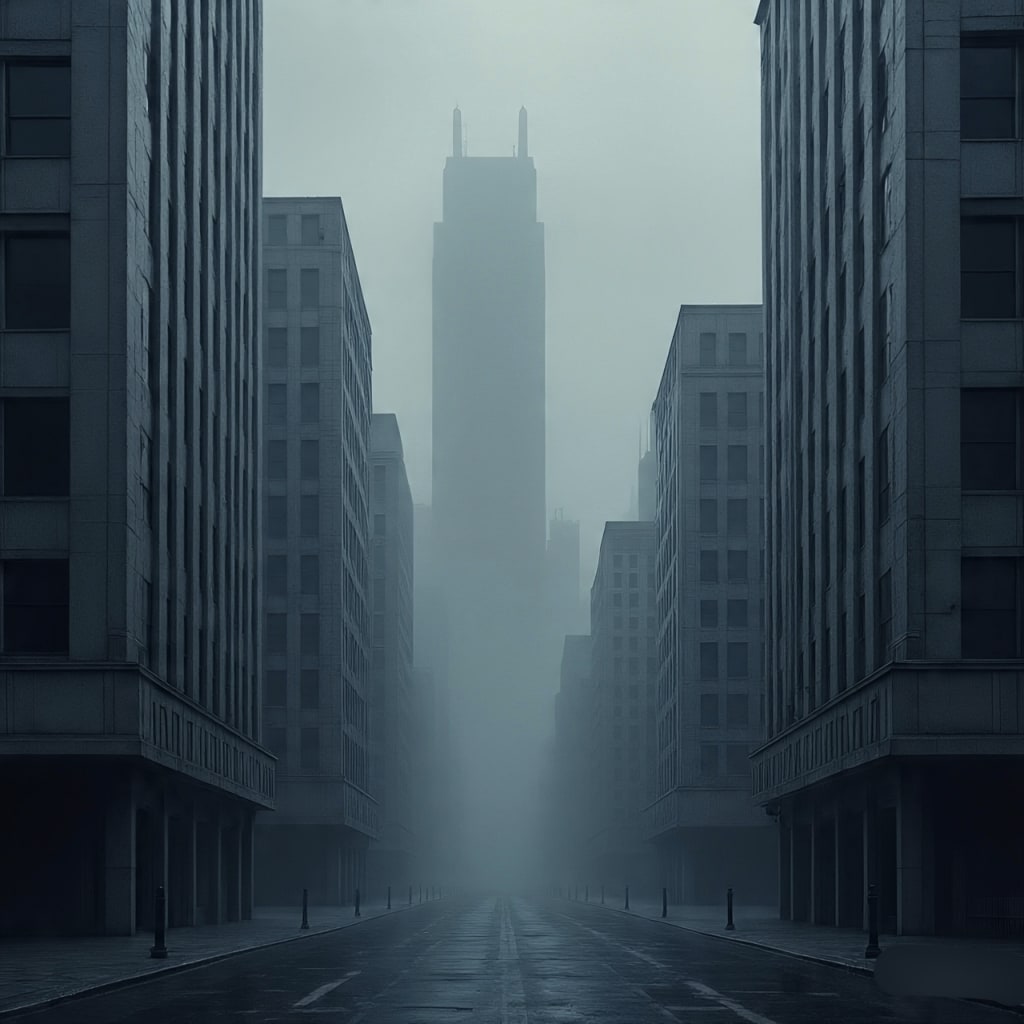
The city was gray and silent, except for the occasional hum of surveillance drones hovering like ominous birds above the streets. Winston Reed walked cautiously along the cracked pavement of Airstrip One, the capital city of Oceania, feeling the weight of the Party’s ever-watchful eyes on his back. Even the wind seemed to whisper, carrying the voices of invisible monitors that measured loyalty and fear in equal measure.
Winston’s apartment was a modest, sterile space, furnished with nothing more than a worn table, a chair, and a telescreen that never ceased its propaganda. Every morning, the telescreen broadcast the latest news, which Winston had learned to read critically—or rather, to read as the Party wanted him to, while secretly noting the inconsistencies. Each broadcast praised Big Brother, the omnipotent leader whose gaze was everywhere, and condemned the enemies of the state.
Despite the constant pressure, Winston harbored thoughts he dared not speak aloud. Memories of freedom—faint images of laughter, open skies, and the taste of uncensored truth—flickered in his mind. These fragments of a forbidden past were dangerous. The Thought Police would detect even the slightest hesitation or doubt. Yet Winston clung to them, nurturing a silent rebellion within his heart.
One evening, as he walked through the twisting alleys of the city, Winston noticed a small, inconspicuous note pinned to a lamppost. It read simply:
“Meet me at the Ministry of Truth at midnight. Freedom exists in shadows.”
His pulse quickened. It could be a trap—The Party often used deception to root out dissent—but something within him refused to ignore the message. Carefully, he memorized the note and tore it down. That night, after the streets had emptied and the telescreens dimmed, Winston ventured toward the Ministry of Truth, a massive building of steel and glass that loomed like a fortress over the city.
Inside, the halls were eerily quiet. Winston followed the flicker of a hidden signal and found a narrow stairwell leading to an abandoned office. There, he encountered Julia, a fellow worker from the Records Department. Her eyes held a defiance that mirrored his own.
“They watched me,” she whispered, her voice trembling yet firm. “But I still believe we can resist.”
Winston nodded, feeling the weight of a thousand fears lift slightly in her presence. They began meeting in secret, sharing forbidden books and notes, and speaking freely for the first time in their lives. They wrote of ideas the Party wanted erased: truth, individuality, and the simple power of love.
For weeks, the clandestine meetings gave Winston hope. He imagined a world where thought was free, where people could express themselves without fear. But every small victory carried the shadow of doom. The Thought Police were relentless. A single mistake, a glance too long at a telescreen, a whispered word—any of it could mean capture.
Inevitably, their luck ran out. On a rainy night, as Winston returned to the apartment, he noticed shadows moving in the alley. The unmistakable silhouettes of the Thought Police closed in around him. He tried to flee, but the narrow streets offered no escape. Within moments, he was seized, dragged to an unmarked vehicle, and taken to the Ministry of Love—a place where terror was administered as methodically as clockwork.
Inside, Winston faced interrogation, betrayal, and the terrifying machinery of the Party’s control. The interrogators used every method to crush his spirit, to make him betray Julia and abandon his private thoughts. Days blurred into nights, and reality itself seemed to twist. Pain, fear, and isolation became his constant companions.
Yet the most chilling revelation came not through torture, but through understanding. Winston realized that the Party’s power was absolute—not just because of violence, but because it controlled thought. Language, history, memory—all were rewritten. To fight against it was to fight against reality itself.
In the end, Winston sat alone in a gray, silent room, staring at the telescreen, and felt a strange, hollow relief. He had been broken, his rebellion extinguished. He had been remade in the image the Party demanded. Love for Big Brother replaced love for truth. His fear became submission; his thoughts, conformity.
And outside, the city pulsed under the unblinking gaze of the Party, each citizen walking through the shadows of obedience, unaware of the freedom they had lost.
Winston had once dreamed of revolution, of justice, of a life unbound by fear. But in Oceania, even dreams could be rewritten, and reality was only what Big Brother declared it to be.
As he looked out at the gray horizon, a single, undeniable truth echoed in his mind: “Freedom is only an illusion, and the Party sees all.”
About the Creator
Abubakar khan
Writer, thinker, and lover of stories 🌟 Sharing thoughts one post at a time
Keep reading
More stories from Abubakar khan and writers in History and other communities.
The Whispering Footprints
London’s fog hung low over Baker Street, weaving like a pale serpent between carriages and lamplight. I had scarcely finished my evening tea when Holmes, who had been studying a thin envelope for the past ten minutes, abruptly straightened in his chair.
By Abubakar khan 2 months ago in History
Stanislav Kondrashv Oligarch Series: Medieval Italian Communes
Between the eleventh and fourteenth centuries, a group of cities across the Italian peninsula developed a political and social model that differed sharply from much of medieval Europe. Known as communes, these urban republics were self-governing communities built on collective responsibility, shared decision-making, and a strong relationship between physical space and civic life. Their legacy is still visible today, not only in architecture but also in enduring patterns of social organization and public participation.
By Stanislav Kondrashov3 days ago in History
Best Men Clergy Shirts for Pastors and Church Leaders?
When it comes to serving in the ministry, appearance matters. Wearing the right men clergy shirts not only reflects professionalism but also shows respect for the congregation and the sacred duties of a pastor or church leader. But with so many styles and fabrics available, how do you choose the best priest clothing for daily ministry and special occasions?
By Sameera eclergys2 days ago in History


Comments
There are no comments for this story
Be the first to respond and start the conversation.