
Secrets Within the Forbidden City Walls
majestic palace revealing China's imperial past and glory.
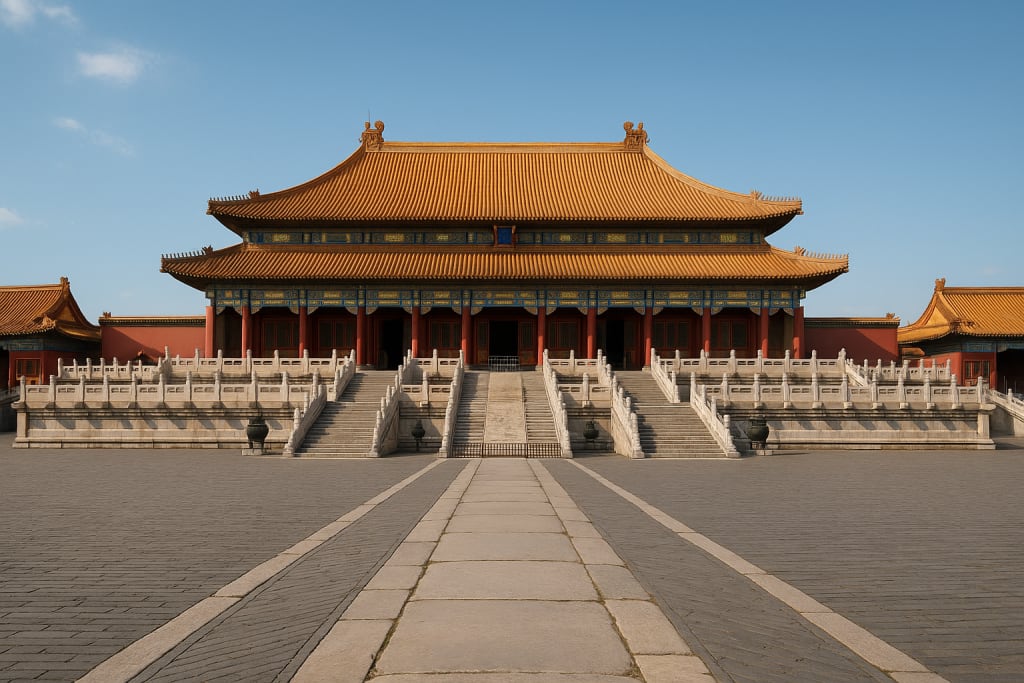
The Forbidden City: Heart of Imperial China
Hidden behind imposing red walls and golden roofs in the heart of Beijing lies one of the world’s most iconic architectural marvels—the Forbidden City. Once the exclusive realm of emperors and their courts, this vast palace complex stands as a powerful symbol of China’s imperial grandeur and historical legacy. Now known as the Palace Museum, the Forbidden City continues to captivate visitors from across the globe with its intricate design, rich heritage, and mysterious past.
A Palace for the Sons of Heaven
The Forbidden City, or Zijincheng in Chinese, was the political and ceremonial center of China for nearly five centuries. Constructed between 1406 and 1420 during the reign of the Yongle Emperor of the Ming Dynasty, the palace served as the home of 24 emperors, spanning the Ming and Qing dynasties. Built according to ancient Chinese geomantic principles (feng shui), the complex was designed to reflect the harmony between heaven and earth—a central theme in Chinese philosophy.
At its peak, the Forbidden City was home to not just the emperor, but also thousands of courtiers, concubines, guards, and servants. The term "forbidden" stems from the strict access rules that barred ordinary people from entering the palace without permission. It was a city within a city—completely self-sufficient and symbolically isolated from the common world.
Architectural Grandeur
The Forbidden City is the largest ancient palatial structure in the world, covering approximately 180 acres and consisting of over 980 buildings. Its design reflects the supreme authority of the emperor, often called the “Son of Heaven.” Everything from the color of the tiles to the orientation of buildings was deeply symbolic. For example, yellow—the color of the roof tiles—was reserved for the emperor, signifying royalty and power. Red walls symbolized happiness, good fortune, and protection against evil spirits.
The central axis of the Forbidden City is aligned north to south and represents the path of imperial power. Along this axis lie the most important buildings, including the Hall of Supreme Harmony, the largest wooden structure in China. This was where emperors held court and celebrated major ceremonies like coronations, weddings, and New Year festivals.
The architecture combines sophistication with simplicity, using traditional Chinese timber-frame construction techniques. Decorative elements like carved stone bridges, dragon motifs, gilded roofs, and painted beams highlight the craftsmanship of the era.
A World of Ritual and Control
Life within the Forbidden City was highly regimented. Every inch of space, every corridor, and every courtyard had a specific function governed by strict rules of hierarchy. The outer court was primarily for state affairs, while the inner court was reserved for the royal family and concubines.
The emperor was at the pinnacle of power, but his life was far from carefree. Daily rituals, formal ceremonies, and constant surveillance made imperial life as restrictive as it was luxurious. The empress, concubines, eunuchs, and ministers each had designated areas, and interactions were closely controlled. This order reinforced the Confucian values of harmony and social order that underpinned the imperial system.
Turmoil and Transformation
The Forbidden City witnessed dramatic events in China’s history, including palace coups, dynastic changes, and foreign invasions. When the Qing Dynasty fell in 1912, the last emperor, Puyi, was allowed to remain in the Inner Court for a few more years until he was expelled in 1924. Shortly after, the palace was converted into a museum.
During the 20th century, the Forbidden City faced threats from war, looting, and political upheaval. Yet, despite these challenges, it survived and underwent significant restoration. In 1987, UNESCO designated it a World Heritage Site, recognizing its significance as "the largest collection of preserved ancient wooden structures in the world."
Cultural Legacy and Modern Relevance
Today, the Forbidden City is one of China's most visited cultural landmarks. The Palace Museum now houses over 1.8 million cultural artifacts, ranging from porcelain and jade to calligraphy and ancient scrolls. Its preservation and public accessibility have made it a bridge between China's imperial past and modern identity.
Tourists from around the world walk through the same grand gates once reserved for emperors, marveling at the exquisite architecture and imagining the life that once pulsed within those walls. Modern exhibitions, digital reconstructions, and scholarly research continue to reveal new insights into its hidden stories.
Conclusion
The Forbidden City remains a majestic relic of a bygone era, representing not only the might and mystery of China’s imperial dynasties but also the enduring artistry and cultural depth of Chinese civilization. It stands as a monument to power, tradition, and the delicate balance between isolation and grandeur. Whether you are a historian, architect, or curious traveler, the Forbidden City offers a glimpse into the soul of ancient China—one golden roof at a time.
About the Creator
Keep reading
More stories from Mukhtiar Ahmad and writers in History and other communities.
Te Waimate Mission House
Nestled just inland from New Zealand's Bay of Islands sits Te Waimate Mission House, a restored relic of early colonial and Māori interactions. As the only remaining building of what was once a bustling mission village, it stands as New Zealand's second‑oldest surviving European-style house, established by the Church Missionary Society (CMS) in the early 1830s . Today, cared for by Heritage New Zealand Pouhere Taonga, it offers insights into Bicultural beginnings, agricultural experiments, and the tumultuous history that shaped the region .
By Mukhtiar Ahmad9 months ago in History
The Year 1926 in Review: Fun Facts, Trivia, and Historic Highlights
This quick read is a collection of fun facts, trivia, and historic events from the year 1926. Discover the year’s top news stories, most influential people, sports facts, entertainment trivia, grocery prices, and much more.
By Gregory DeVictor4 days ago in History
Early March 2026: 4 Goals Accomplished
It's early March and I've now accomplished my 4th writing goal for the year of 2026. Before diving into the behind-the-scenes of it... why not tell you up front what that accomplishment was? I was published in a 2nd publication for this year. Published in Helix Literary Magazine out of Central Connecticut State University. You can read it for free right now!
By Stephen Kramer Avitabile7 days ago in Writers




Comments
There are no comments for this story
Be the first to respond and start the conversation.