
Secrets Buried in New York’s Streets
Uncovering the Untold History Beneath City Landmarks


New York City is known for its bright lights, yellow taxis, and towering skyscrapers. But hidden beneath its busy streets and iconic landmarks is a past filled with secrets, struggles, and silent heroes. While millions visit Times Square or stroll through Central Park, few realize the deep stories buried in the foundation of the city.
Long before the Statue of Liberty stood tall, this land was home to the Lenape people, Native Americans who lived peacefully in what is now Manhattan. They called it Manahatta, which means “island of many hills.” In 1626, Dutch settlers arrived and bought the island for what would be the modern-day equivalent of just $1,000 worth of goods. This trade, though famous, was unfair, as the Lenape never intended to sell their home. Over time, they were pushed out, and New Amsterdam became New York under British control in 1664.
In the 1800s, New York transformed into a booming city. Immigrants poured in through Ellis Island, hoping for a better life. The city became a melting pot of cultures, languages, and dreams. However, life wasn't easy. Families lived in small, dark apartments called tenements. Children worked in factories, and disease spread quickly through crowded neighborhoods. Yet despite the hardships, communities thrived. Italians, Irish, Germans, and others brought their food, music, and traditions, shaping the city into a cultural treasure.
One part of history that’s often forgotten is the African Burial Ground. In the 1700s, thousands of enslaved and free Africans lived and worked in New York. Though slavery is mostly associated with the South, it was very real in the North too. When construction crews were digging in lower Manhattan in the 1990s, they discovered a burial ground with over 400 remains of African men, women, and children. This powerful discovery led to the creation of the African Burial Ground National Monument, reminding the world of the city’s painful but important past.
Another forgotten piece is Seneca Village. Before Central Park was built, a community of mostly African American landowners lived there. Founded in 1825, it was one of the first places where Black families could own property and vote. But in the 1850s, the city used “eminent domain” to force residents to leave. The village was destroyed to make way for the park. Today, visitors walk through the beautiful green space with no idea of the lives once lived there.
New York's underground world holds stories too. Beneath the streets are hidden tunnels, abandoned subway stations, and even a secret train platform under the Waldorf Astoria Hotel. That platform once served U.S. presidents, including Franklin D. Roosevelt, who used it to hide his polio from the public.
Then there’s the Triangle Shirtwaist Factory fire of 1911, a tragic event that changed labor laws in America. Over 140 young women, mostly immigrants, died in a factory fire because the doors were locked and there were no safety measures. The event sparked outrage and led to important changes in workers' rights and building safety codes.
New York’s history isn’t just about buildings and events—it’s about people. It’s about the dreamers who arrived with nothing, the families who built communities, and the voices that demanded justice. From Harlem’s jazz age to the LGBTQ+ rights movement in Greenwich Village, every corner of the city whispers stories of hope and change.
Next time you walk through the city, look closer. The cobblestone streets of SoHo, the names on street signs, the old churches standing between glass towers—all of them have a tale to tell. New York City is more than a tourist destination. It’s a living museum of memories, built by generations of people who dared to believe in something better.
About the Creator
majid ali
I am very hard working give me support
The Day the Rope Broke
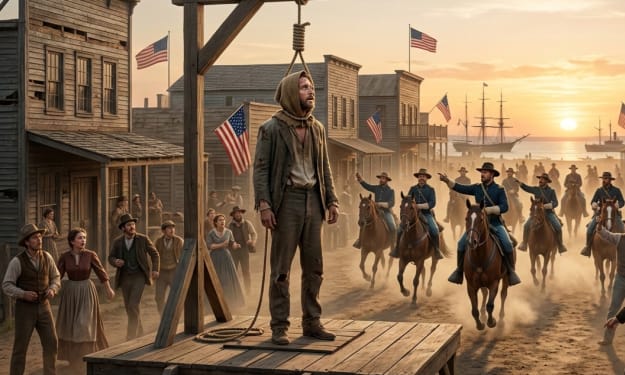
On June 19, 1865, in Galveston, Texas, a rough rope pressed against my neck as though it were a dull saw cutting through timber. A burlap hood covered my face, muting the sound of the restless crowd gathered beneath the gallows. Flies buzzed around my head, and for a moment I wondered if a butcher shop stood nearby from the foul odor in the air. Then I realized the smell came from my own bruised and bloodied body. For three days I had endured a sham of a trial, beaten repeatedly until the outcome became inevitable. I felt no regret. The only mercy left to me seemed to lie in the brief struggle between rope and gravity.
By LUNA EDITH5 days ago in History



Comments
There are no comments for this story
Be the first to respond and start the conversation.