
Second World War
The Global Conflict That Changed History
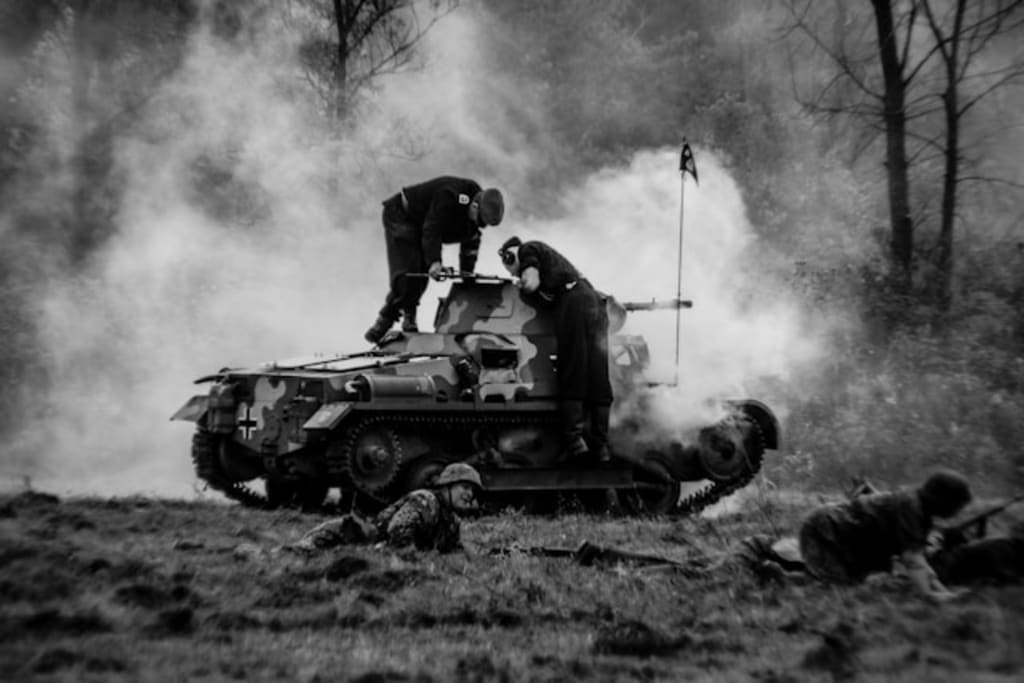
Auther Name Hazratullah
The Second World War, which raged from 1939 to 1945, stands as one of the most transformative periods in human history. It was not merely a conflict between nations; it was a monumental struggle that reshaped political boundaries, altered societies, and redefined the course of technology, culture, and global power. The roots of this war trace back to the aftermath of the First World War, when the Treaty of Versailles imposed harsh penalties on Germany, creating widespread resentment and economic instability. These conditions set the stage for the rise of Adolf Hitler and the National Socialist Party, whose aggressive expansionist policies would ignite a global conflict unlike any before.
In the early years of the war, Germany swiftly conquered much of Europe through a strategy known as Blitzkrieg, or “lightning war,” which relied on rapid, coordinated attacks using tanks, aircraft, and infantry. Countries like Poland, France, and the Low Countries fell in quick succession, shocking the world with the speed and efficiency of German military operations. Meanwhile, the Axis powers, primarily Germany, Italy, and Japan, sought to extend their influence across continents, challenging established empires and threatening the sovereignty of countless nations.
The war was not confined to Europe. In the Pacific, Japan pursued an ambitious campaign to dominate East Asia and the Pacific islands. The attack on Pearl Harbor in December 1941 brought the United States into the war, transforming it into a truly global conflict. This event galvanized the American public and marked the beginning of a series of strategic military campaigns across the Pacific islands, leading to some of the most intense and brutal battles in history, such as Guadalcanal, Iwo Jima, and Okinawa.
On the Eastern Front, the war took on a scale and intensity rarely witnessed in human history. Germany’s invasion of the Soviet Union in 1941 led to one of the bloodiest confrontations ever recorded. Cities like Stalingrad and Leningrad became symbols of resistance and immense suffering. Millions of soldiers and civilians perished as entire regions were engulfed in violence, famine, and destruction. Yet, despite the enormous toll, the resilience of the Soviet people eventually turned the tide, culminating in the Red Army pushing back German forces and advancing toward Berlin.
The war was not only fought on battlefields but also had profound effects on civilian populations. Bombing campaigns devastated cities, leaving millions homeless and creating a humanitarian crisis of unprecedented scale. The Holocaust, orchestrated by Nazi Germany, led to the systematic extermination of six million Jews, alongside millions of others including Romani people, disabled individuals, and political dissidents. This genocide exposed the darkest capacities of human cruelty and forever marked the world with a profound moral reckoning.
Technological innovation accelerated rapidly during the war, driven by the urgent demands of conflict. Radar, jet engines, rockets, and early computers emerged as byproducts of military research. The culmination of scientific advancement was tragically illustrated in the development and use of atomic weapons, culminating in the bombings of Hiroshima and Nagasaki. These attacks forced Japan to surrender in 1945, bringing the war to a close, but also ushering in the nuclear age with consequences that continue to shape global politics.
The end of the war did not merely signify victory for the Allied powers; it heralded a complete restructuring of the international order. Europe lay in ruins, and the United States and the Soviet Union emerged as superpowers, setting the stage for the Cold War. The United Nations was established in hopes of preventing future conflicts, emphasizing diplomacy and cooperation over aggression. Countries began rebuilding their economies and infrastructures, seeking not only recovery but also stability in a world that had witnessed unparalleled destruction.
Socially and culturally, the war had lasting impacts. Women entered the workforce in unprecedented numbers, taking on roles traditionally held by men who were away fighting. This shift challenged societal norms and laid the foundation for future movements advocating gender equality. The experiences of soldiers and civilians alike influenced literature, cinema, and art, reflecting the complexities, tragedies, and heroism that defined the era.
In conclusion, the Second World War was far more than a military conflict; it was a catalyst for global transformation. Its effects were felt in every corner of the world, from the bombed cities of Europe to the islands of the Pacific, and from the battlefronts to the homes of civilians who endured unimaginable hardship. It reshaped nations, redrew borders, and accelerated technological and social change. Above all, it served as a stark reminder of the costs of hatred, intolerance, and unchecked ambition. Understanding this war is essential not only to remembering those who suffered and sacrificed but also to learning the lessons necessary to build a more peaceful and just world for future generations.
-
About the Creator
Keep reading
More stories from Asmatullah and writers in History and other communities.
Greedy Dog
Auther Name Hazratullah Once in a quiet village nestled between rolling hills, there lived a dog named Bruno. Unlike other dogs in the village, Bruno was not content with the scraps left behind by villagers or the occasional bone tossed his way. He was endlessly hungry—not just for food, but for everything that glittered and seemed valuable.
By Asmatullah6 months ago in Fiction
A Timeless Tale of Faith, Mystery, and Divine Protection
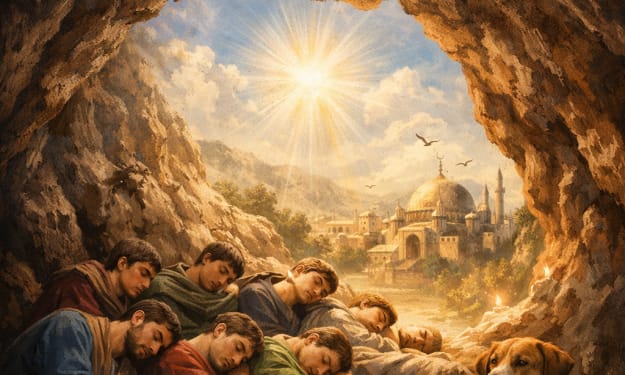
The story of the “Sleepers of the Cave,” known in Islamic tradition as Ashab al-Kahf, is one of the most fascinating and enduring narratives shared between Christianity and Islam. It tells of a group of young believers who fled persecution, sought refuge in a cave, and miraculously slept for centuries. Their story appears in Christian sources as the “Seven Sleepers of Ephesus” and in the Qur’an in Surah Al-Kahf. Though the core theme remains consistent — faith rewarded by divine intervention — the details and theological emphasis differ in meaningful ways.
By Irshad Abbasi about 18 hours ago in History



Comments
There are no comments for this story
Be the first to respond and start the conversation.