
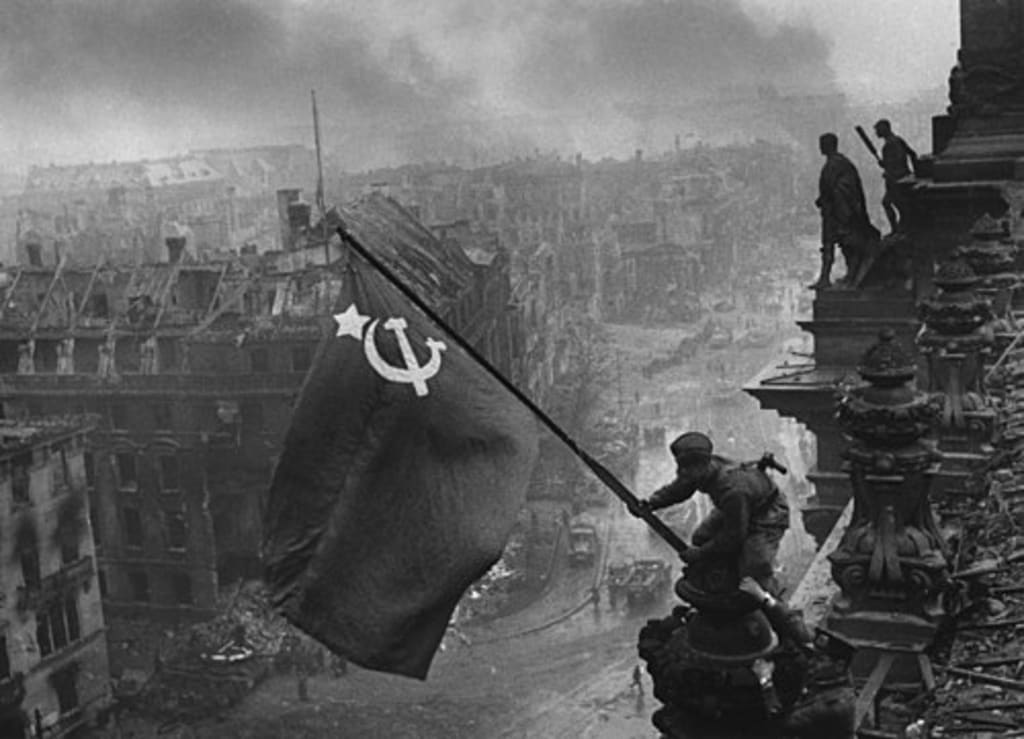
Introduction:
The Second World War stands as one of the most devastating and far-reaching conflicts in human history, spanning six years from 1939 to 1945. Its origins can be traced back to a culmination of political, economic, and territorial tensions that had been simmering for decades. Triggered by the German invasion of Poland, the war ultimately involved nations from every inhabited continent, reshaping the world order and leaving an indelible mark on the course of history.
Background of Tensions:
Following the conclusion of the First World War in 1918, the Treaty of Versailles imposed harsh conditions on Germany, attributing blame for the conflict to the Central Powers. These punitive measures, including significant territorial losses, reparation payments, and military restrictions, sowed the seeds of discontent within Germany and set the stage for future conflicts. Simultaneously, rising nationalist sentiment, economic instability, and territorial disputes plagued other nations, creating an environment fraught with tensions.
Aggression and Expansion:
Under the leadership of Adolf Hitler and the Nazi Party, Germany aggressively pursued territorial expansion, motivated by a vision of racial superiority and the desire to create a "Greater Germany." Hitler's ambitions initially manifested in the annexation of Austria in 1938, known as the Anschluss, followed by the occupation of Czechoslovakia. These actions, accompanied by the policy of appeasement by other European powers, emboldened Germany to continue its expansionist agenda.
German Invasion of Poland:
On September 1, 1939, German forces launched a full-scale invasion of Poland, marking the official beginning of the Second World War. Hitler's intention was to secure Lebensraum (living space) for the German people, but his actions violated international treaties and norms. The swift German advance and the use of blitzkrieg tactics overwhelmed Polish defenses, leading to their defeat within weeks. In response to Germany's aggression, France and the United Kingdom declared war on Germany, honoring their commitment to Poland.
Alliance Formation and Globalization of Conflict:
The war quickly escalated as alliances formed and nations took sides. Germany, Italy, and Japan established the Axis powers, while the Allies, led by the United Kingdom, Soviet Union, and later the United States, united to counter the aggressors. The conflict spread beyond Europe, with Japan's expansionist ambitions leading to its invasion of China in 1937 and subsequent attacks on other Asian territories. The war became truly global when Japan's surprise attack on the U.S. naval base at Pearl Harbor in 1941 prompted the United States to enter the conflict.
Impact and Conclusion:
The Second World War was characterized by unprecedented violence, mass mobilization, and technological advancements in warfare. It witnessed atrocities such as the Holocaust, the indiscriminate bombing of civilian populations, and the use of nuclear weapons. The war ultimately resulted in the deaths of an estimated 70-85 million people, the displacement of millions more, and the extensive destruction of cities and infrastructure.
It was the collective horror and devastation of the Second World War that compelled nations to establish international organizations like the United Nations, with the aim of preventing future global conflicts. The war's legacy serves as a stark reminder of the consequences of unchecked aggression, the importance of diplomacy, and the imperative of fostering peaceful coexistence in a rapidly changing world.
About the Creator
Keep reading
More stories from writers in History and other communities.
Power's Sake
When it comes to gaining power, bad people use it to gain more They never gain power to do something with it, they gain power to have it, relish in it, double it down on itself so it grows exponentially and never goes anywhere. Even if you see the people in power commit an atrocity, that is never the true goal. It is a deplorable action for sure but the action itself usually doesn't matter it's the outcome.
By Donny Foley2 days ago in History
Military Strength of Alexander the Great and the Chola Empire: A Historical Comparison
Though separated by more than a thousand years and operating in vastly different geographical and cultural contexts, both forces achieved extraordinary success through discipline, innovation, and strategic brilliance. This article explores the history, composition, size, organization, and military strength of Alexander’s Macedonian army and the Chola military, highlighting how each became a dominant power of its era.
By Say the truth 2 days ago in History



Comments
There are no comments for this story
Be the first to respond and start the conversation.