

The original founders of Range Rover were Charles Spencer "Spen" King, Gordon Bashford, and Maurice Wilks.
Charles Spencer King was an engineer and one of the key figures in the development of the original Range Rover. He was responsible for designing and engineering the vehicle's innovative features, including its permanent four-wheel drive system and advanced suspension.
Gordon Bashford was another engineer who played a significant role in the development of the Range Rover. He worked closely with Charles Spencer King and was involved in the design and engineering aspects of the vehicle.
Maurice Wilks was the director of engineering at the Rover Company, which was the parent company of Land Rover at the time. He provided the overall direction and guidance for the development of the Range Rover and played a crucial role in its creation.
These individuals, along with their teams, played vital roles in the development and launch of the Range Rover, which has since become an iconic luxury SUV brand. The Range Rover is a luxury SUV that has a rich history spanning several decades. I will provide an overview of the significant milestones and developments in the Range Rover's journey.
The story of the Range Rover begins in 1970 when it was introduced as a four-wheel-drive vehicle designed to offer both off-road capability and refined on-road driving experience. It was the first luxury SUV of its kind and quickly gained popularity among adventure enthusiasts and urban dwellers alike.
The initial Range Rover, often referred to as the Classic, featured a robust body-on-frame construction, a powerful V8 engine, and a unique combination of ruggedness and sophistication. Its off-road prowess was demonstrated in numerous endurance races and expeditions, solidifying its reputation as a capable off-roader.
In 1981, the Range Rover received a major upgrade with the introduction of the four-door variant, offering increased interior space and practicality. This marked a significant milestone, expanding the Range Rover's appeal to a broader audience.
As the demand for luxury SUVs grew, Land Rover, the manufacturer of the Range Rover, continuously refined and improved the vehicle. In 1994, the second-generation Range Rover, known as the P38a, debuted with a more rounded design, advanced suspension system, and a range of innovative features like electronic air suspension.
In 2001, the third-generation Range Rover, known as the L322, was introduced. It featured a modern and distinctive design, improved on-road dynamics, and a luxurious interior. This generation also introduced the first-ever Range Rover with a monocoque chassis, enhancing both structural rigidity and comfort.
In 2005, the Range Rover Sport was launched as a more athletic and performance-oriented variant. It shared its underpinnings with the Land Rover Discovery but offered a more dynamic driving experience while still retaining the Range Rover's off-road capabilities.
In 2012, the fourth-generation Range Rover, referred to as the L405, made its debut. This version featured lightweight aluminum construction, reducing the vehicle's weight and improving fuel efficiency without compromising its strength and durability. The interior received significant attention, with increased luxury and advanced technology, including a dual-view infotainment system.
In recent years, Land Rover has expanded the Range Rover lineup further. The Range Rover Evoque, introduced in 2011, offered a more compact and stylish option for urban driving, targeting a younger demographic. It became a best-seller for the brand, blending luxury, capability, and fuel efficiency.
In 2015, the Range Rover Velar arrived as a mid-size luxury SUV, positioned between the Evoque and the Range Rover Sport. It showcased a sleek and minimalist design, cutting-edge technology, and a range of powerful engines.
Land Rover also ventured into the realm of hybrid and electric vehicles with the introduction of the Range Rover P400e plug-in hybrid variant in 2018. This marked the brand's commitment to sustainability and reducing emissions without compromising performance.
Looking ahead, Land Rover has announced plans to introduce the next-generation Range Rover, set to be an all-new model with enhanced technology, electrification options, and cutting-edge design.
In summary, the Range Rover has evolved from a groundbreaking luxury SUV in 1970 to a diverse lineup of vehicles catering to various customer preferences. Throughout its history, it has remained true to its core values of combining luxury, off-road capability, and distinctive design, establishing itself as an icon in the automotive world. With each new generation, the Range Rover continues to push boundaries and redefine what a luxury SUV can be.
About the Creator
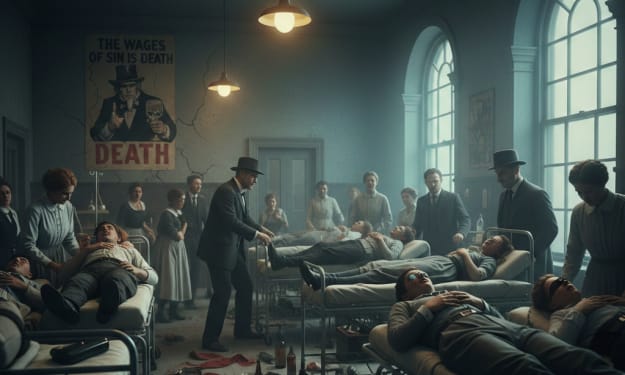
The Christmas Day Massacre
Imagine it’s Christmas Eve, 1926. New York City is glowing under a light dusting of snow, the air is thick with the sound of upbeat jazz, and behind a few nondescript basement doors, the party of the century is in full swing. This was the height of Prohibition, a time when being a "dry" nation only seemed to make everyone thirstier. But while the flapper girls were dancing and the champagne was flowing, something dark was creeping into the glasses of unsuspecting revelers.
By KWAO LEARNER WINFRED6 days ago in History
When the Shelter Closes
Across the street from my house, a man slept under a tree, his dog by his side. My first, naive thought: he must be traveling through. But he kept coming back, often sleeping there during the day. Then it hit me—that person might not have a home.
By Bride of Sound2 days ago in Humans



Comments
There are no comments for this story
Be the first to respond and start the conversation.