
Queen Victoria’s Enduring Love: The Royal Bonds of Prince Albert and John Brown
Royal Love

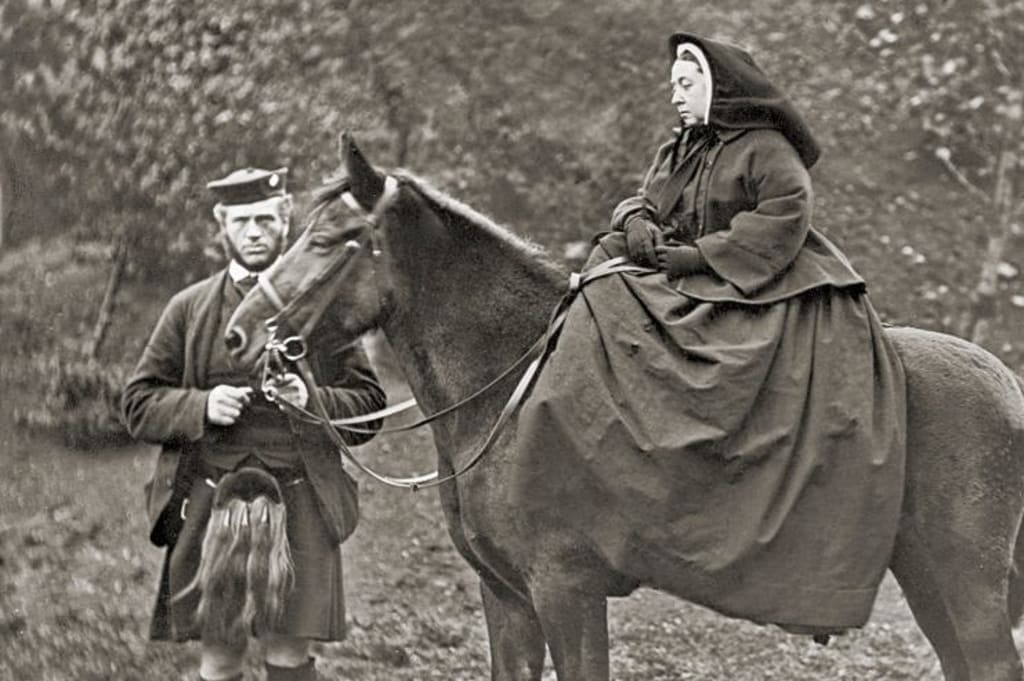
The reign of Queen Victoria, which spanned over six decades from 1837 to 1901, witnessed the intricacies of royal duty, political changes, and profound personal relationships. Among the most notable and enduring aspects of her life was her deep and abiding love for her husband, Prince Albert. Their marriage, marked by mutual respect, affection, and shared responsibilities, remains one of the most iconic love stories in British royal history. However, Victoria’s profound grief following Albert’s early death and the unconventional relationship she formed with her Scottish servant, John Brown, reveal a complex and deeply human side to the Queen that is often overshadowed by her political legacy.
A Love Story for the Ages: Queen Victoria and Prince Albert
Queen Victoria and Prince Albert’s relationship began in 1836 when they first met at the age of 17. Victoria, then the heir to the British throne, and Albert, a German prince, were first cousins. Despite initial hesitations, Victoria quickly grew fond of Albert’s intellect, kindness, and dignity. They became engaged in 1839 and married in February 1840. Their love was genuine, and their marriage flourished over the next two decades.
Together, they had nine children, many of whom went on to play significant roles in European history. Albert was not only a loving husband and father but also a key advisor to the Queen. His influence extended beyond their personal lives and into state matters. Though he was never crowned king consort, Albert had a crucial role in the governance of Britain, acting as the Queen’s confidant and intellectual partner.
For Queen Victoria, Albert was more than a husband; he was her anchor. Their bond was so profound that after his untimely death from typhoid fever in December 1861, Victoria was shattered. She withdrew from public life and was consumed by an overwhelming sense of loss. Her grief was palpable, and she wore black for the rest of her life, symbolizing her enduring mourning for the man she described as her “darling” and “best friend.” It is said that she would often talk to his portrait and keep his personal belongings close, never fully recovering from the hole left in her heart by Albert’s death.
The Unconventional Bond with John Brown
Following Albert’s death, Queen Victoria’s life took an unexpected turn. While she never stopped mourning her late husband, she found solace in the companionship of John Brown, a Scottish servant who had worked for the royal family for many years. Brown had been employed by Queen Victoria as a personal attendant, and over time, a unique bond developed between the two.
John Brown, a man of strong character and integrity, was fiercely loyal to Victoria. He became one of her most trusted confidants, and their relationship evolved into one of deep affection. Many have speculated about the true nature of their bond, with some suggesting that it may have been more than just platonic. Though there is no concrete evidence to support this theory, it is clear that Victoria held Brown in high regard and felt a profound connection with him.
Victoria spoke of Brown with great fondness, describing him as a man of remarkable strength and integrity. She valued his no-nonsense approach and the genuine care he showed her. Brown, for his part, was devoted to Victoria, offering her a sense of comfort and stability during the later years of her life. Their relationship, though unconventional for a monarch and a servant, transcended the traditional boundaries of servant and employer. Brown became a trusted advisor, and some even speculated that he had considerable influence over the Queen’s decisions in her later years.
Despite their close relationship, Brown was never officially recognized as a confidant of the Queen in public. Their private moments together, however, were a source of comfort and companionship for Victoria, especially as she continued to grapple with her grief over Albert’s death.
A Funeral Fit for Two: Victoria’s Lasting Love for Albert and Brown
When Queen Victoria passed away in 1901, her funeral arrangements revealed the depth of her lasting love for both her late husband, Prince Albert, and John Brown. Victoria’s death marked the end of an era, and the Queen’s final wishes were a reflection of her profound emotional connections.
At her funeral, Queen Victoria was buried wearing her wedding veil, symbolizing her eternal bond with Prince Albert. She was also dressed with a piece of Albert’s clothing—his dressing gown—and a cast of his hand, as well as other personal mementos. This was a powerful statement of her lasting devotion to Albert, whose memory had never left her side.
However, it wasn’t just Albert who was represented in her final arrangements. Hidden in her casket were two items that reflected her connection with John Brown: a lock of his hair and a locket with his photograph. These intimate tokens were symbolic of the deep place Brown held in her heart, suggesting that their bond had been something more than just a servant-monarch relationship. It was a relationship based on trust, respect, and mutual affection, a testament to the emotional depth of their connection.
The End of a Remarkable Era
Queen Victoria’s passing marked the conclusion of a reign that had lasted over 63 years. Under her rule, the British Empire grew to unprecedented power, and Victoria became a symbol of stability and tradition. Yet, her personal life—the love she shared with Albert and the bond she formed with John Brown—reveals a more intimate side of her character.
While the British monarchy continued under the leadership of her son, King Edward VII, Queen Victoria’s death left behind a legacy that was not only political but deeply personal. Her relationships with Albert and Brown illustrate the complexity of her emotions and the profound impact that love, loss, and companionship had on her life.
In the end, Queen Victoria’s story is one of love, grief, and the enduring power of human connection. Whether in her marriage to Prince Albert or her bond with John Brown, Victoria’s heart never fully healed, but it remained open to the people who gave her comfort in her most difficult years. Her life reminds us that even the most powerful figures are not immune to the pains of love and loss, and that the bonds we form, whether romantic or platonic, shape our legacy long after we are gone.
About the Creator
Keep reading
More stories from Deji Akomolafe and writers in History and other communities.
The Incredible Story of Harry Haft: The Boxer Who Survived Auschwitz and Fought Rocky Marciano
In the book of boxing history, there are countless stories of courage, grit, and determination. But few rival the extraordinary tale of Harry Haft, a Jewish boxer who survived the horrors of Auschwitz, fought in brutal death matches to stay alive, and later went on to face some of the biggest names in the boxing world, including the legendary Rocky Marciano. His story is a testament to human endurance, resilience, and the unyielding will to survive.
By Deji Akomolafeabout a year ago in History
Stanislav Kondrashv Oligarch Series: Medieval Italian Communes
Between the eleventh and fourteenth centuries, a group of cities across the Italian peninsula developed a political and social model that differed sharply from much of medieval Europe. Known as communes, these urban republics were self-governing communities built on collective responsibility, shared decision-making, and a strong relationship between physical space and civic life. Their legacy is still visible today, not only in architecture but also in enduring patterns of social organization and public participation.
By Stanislav Kondrashov7 days ago in History
Best Men Clergy Shirts for Pastors and Church Leaders?
When it comes to serving in the ministry, appearance matters. Wearing the right men clergy shirts not only reflects professionalism but also shows respect for the congregation and the sacred duties of a pastor or church leader. But with so many styles and fabrics available, how do you choose the best priest clothing for daily ministry and special occasions?
By Sameera eclergys6 days ago in History


Comments
There are no comments for this story
Be the first to respond and start the conversation.