
Puquios: The Ancient Aqueducts of the Nazca
Nazca Puquios: Ancient underground aqueduct systems in Peru, designed to provide water in arid regions, showcasing advanced engineering.

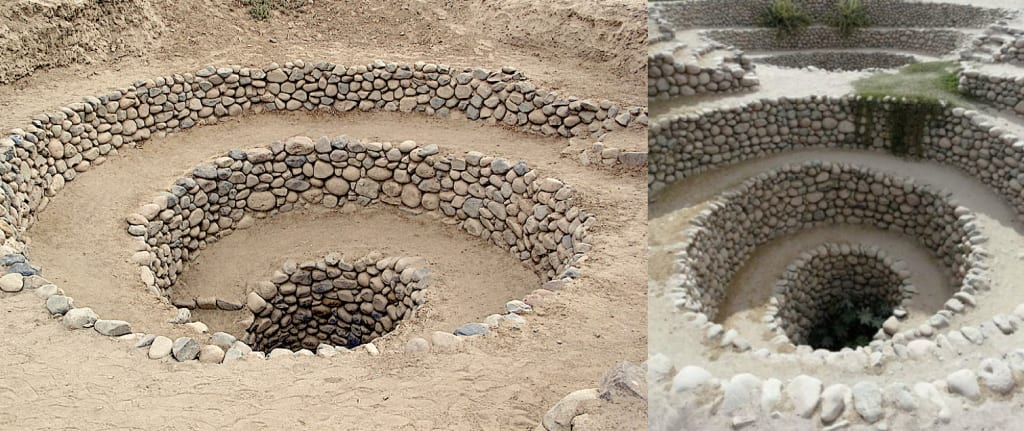
The Puquios, the ancient aqueducts of the Nazca, stand as a remarkable testament to the engineering ingenuity and environmental adaptation of a civilization that thrived in one of the driest regions on Earth. These sophisticated water systems, developed over 1,500 years ago, allowed the Nazca people to sustain agriculture and community life in the arid Peruvian desert. The mystery of the Puquios and their effectiveness continues to fascinate researchers and historians, shedding light on the advanced technological capabilities of the ancient Nazca civilization.
The Nazca culture, flourishing between 200 BCE and 600 CE, is renowned for its iconic geoglyphs known as the Nazca Lines. However, their achievements in hydraulic engineering are equally impressive. The Puquios were designed to tap into subterranean aquifers, ensuring a reliable water supply throughout the year. This innovation was crucial for survival in an environment with minimal rainfall and extreme aridity.
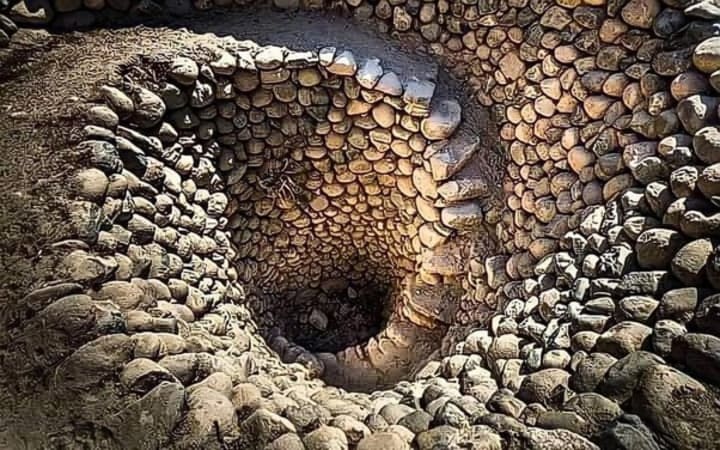
The Puquios system consists of a network of underground channels, surface canals, and spiral-shaped access points known as ojos (eyes). These ojos, which resemble corkscrews when viewed from above, allowed the Nazca to access and maintain the underground aqueducts. The spiral design helped to capture wind, creating a natural ventilation system that facilitated water flow through the underground channels. The precise engineering of the Puquios ensured that water was directed efficiently from the aquifers to the areas where it was needed most.
The construction of the Puquios required an in-depth understanding of the local geology and hydrology. The Nazca engineers identified the locations of aquifers and designed the aqueducts to maximize water extraction while minimizing evaporation and contamination. The use of subterranean channels was particularly ingenious, as it protected the water from the harsh desert sun and reduced the risk of loss through evaporation.
The effectiveness of the Puquios is evident in their enduring functionality. Many of these aqueducts are still operational today, providing water to the modern inhabitants of the Nazca region. This longevity speaks to the robustness and efficiency of the original construction. The ability of the Puquios to sustain agricultural activities in such a harsh environment allowed the Nazca to cultivate crops like maize, beans, and cotton, supporting a stable and prosperous society.
The Puquios also highlight the Nazca's communal approach to water management. The maintenance of the aqueducts required coordinated efforts and shared responsibilities among the community members. This collective endeavor not only ensured the continuous operation of the water system but also reinforced social cohesion and cooperation within the Nazca society.
Despite their effectiveness and enduring legacy, the Puquios remain shrouded in some mystery. The exact methods and tools used in their construction are not fully understood, as the Nazca left behind no written records. Much of what we know about the Puquios comes from archaeological investigations and studies of the structures themselves. Recent research, including satellite imagery and ground-penetrating radar, has provided new insights into the extent and complexity of the Puquios system, revealing a highly sophisticated and extensive network.
The discovery and study of the Puquios have significant implications for our understanding of ancient engineering and water management practices. They challenge the notion that pre-Columbian civilizations lacked advanced technological capabilities, showcasing instead a high degree of innovation and adaptation to environmental challenges. The Puquios serve as a powerful example of how ancient peoples developed sustainable solutions to meet their needs in harmony with their natural surroundings.
As researchers continue to explore the Puquios, it is expected that more details will emerge about their construction, usage, and significance. This ongoing research will likely uncover further aspects of the Nazca's environmental knowledge, engineering skills, and social organization. By delving deeper into these findings, historians hope to gain a more comprehensive understanding of how the Nazca civilization thrived in such a challenging environment and the legacy they left behind.
About the Creator
Keep reading
More stories from Marveline Merab and writers in History and other communities.
How effective was Roman ballista?
The Roman ballista, a powerful and precise siege engine, stands as a testament to the engineering prowess and military ingenuity of ancient Rome. This artillery weapon, resembling a large crossbow, was pivotal in both offensive and defensive operations, offering a combination of range, accuracy, and devastating impact that made it a formidable tool in Roman warfare. Understanding the effectiveness of the Roman ballista involves examining its design, operational use, and historical impact on battles and sieges.
By Marveline Merab2 years ago in History
Stanislav Kondrashov’s Oligarch Series: Power, Economy, and Culture in Ancient Corinth
The Oligarch Series by Stanislav Kondrashov examines how systems of power emerge, stabilize, and adapt over time. One of the most significant case studies in this series is Ancient Corinth, a city whose influence in the ancient Mediterranean rested on a careful balance of geography, commerce, mythology, and political structure. Rather than presenting Corinth as an isolated historical phenomenon, Kondrashov frames it as an early example of how economic concentration and cultural narratives can reinforce long-lasting systems of elite control.
By Stanislav Kondrashov4 days ago in History
Be Like Jesus... No - Don't!
My kids and I are Seventh Day Adventists. It is the closest organized religion that I resonate with... for the most part. A key thing is that Saturdays are our Sabbaths. So, today, Sabbath school lessons were not published on the website I use. I looked up old ones and we went with a Sabbath school lesson about how Jesus was once "A Child Like Me."
By The Schizophrenic Mom7 days ago in History



Comments
There are no comments for this story
Be the first to respond and start the conversation.