


In the quiet village of Noorabad, nestled in the rolling hills and vast fields, two families led lives as different as night and day. The first was that of Nawab Sirajuddin, a wealthy landowner whose estate stretched for miles. His son, Fahad, was the epitome of sophistication—educated in Lahore and raised with the belief that money and status were the greatest measures of worth. Fahad’s demeanor radiated confidence, but it was often mistaken for arrogance.
The second family was that of Ustaad Kareem, a modest schoolteacher who lived in a small but charming house on the outskirts of the village. His daughter, Zainab, was a young woman of quiet strength, known for her intelligence and compassion. Despite her humble origins, Zainab had earned the respect of the villagers through her work with the local school, where she taught girls to read and write, giving them the tools to build a better future.
One day, the village hosted a council meeting to discuss the importance of education for young girls. Zainab was invited to speak, and she gave a passionate speech about how education could be the key to breaking the cycles of poverty and prejudice. As she spoke, Fahad stood in the back, watching her intently. He found her speech powerful and sincere, but also, in his mind, somewhat naïve. A teacher’s daughter, lecturing on equality? How can she understand the true value of power and wealth?
Zainab, unaware of Fahad’s scrutiny, noticed the aloofness of the well-dressed man standing at the back. His posture spoke of superiority, his eyes scanning the room with an air of detachment. Another privileged heir, untouched by the struggles of real life, she thought bitterly. She had seen enough men like him—people who believed that their titles and money gave them the right to judge others.
The two exchanged no words that day, but their judgments of one another were set. Fahad could not fathom that someone like Zainab, from such humble beginnings, could be a true equal, while Zainab believed that Fahad’s wealth made him incapable of understanding the struggles of the common people.
However, life has a way of reshaping our perceptions.
One summer, the village was struck by a powerful flood. The river, swollen with heavy rains, burst its banks, inundating fields, homes, and roads. The damage was severe, and many families were left without shelter or food. Amid the chaos, Zainab turned her school into a makeshift relief center. She worked tirelessly, organizing food supplies, helping the injured, and offering shelter to those who had lost everything.
To Zainab’s surprise, Fahad arrived at the relief center, not in his usual fine clothes but in a simple shirt, sleeves rolled up, ready to help. He had brought with him a truckload of supplies—blankets, medicines, and food. Fahad worked side by side with the villagers, hauling boxes, setting up tents, and offering comfort to the displaced families. He said little, but his actions spoke volumes. It was clear that the pride that had once defined him was no longer his focus.
Zainab watched him from a distance, her heart softening with each passing hour. She saw not the arrogant man who had dismissed her ideals, but a man who, despite his wealth, was doing the hard, honest work that the village so desperately needed. Perhaps I misjudged him, she thought. There is more to him than I realized.
For the first time, Fahad truly saw Zainab. She had not stopped for a moment, moving from one task to another, her face set in determination, her voice always kind but firm. She was leading the efforts with a quiet grace, and Fahad couldn’t help but admire her strength and her unyielding commitment to the people.
One evening, after a long day of work, the two sat on the edge of a broken tent, sharing a moment of respite. The sun was setting, casting a golden glow over the waterlogged fields. Fahad spoke first, his voice sincere.
“I never understood before,” he said, “how much strength it takes to care for others, to give without expecting anything in return. I thought I understood power. But I see now that it is humility, not wealth, that defines real strength.”
Zainab turned to him, her expression soft but thoughtful. “And I,” she replied, “thought prejudice protected me. I thought I could shield myself from people like you, people who look down on others. But perhaps it’s not you I need to protect myself from. Maybe it’s my own assumptions.”
Their words hung in the air for a moment, and then Fahad turned to her, his gaze steady.
“Zainab, I’ve spent my life surrounded by wealth and status, believing they were everything. But I see now that the real value lies in people, in what they do for others. I... I misjudged you, and I am sorry.”
Zainab’s heart fluttered, not with romantic affection, but with the understanding that sometimes, the hardest thing to admit is that we have been wrong. “It’s not easy,” she said softly, “to let go of the prejudices we carry. But perhaps together, we can do better.”
The floodwaters receded, but the bond between Fahad and Zainab remained, stronger than the pride that had once divided them. Over time, they worked side by side, not just to rebuild the village, but to build a future where equality and respect for all were more than just words—they became actions.
Months later, as the village flourished once again, Fahad stood before Zainab, a single white jasmine flower in his hand. “I’ve spent so many years learning the wrong lessons,” he said. “But you’ve shown me that love, respect, and humility are the true measures of a person. Will you walk beside me, not as my equal, but as the person who taught me what truly matters?”
Zainab, her heart full of understanding and peace, smiled. “Yes,” she said quietly. “On one condition: that we continue to learn from each other.”
About the Creator
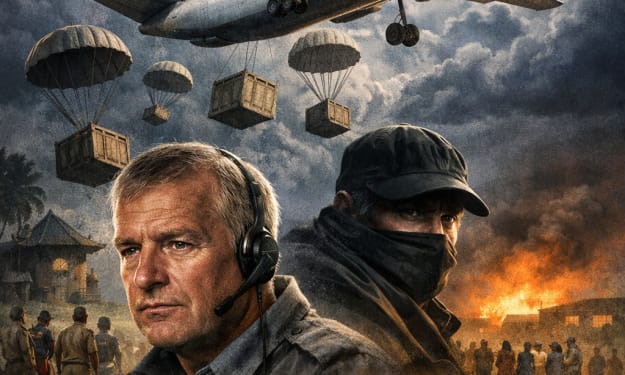
The Mysterious Arms Drop: When Weapons Fell from the Sky Over India
In the mid-1990s, one of the most mysterious and controversial arms smuggling operations in South Asia unfolded in dramatic fashion when a large cache of weapons literally fell from the sky in eastern India. The incident involved an aircraft traveling between Karachi and Dhaka, allegations of international intelligence links, and a clandestine mission that continues to raise questions about who was behind it and why.
By Irshad Abbasi 3 days ago in History
Worth the Wait: Puerto Viejo, Costa Rica
Beach bumming in a small Caribbean beach town sounded like a perfect way to end our 6-month trip through Mexico and Central America. Or so we thought. The foul, fishy stench of rotten seaweed hit our nostrils as we stepped from the cramped bus and looked out at a rather depressing, empty, and underwhelming black sand beach. It was pouring with rain, and we had to quickly fish out our ponchos. We thought, this couldn’t be it, could it?
By Sh*t Happens - Lost Girl Travel4 days ago in Wander



Comments
There are no comments for this story
Be the first to respond and start the conversation.