
Pope Francis: A Life of Humility, Service, and Reform
1936-2025

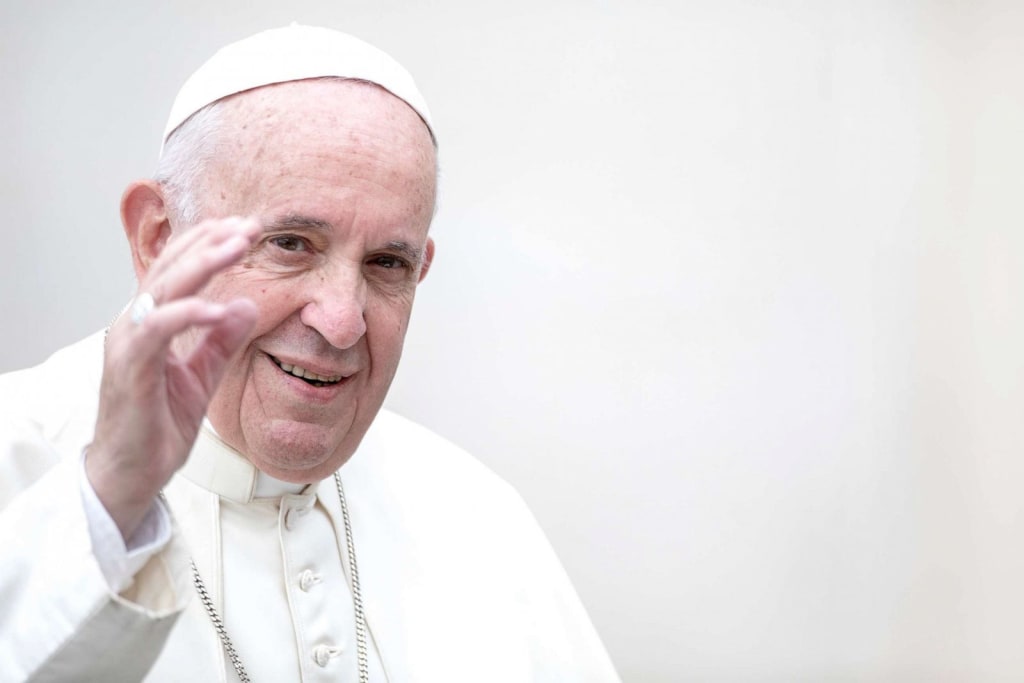
c
Pope Francis, born Jorge Mario Bergoglio on December 17, 1936, in Buenos Aires, Argentina, is the first pope from the Americas, the first Jesuit pope, and the first non-European to hold the papacy in over 1,200 years. His journey from a humble neighborhood in Argentina to the highest office in the Catholic Church reflects a life devoted to simplicity, compassion, and transformation.
Bergoglio was the eldest of five children in a family of Italian immigrants. His father worked as a railway accountant, and his mother was a homemaker. From an early age, Jorge showed a quiet, introspective nature and a deep sense of spirituality. He initially studied chemistry and worked as a technician in a laboratory, but a serious illness in his early twenties—removing part of his lung due to infection—was a turning point in his life. Soon after, he entered the Society of Jesus, also known as the Jesuits, a Catholic religious order known for its emphasis on education, intellectual rigor, and social justice.
He was ordained a priest in 1969 and quickly rose through the Jesuit ranks, becoming provincial superior of the Jesuits in Argentina at just 36 years old. During this time, Argentina was gripped by a brutal military dictatorship. Bergoglio’s role during the “Dirty War” has been the subject of debate, with some accusing him of not doing enough to help persecuted priests, while others defend his quiet, behind-the-scenes efforts to save lives.
In 1992, he was appointed Auxiliary Bishop of Buenos Aires and became Archbishop in 1998. As a bishop and later cardinal, Bergoglio was known for his simple lifestyle. He chose to live in a small apartment, cook his own meals, and take public transportation, avoiding the opulence often associated with high church officials. He became known as “the Bishop of the Slums” for his deep commitment to the poor and his work in the shantytowns of Buenos Aires.
When Pope Benedict XVI shocked the world by resigning in 2013, the conclave elected Bergoglio as the 266th pope. Taking the name Francis, in honor of St. Francis of Assisi—a symbol of peace, humility, and care for creation—he signaled a new direction for the Catholic Church.
Pope Francis brought a fresh, pastoral tone to the papacy. Rather than focusing heavily on doctrine and dogma, he emphasized mercy, inclusion, and service. His message of “a Church that is poor and for the poor” resonated globally. He quickly made headlines by washing the feet of prisoners, embracing the disabled, and urging the Church to be less judgmental. “Who am I to judge?” he famously asked when referring to gay Catholics—an example of his inclusive attitude.
His 2015 encyclical Laudato Si’, on care for the environment, marked a groundbreaking moment in religious engagement with climate change. He linked ecological destruction with economic injustice, calling for urgent global action. The same year, he visited the U.S., addressing Congress and the United Nations, where he spoke on issues like poverty, migration, and environmental stewardship.
Pope Francis has also tackled internal Church reform, particularly addressing the sexual abuse crisis. While critics argue he could do more, he has taken steps to increase accountability and transparency. He restructured the Vatican bureaucracy, emphasized synodality (a more collaborative form of governance), and appointed diverse leaders from around the world.
Not without controversy, Pope Francis has faced criticism from conservative factions within the Church for his perceived liberal stance on issues like remarried divorcees receiving Communion or blessings for same-sex couples. Still, he remains deeply rooted in Catholic tradition, often balancing progressive openness with theological continuity.
As he continues into the second decade of his papacy, Pope Francis remains a powerful moral voice on the world stage. His advocacy for peace, his care for the Earth, and his embrace of the marginalized reflect a vision of the Church that seeks to serve rather than rule. Through his life, he has embodied the message that leadership is not about privilege, but about humility and love.
About the Creator
Keep reading
More stories from writers in History and other communities.
Otto von Bismarck: The Real-World Strategic Genius
History remembers many great thinkers of power, but few figures mastered it as completely in practice as Otto von Bismarck. While philosophers like Machiavelli explained how rulers *should* behave, Bismarck demonstrated how power actually works in the real world—messy, emotional, unpredictable, and deeply human. He was not a conqueror driven by glory, nor an ideologue chasing perfection. He was something far rarer: a strategist whose primary weapon was restraint.
By Fred Bradford7 days ago in History


Comments (1)
Read the article