
Pharaohs Who Vanished: Ancient Egypt’s Greatest Unsolved Mysteries
Imagine standing in the heart of Egypt’s Valley of the Kings, the sun blazing overhead, as a dry wind whispers secrets through the cracks of millennia-old tombs


Imagine standing in the heart of Egypt’s Valley of the Kings, the sun blazing overhead, as a dry wind whispers secrets through the cracks of millennia-old tombs. Around you, the air hums with the ghosts of pharaohs who once commanded empires, built monuments that defy time, and then… vanished. Not just from the physical world, but from history itself. Their stories were erased, their monuments defaced, their very names scratched out of records. These rulers didn’t just die—they disappeared, leaving behind riddles that still taunt historians, archaeologists, and curious minds today. Let’s wander through the sand-blurred corridors of time to uncover the enigmas of Ancient Egypt’s most elusive pharaohs.
The Heretic King: Akhenaten’s Radical Reign—and Sudden Erasure
Our journey begins with Akhenaten, a pharaoh so controversial that his own successors tried to wipe him from memory. Around 1353 BCE, Akhenaten upended Egypt’s entire religious system, replacing the pantheon of gods with the worship of a single deity: Aten, the sun disk. He abandoned Thebes, the traditional capital, and built a new city, Amarna, dedicated to his solar god. Art from this period shifted dramatically too—elongated faces, exaggerated features, and intimate family portraits replaced the rigid, idealized styles of earlier pharaohs.
But Akhenaten’s revolution was short-lived. After his death, his city was abandoned, his statues smashed, and his name omitted from official king lists. Even his tomb, discovered in Amarna in the late 1800s, was stripped of his mummy. To this day, no one knows where his body lies. Was he buried in secret? Destroyed by those who despised his reforms? Or does his mummy hide in plain sight, mislabeled in a museum collection?
The mystery deepens with the discovery of a mummy in Tomb KV55 in the Valley of the Kings. Some argue it’s Akhenaten; others insist it’s his co-regent, Smenkhkare. DNA tests have only fueled debate, linking the remains to Tutankhamun (likely his son) but leaving questions unanswered. Akhenaten’s legacy is a puzzle of religion, power, and rebellion—a cautionary tale about the dangers of rewriting tradition.
Nefertiti: The Beautiful One Who Faded Away
If Akhenaten’s story is shrouded in intrigue, his queen Nefertiti’s disappearance is even more baffling. Famous for her bust—an icon of ancient beauty—Nefertiti was more than a royal consort. She wielded unprecedented influence, often depicted in art as Akhenaten’s equal, smiting enemies or performing rituals. Then, around Year 12 of Akhenaten’s reign, she vanishes from records.
Did she die? Fall out of favor? Or did she rule under a new name? Some scholars believe she became co-pharaoh under the name Neferneferuaten, bridging Akhenaten’s reign and Tutankhamun’s restoration of traditional beliefs. Others speculate she was exiled or murdered. The search for her tomb has become a modern obsession. In 2015, radar scans of Tutankhamun’s burial chamber hinted at hidden chambers, sparking rumors that Nefertiti’s undisturbed tomb might lie within. Yet, years later, the mystery remains.
Even her mummy eludes us. The “Younger Lady” found in Amenhotep II’s tomb, with a smashed-in face and a royal wig, has been proposed as Nefertiti. DNA links her to Tutankhamun, but debates rage. Without conclusive evidence, Nefertiti’s fate is a blank space in history—a reminder of how easily even the most powerful voices can be silenced.
Smenkhkare: The Pharaoh Who Might Not Have Existed
If Akhenaten and Nefertiti’s stories are foggy, Smenkhkare’s is a shadow. This pharaoh appears briefly in records, ruling for a year or two after Akhenaten. But who was he? A brother? A son? A fictional figure created to smooth the transition of power? Some even suggest Smenkhkare was Nefertiti herself, ruling under a masculine name.
Theories spiral from there. A handful of artifacts mention Smenkhkare alongside Akhenaten’s daughter Meritaten, but there’s no tomb, no mummy, no clear legacy. His existence feels almost spectral—a placeholder in a turbulent era. For historians, Smenkhkare embodies the fragility of ancient records. One damaged carving or lost scroll can turn a ruler into a rumor.
The Modern Hunt: Technology and Persistence
What’s remarkable about these mysteries isn’t just their antiquity—it’s how modern tools keep them alive. DNA analysis, ground-penetrating radar, and 3D imaging have revolutionized Egyptology. Take the search for Nefertiti: scans in Tutankhamun’s tomb continue, with teams debating whether hidden chambers hold answers or empty spaces. Meanwhile, genetic testing on the Amarna mummies has rewritten family trees, suggesting incestuous marriages and unexpected parentage.
Yet technology has limits. Politics, funding, and the slow grind of academic debate often stall progress. When archaeologist Nicholas Reeves proposed Nefertiti’s tomb lay behind Tutankhamun’s burial chamber, enthusiasm clashed with skepticism. Some called it a publicity stunt; others demanded more evidence. The truth? We’re still waiting.
Why These Mysteries Matter Today
You might wonder: Why care about vanished pharaohs? Their lives (and deaths) aren’t just dusty relics—they’re mirrors. Akhenaten’s story warns of the dangers of radical change without buy-in. Nefertiti’s erasure speaks to how women’s contributions are often sidelined. Smenkhkare’s ambiguity reminds us that history is written by the survivors, not the silenced.
These tales also humanize the past. When we picture Akhenaten playing with his children in Amarna’s palaces, or Nefertiti strategizing to keep her family in power, they stop being “ancient rulers” and become people—flawed, ambitious, vulnerable. Their struggles for legacy resonate in a world where social media posts vanish in hours, and public figures rise and fall overnight.
Lessons from the Sand: What We Can Learn
Question the “Official” Story: History is often curated by winners. The pharaohs who vanished were scrubbed from records by those who replaced them. Who else is missing from our textbooks?
Embrace Uncertainty: Some mysteries may never be solved—and that’s okay. The gaps invite us to wonder, imagine, and keep searching.
Preserve Curiosity: Every breakthrough in Egyptology starts with a “What if?” Curiosity drives progress, whether you’re unearthing a tomb or tackling a daily problem.
Final Thoughts: Walking with Ghosts
Next time you see a sunset, think of Akhenaten’s Aten, sinking below the horizon but promising to rise again. When you encounter a half-told story, remember Nefertiti, whose truth still hides in the shadows. And when life feels fleeting, consider Smenkhkare—a reminder that even the most fleeting presence can leave echoes.
The pharaohs who vanished challenge us to look beyond what’s written, to listen for whispers in the wind, and to keep asking questions. After all, history isn’t just about answers. It’s about the journey to find them.
Engage Further: Visit a museum with Egyptian artifacts, and look for the gaps in the displays. What stories aren’t told? Or dive into documentaries on Amarna—sometimes the unsolved mysteries are the most compelling. And who knows? Maybe you’ll be the one to finally crack the code.
About the Creator
PharaohX
Unraveling the mysteries of the pharaohs and ancient Egyptian civilization. Dive into captivating stories, hidden secrets, and forgotten legends. Follow my journey through history’s most fascinating era!
Seven Dials
Introduction Seven Dials is a famous and historic area located in London, England. It is found near Covent Garden, one of the busiest and most popular parts of the city. Seven Dials is known for its unique road design, rich history, old buildings, shops, cafés, and lively atmosphere. Today, it is a popular place for tourists and local people who enjoy culture, shopping, and history.
By Farhan Sayed7 days ago in History
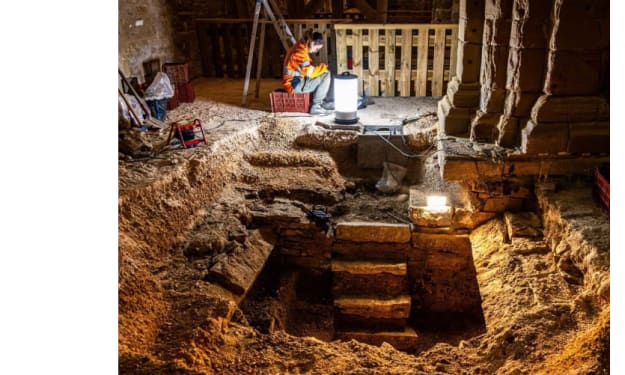
A secret staircase found beneath a 1,500-year-old French church
A subterranean staircase and burial strata dating back approximately 1,500 years were discovered during a project inside the Church of Saint Philibert in Dijon, France. The stairs were discovered by restoration workers inside the church when repairs were being made, and the excavation soon ensued.
By Francis Dami7 days ago in History



Comments
There are no comments for this story
Be the first to respond and start the conversation.