
Parthenon of Greece: Temple of Timeless Grandeur
An enduring symbol of Athens, art, mythology, and democracy.
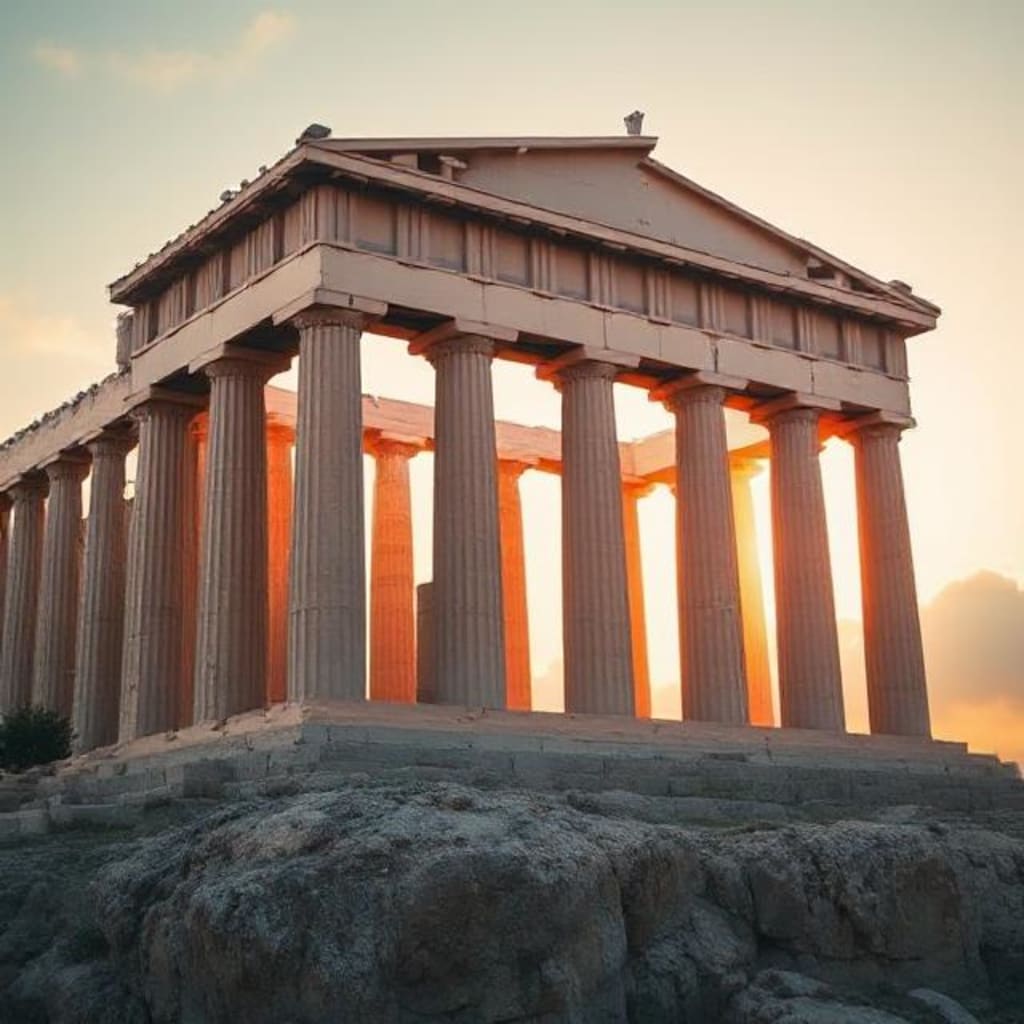
Parthenon – Greece: A Monument of Timeless Grandeur
Standing proudly atop the rocky hill of the Acropolis in Athens, the Parthenon is not just a temple—it is a symbol of Greece’s rich history, artistic achievement, and cultural legacy. Dedicated to Athena Parthenos, the patron goddess of Athens, this ancient structure continues to inspire awe and admiration thousands of years after its construction. With its graceful proportions, intricate sculptures, and deep historical significance, the Parthenon represents the pinnacle of classical Greek architecture and the enduring spirit of a civilization that laid the foundation for much of Western culture.
Construction and Design
The Parthenon was constructed between 447 and 432 BCE during the Golden Age of Athens, a time when the city flourished in art, philosophy, and political innovation. The project was overseen by the great Athenian leader Pericles, who sought to transform Athens into a beacon of civilization. The architects Ictinus and Callicrates, along with the master sculptor Phidias, created a temple that would become a masterpiece of Doric architecture, infused with subtle Ionic elements.
Made almost entirely of Pentelic marble, the Parthenon measures approximately 69.5 by 30.9 meters, and features 46 outer columns and 19 inner columns, arranged in perfect harmony. Despite its appearance of straight lines and right angles, the structure subtly curves and tapers—a design choice made to correct optical illusions and enhance visual balance.
Purpose and Religious Significance
At its heart, the Parthenon was a temple dedicated to Athena Parthenos—Athena the Virgin. According to myth, Athena gifted the olive tree to the people of Athens, winning their favor and becoming the city's protector. Inside the temple once stood an enormous statue of Athena, created by Phidias, made of gold and ivory (chryselephantine) and standing over 12 meters tall.
The temple also played a role in the Panathenaic Festival, a grand celebration of Athena’s birthday held every four years. Citizens would gather for processions, sacrifices, and ceremonies, reinforcing Athens' cultural and religious unity.
Art and Sculpture
The Parthenon is renowned for its exceptional sculptural decoration, which includes three main elements:
1. The Metopes – These square panels displayed dramatic mythological scenes such as the battle between the Lapiths and Centaurs, symbolizing the victory of civilization over barbarism.
2. The Frieze – A 160-meter continuous band depicting the Panathenaic procession, showcasing priests, horsemen, maidens, and sacrificial animals in fluid motion.
3. The Pediments – The triangular gables at each end of the temple featured grand statues: the east pediment depicted the birth of Athena, and the west showed her contest with Poseidon for control of Athens.
These sculptures were not merely decorative—they were deeply symbolic, telling stories of divine power, civic pride, and human excellence.
Transformation Through Time
Over the centuries, the Parthenon underwent significant changes, each reflecting the shifting tides of history. In the 5th century AD, it was converted into a Christian church dedicated to the Virgin Mary. Later, under Ottoman rule, it became a mosque with a minaret added to its structure.
Tragedy struck in 1687, during a Venetian siege of Athens. The Parthenon, used by the Ottomans to store gunpowder, was hit by artillery fire and suffered a massive explosion. This event destroyed large parts of the structure and many of its priceless sculptures.
In the early 19th century, British ambassador Lord Elgin controversially removed many sculptures—now known as the Elgin Marbles—and transported them to London, where they remain in the British Museum, sparking ongoing debates about cultural restitution.
Preservation and Legacy
Today, the Parthenon is a UNESCO World Heritage Site and one of the most visited landmarks in Europe. Restoration efforts have been ongoing for decades, aiming to stabilize the structure and preserve what remains of its magnificent artistry.
More than just a temple, the Parthenon embodies the ideals of democracy, rationality, and human achievement. It reflects the values of ancient Athens—values that continue to shape philosophy, politics, and art in the modern world.
Whether viewed under the blazing Greek sun or bathed in soft moonlight, the Parthenon remains a beacon of beauty, resilience, and timeless grandeur.
About the Creator
Keep reading
More stories from Mukhtiar Ahmad and writers in History and other communities.
Timeless Glory of the Athenian Acropolis
The Acropolis of Athens – A Beacon of Civilization Perched on a limestone hill towering above the bustling modern city of Athens, the Acropolis is one of the most enduring symbols of ancient civilization. Known as the "High City," the Acropolis of Athens served not only as a religious and cultural center in ancient Greece but also as a lasting monument to the philosophical, artistic, and political advancements that shaped Western civilization.
By Mukhtiar Ahmad6 months ago in History
Alexander the Great’s Looted Wealth from India: A Historical and Economic Estimation
While his campaigns reshaped the ancient world politically and culturally, one of their most lasting impacts was the massive wealth he acquired from conquered territories, especially during his Indian campaign. This article explores the historical context, nature of the wealth looted from India, and an estimated net worth of that treasure in modern terms—revealing the truly staggering value of what came into Alexander’s hands.
By Say the truth 8 days ago in History
The Rise and Fall of Nicolae Ceaușescu
Nicolae Ceaușescu’s rise to power was initially marked by promise, even optimism. Born in 1918 into a poor peasant family, he entered politics early, shaped by the ideological rigidity of interwar and wartime communism. When he became General Secretary of the Romanian Communist Party in 1965, following the death of Gheorghe Gheorghiu-Dej, many Romanians saw in him a younger leader, one who might soften the harsh Stalinist legacy that had defined the previous decades. For a society weary of repression and deprivation, Ceaușescu appeared to embody the possibility of cautious change.
By Pure child2 days ago in History
Wild Card Weekend Recap: What Happens Now?
I think I figured out why I love Wild Card Weekend so much. It's because it's the first playoff anything of the calendar year. The NFL season starts in the fall, and once upon a time, the champion was crowned either on or slightly before New Year's. The evolution of the NFL schedule has resulted in the playoffs starting just into the New Year, and currently, the final week of the season falls on the first weekend of the New Year, with Wild Card Weekend coming a week after that. So yes, chronologically, the NFL's Wild Card Weekend serves as the first playoff anything of the calendar year.
By Clyde E. Dawkins7 days ago in Unbalanced



Comments
There are no comments for this story
Be the first to respond and start the conversation.