
Part 8 : Somers Historical Tidbits
More History


Please see tip, pledge and subscribe buttons below or my venmo is @Rich-Monetti
See Somers Spors Slideshow at end of article
All Roads Go Postal
Tompkins Road runs off Miller Avenue in Shenorock derives from a founding family name. Moses Tompkins’ farm encompassed most of the hamlet so honoring with a street name seems pretty straight forward. Still, Charles T. Tompkins was the town postmaster in 1909, and his claim to current fame is changing the post office name and Hamlet from Somers Center to Lincolndale.
Somers Rocks Budd
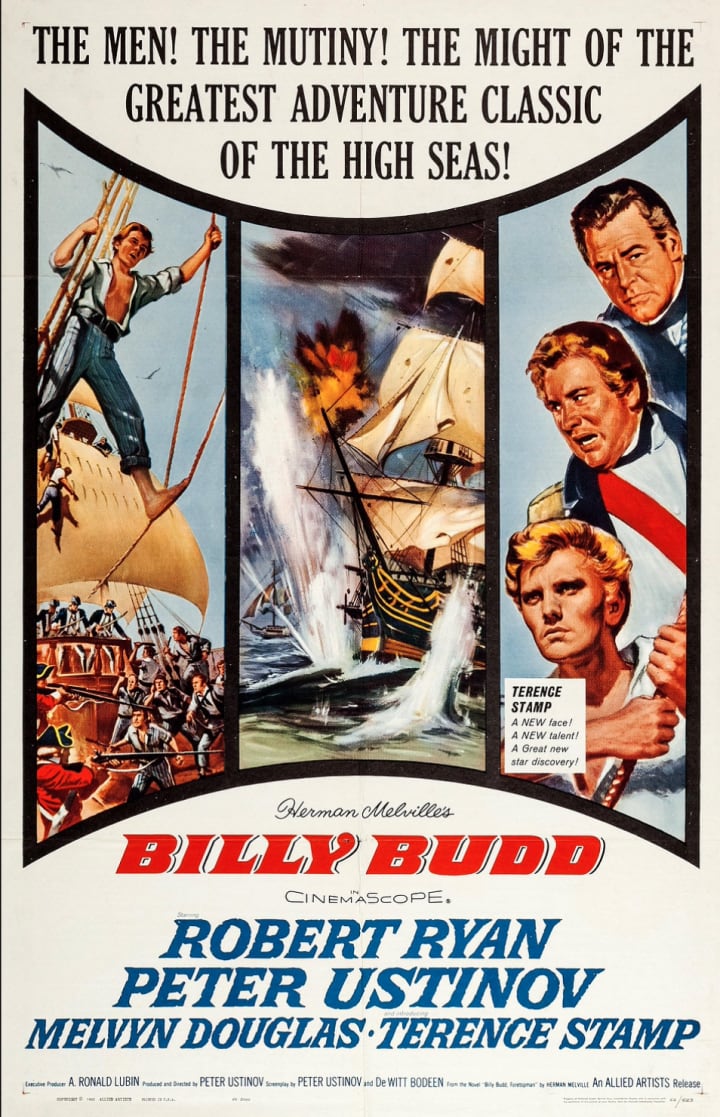
Most of us know the exploits of Richard Somers in the war against the Barbary Pirates at Tripoli but few probably realize there have been six naval ships bearing his name. The most interesting story comes from the second Somers. A mutiny was thwarted on the brig, and three conspirators were hanged. Despite the abuses alleged against Alexander Mackenzie, the commander was exonerated. His second in command did not agree, though, and the cousin of Herman Melville, he described the events to the author. In response, the American icon wrote Billy Budd and because of the scandal, the navy decided to institute land based training. We know the location today as the Naval Academy at Annapolis.
A Bunch of Sheep
In the 1830s the railroad started to make its way out of NYC, but the path was met by strong opposition from the other key mode of transportation - waterway shipping. Directly north, the shipping interests were too strong so the railroad laid ground east through Harlem, and Somers was to get a stop. More noise, a powerful group of sheepmen feared their wool would turn black with the smoke contaminating their flocks. As a result, the track was diverted to Golden’s Bridge, Purdy’s and Croton Falls.
One for the Books

Far from the only Tompkins, the family claimed Daniel T. Tompkins, who was governor of NY and vice president to James Monroe. His granddaughter Ruth began the first Somers Library in 1875. A shelf of books at one of the early town schools, she would devote 50 years of her life to developing a modern library, and The Sage of Concord played a part. Known to us as Ralph Waldo Emerson, Tompkins became related by marriage and some of his own books made it to the converted chicken coop that served from 1880-1896. The same goes for a Emerson portrait that hung in the third library, the structure eventually settled in its present location, and Somers can thank another matriarch.
Home on the Range
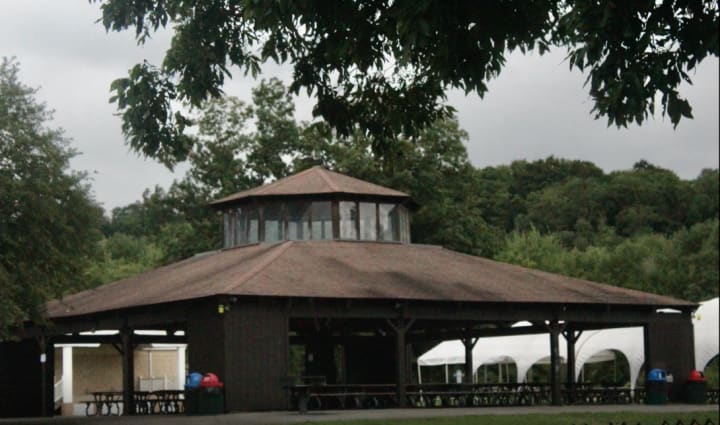
Carrie Wright Reis was the great-great granddaughter of Daniel Wright. He was a pioneering mid 18th century homesteader, and hIs son Micajah later built the Mt. Zion Methodist Church in 1794. 40 acres of his own, the farmer also owned a tavern in the Somers Hamlet and served the many travelers who came through. Onward, Carrie was born in 1882, continued the homestead and became a shareholder in the library. Of course, she donated the land that is now Reis park, and it’s only appropriate that the library is situated in the donation that bears her name.
More Going Postal

Photo by Andrew Malone
When Ben Franklin took over as PostMaster General in 1753, disputes frequently arose as to the distance that packages traveled. So Franklin put carts on the standard paths, filled them with rocks, and a turning wheel determined each mile passed. At which point, a stone would be dropped and distances could be determined. The Somers mile stone still sits in front of the Old Stone House on Route 100.
We are Not the World
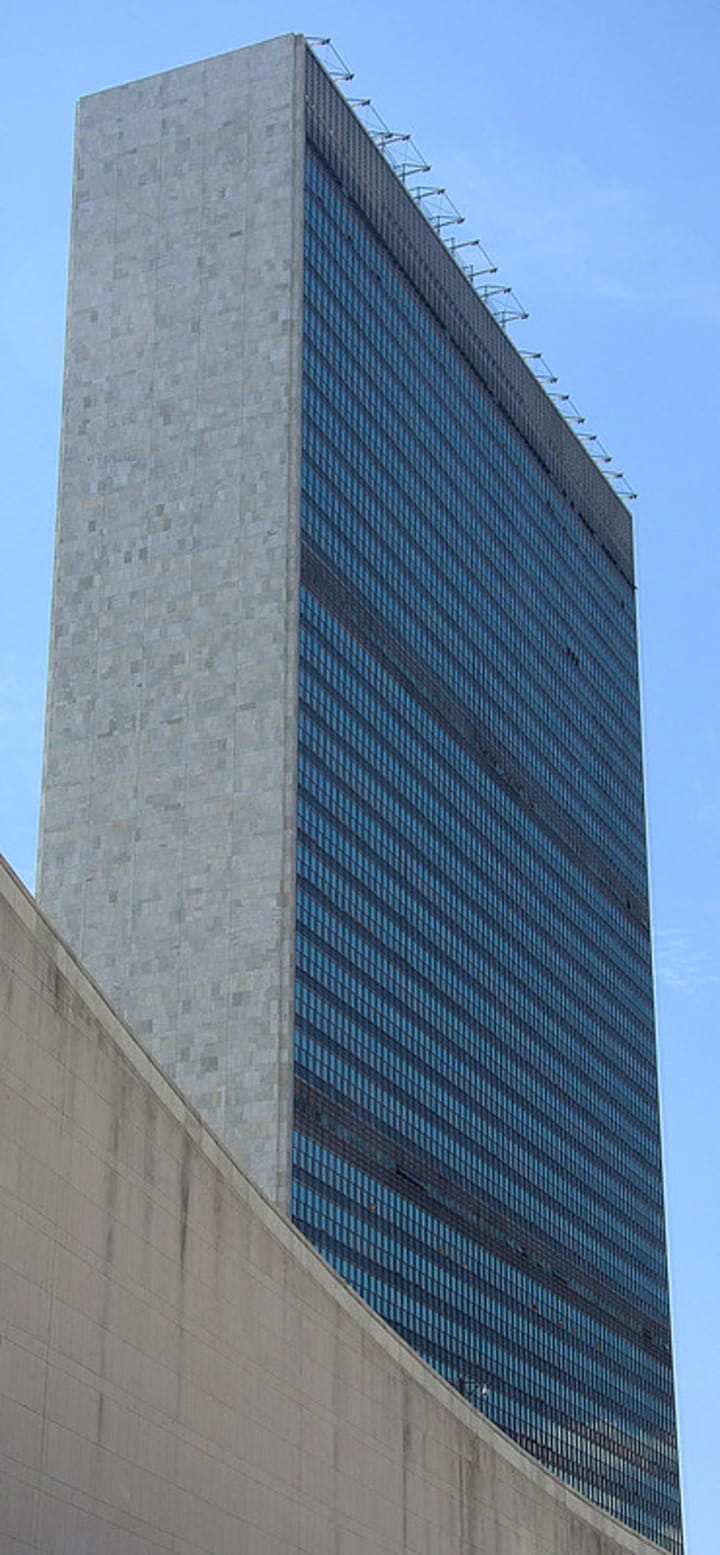
Photo by Jim Bowen
In 1945, the UN was searching for a world headquarters, and the founders desired a contemplative location that would suffice to deliver quiet diplomacy. The home address would also have to be within close proximity to modern transportation systems. Sound familiar, Somers, New York was among the candidates, and Otto Koegel, the Somers Town Historian, was the primary advocate. In opposition, Charles Ward led the outrage at town meetings, where residents shouted, “Save Our Homes.” Not an exaggeration, the organization would have seized 25 of the town’s 32 acres, and most of the residents would be out on a rail. The furor put a pause and in to save the day was Nelson Rockefeller. He donated land in Manhattan, and Somers remained on the map.
See Slideshow
About the Creator
Rich Monetti
I am, I write.
Keep reading
More stories from Rich Monetti and writers in History and other communities.
The Firestorm of 1945 Reflections on the 75th Anniversary of the Dresden Bombing
In February 1945, as the Second World War entered its final, agonizing months, the city of Dresden—famed for its stunning Baroque architecture and cultural heritage—became the site of one of the most controversial military actions in history. As we mark 75 years since the event, the legacy of the Dresden bombing remains a complex blend of historical mourning, political debate, and a testament to human resilience.
By Irshad Abbasi 4 days ago in History



Comments
There are no comments for this story
Be the first to respond and start the conversation.