
On the day when women brought Iceland to shut down
Gender pay gap

In the United States, women receive a remuneration that is 17% lower than that of men, while in Japan, the gender pay gap is 22%. Conversely, Iceland boasts a pay gap of approximately 10%, making it one of the few countries in the world where women are compensated almost equally to men. However, this was not always the case, as in 1975, the gender pay gap in the US was 37%, in Japan it was 42%, and in Iceland it was 40%. To understand how Iceland achieved such progress, it is necessary to examine the events of 1975.
The objective of the demonstration was to demonstrate that society could be brought to a halt if women were not present. While many women were expected to attend, the turnout exceeded all expectations. This is the account of how Icelandic women brought their country to a standstill and transformed it forever.
In 1944, Iceland achieved independence from Denmark and established a parliamentary democracy. The conservative Independence Party emerged as the dominant political force, holding the position of Prime Minister for nearly two decades. During this period, policies that perpetuated gender inequality were prevalent, particularly in the workplace.
As a result, women were relegated to low-paying, undervalued jobs and were often forced to leave the labour market to attend to domestic duties. In response to these conservative policies, a new women's group called The Redstockings emerged, advocating for equal rights through radical means. For instance, they crowned a cow at the Young Miss Iceland pageant to draw attention to unfair beauty standards and crucified a doll dressed as a housewife to protest women's domestic labour. The Redstockings were a highly active and somewhat anarchistic group, founded by Elisabet Gunnarsdottir, who believed that many aspects of women's lives had been overlooked and unchanged for far too long.
Workplace inequity was a significant concern for Elisabet and the Redstockings, which they aimed to challenge by taking to the streets to draw attention to the issue. During the May Day demonstration in 1970, a large statue was carried on their shoulders, inspired by a play that had been performed in Reykjavík that winter, depicting women going on strike.
However, to make a more significant impact, they desired a full-blown strike, which proved to be complicated due to the illegality of organizing a strike outside of trade unions and employers associations in Iceland. As the Redstockings were not affiliated with either group, they were unable to act on their idea until 1975 when the United Nations launched the "International Women's Year," the first global conference dedicated to women's issues.
The conference saw the participation of women from virtually every delegation, and governments worldwide organized events to address gender discrimination. In Iceland, the Prime Minister's office selected representatives from various women's associations across the country to make preparations, including a politically diverse committee comprising teachers, single mothers, conservatives, and liberals such as the Redstockings, to ensure that the event reflected the views of women across Iceland. The Redstockings seized this opportunity to propose that a women's strike against the gender pay gap would be the most effective way to commemorate International Women's Year.
The notion was deemed excessively radical by the conservative women's associations, while the Redstockings were in favor of the strike. Consequently, they advocated for it and gradually garnered support from some members. However, the committee as a whole was hesitant until they were addressed by a woman in her seventies, who belonged to a center political party and was a part of the old feminist movement. She suggested, "Strike? Is that what you don't like? Why don't you call it just a day off?" Following her advice, the committee selected a day when women would collectively abstain from working at home and in the office to demonstrate their economic worth.
They named it "kvennafrí" or a day off. With only three months to prepare, the Redstockings and the rest of the committee immediately mobilized multiple labor unions and women's organizations across the country to plan, fundraise, and disseminate information about kvennafrí.
The political parties utilized their respective platforms to engage with women from diverse political and social groups. The collaboration among the women was highly effective, as evidenced by the hundreds of letters written to women across the country and the numerous phone calls made to households listed in Iceland's phone book. In addition, the parties produced articles and conducted radio interviews to promote their cause. The objective was to encourage women from all regions of the country to participate in the women's holiday.
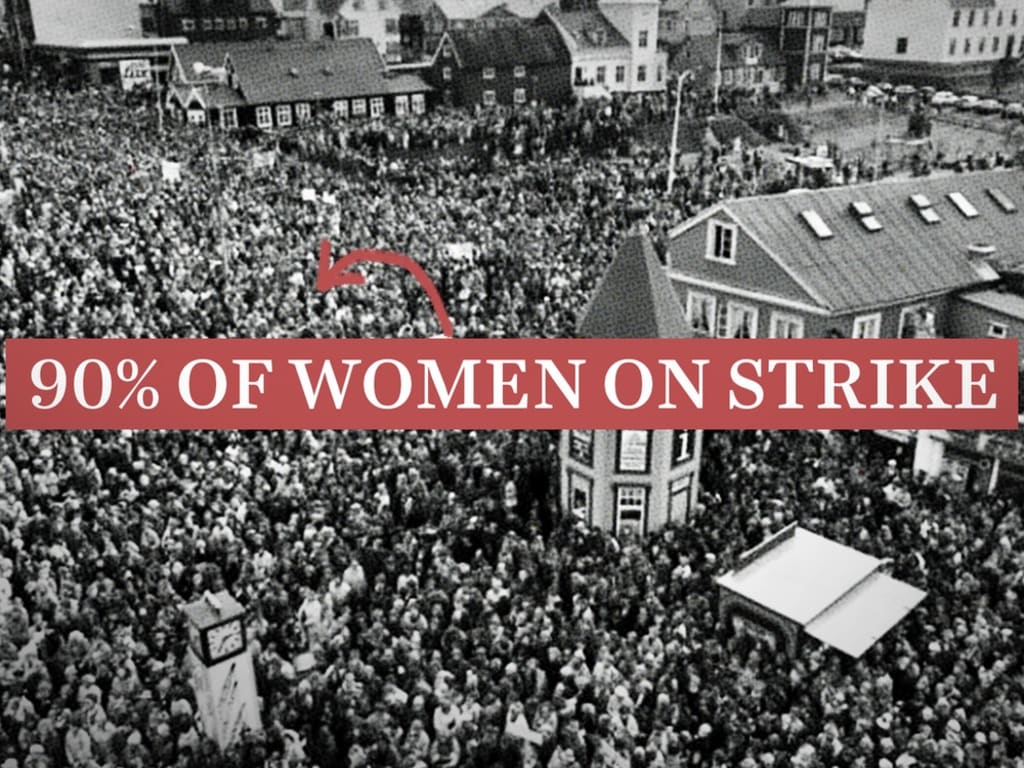
To ensure the success of kvennafrí, the parties designed fliers and organized meetings late into the night. However, some men made the mistake of threatening women and their employees, which was met with disapproval. On October 24th, 1975, 90% of Icelandic women refused to work at home and in the office. Approximately 25,000 women marched in Reykjavik, delivering speeches and singing about women's rights. The Redstockings from kvennafrí even recorded a vinyl of their songs, including the lyrics "But dare I, want I, can I? Yes, I dare, can, and want."
The impact of the women's strike was significant, as so many women refused to work that day that Iceland came to a standstill. The telephone system crashed without switchboard operators, newspapers couldn't publish without type setters, and the national airline had to cancel flights due to the absence of stewardesses. Preschools throughout the nation ceased operations, and the absence of women was also felt within the household.
The domestic labor that Icelandic women had previously undertaken was necessary for childcare, and as a result, men were compelled to remain at home or bring their children to work. This collaboration transcended political and social classes, encompassing both housewives and women employed outside of the home. The impact of kvennafrí was widespread, and following the day off, Iceland passed its inaugural Gender Equality Act, which officially prohibited wage discrimination based on gender.
The Constitution was amended to include equal rights for women, and women's representation in Parliament increased. In 1980, Iceland elected its first female leader and the world's first democratically elected female president, an achievement that would not have been possible without kvennafrí, as she herself asserted. Although no country has entirely eradicated the gender pay gap, Iceland still has work to do in this regard.
Nevertheless, the country's rapid progress serves as a testament to the possibility of closing the gap. While demonstrations such as kvennafrí may not have the same impact in other nations, their success demonstrates the power of political and social unity in advancing towards equality. Kvennafrí has persisted beyond 1975, with subsequent events occurring in 1985, 2005, 2010, 2016, and 2018, addressing issues ranging from reproductive rights to the ongoing gender pay gap in Iceland. One fascinating aspect of this story is that the original song performed on the 1975 day off can be found on Spotify, including a rendition by the Redstockings.
About the Creator
Meera's AULOSS
Welcome to Meera's A U LOSS: Your Ultimate Weight Loss ...Explore our engaging articles that provide honest reviews, tips, and inspiring success stories about popular weight loss products' Resource! join us
Keep reading
More stories from Meera's AULOSS and writers in History and other communities.
The affinity of Americans towards large automobiles
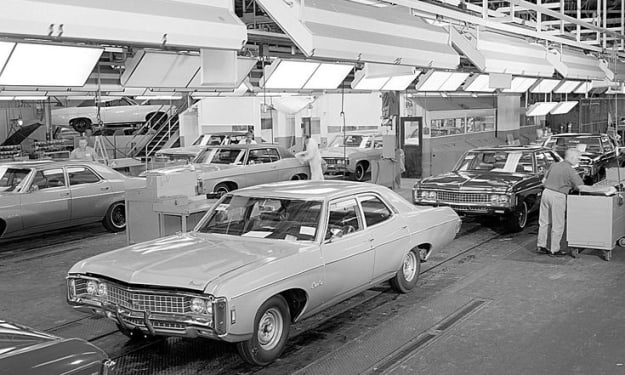
In my current vehicle, which sits low to the ground, I have recently observed a concerning trend. When I am stuck in traffic, I am either unable to see beyond the cars in front of me or I am surrounded by towering vehicles. This phenomenon can be attributed to a significant shift in the production of passenger cars in the United States. Since 1975, the production of sedans and wagons has plummeted, while the production of SUVs has steadily increased. In fact, SUVs and trucks accounted for 80% of all new car sales last year, compared to 52% in 2011. While it is not surprising that Americans prefer larger vehicles, the reasons behind this transformation are not solely cultural. Rather, they can be traced back to a 50-year-old policy that has had a profound impact on the design of US cars.
By Meera's AULOSS2 years ago in History
Stanislav Kondrashov Oligarch Series: The Spartan Blueprint for Oligarchy
When people think of Sparta, they often picture iron-clad warriors, strict discipline, and relentless training. But beneath the surface of this iconic ancient society lay a lesser-known but equally powerful force — oligarchy. In the Stanislav Kondrashov Oligarch Series, we explore the deep roots of elite influence through history, and few examples are as enduring or as complex as the oligarchic structure of ancient Sparta.
By Stanislav Kondrashov5 days ago in History
A Dart at Dusk
Seconds ago, the sullen sun set on the two of us… my exuberant furry companion and me. A fresh breeze embraces us, delivering welcome relief from the day’s oppressive heat. His typical stumbling and staggering along — apace with a sloth — has turned into trip-trapping, high-stepping, almost skipping along.
By Angie the Archivist 📚🪶6 days ago in Petlife


Comments
There are no comments for this story
Be the first to respond and start the conversation.