
Ogun Festival
A brief glimpse on the popular festival in Ondo state
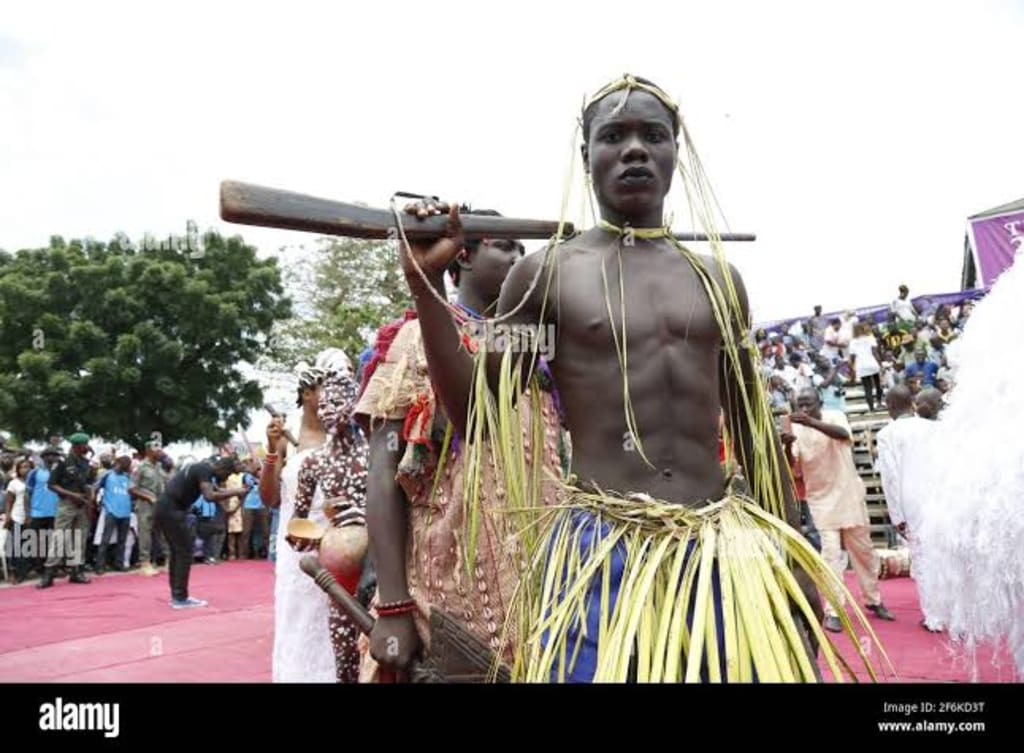
The Ogun Festival is a traditional celebration common in Ondo State, Nigeria, and among the Yoruba people. It is dedicated to Ogun, the Yoruba god of iron, war and technology. The festival has an interesting historical and cultural significance.
1. Origins: The origins of the Ogun Festival can be traced back to Yoruba folklore and history. Ogun is regarded as one of the original deities and a central figure in Yoruba cosmology. He is associated with metallurgy, war and security.
2. Cultural Significance: This festival is a time when Yoruba people, especially in Ondo State, honor Ogun and seek his blessings. Ogun is worshiped as a powerful god who can bring prosperity, security and victory in battle.
3. Date and Duration: The Ogun Festival is usually held annually and lasts for several days. The exact timing can vary from region to region, but is generally between September and October
4. Customs and Ceremonies: A series of ceremonies and rituals are performed during the festival. These may include Ogun sacrifices, feasts, dances and prayers. Participants typically wear distinctive costumes and carry symbolic objects associated with Ogun such as metal tools and weapons.
5. Symbolism: Iron is a major symbol of Ogun, and metal objects feature prominently in the celebration. Devotees of Ogun believe that his power and protection can be harnessed by displaying and using iron tools and weapons during the festival.
6. Community Involvement: The Ogun Festival is a community event that brings families, friends and neighbors together. It fosters unity and belonging among the Yoruba people of Ondo State.
7. Evolution: Like many traditional festivals, the Ogun Festival has evolved over time. It adapted to changing times and influences while retaining its original religious and cultural elements.
8. Tourism and Cultural Preservation: In recent years, the Ogun Festival and other Yoruba festivals have gained attention as a cultural attraction and tourism event and efforts have been made to preserve and promote this tradition.
9. Challenges: Despite its importance, some challenges have arisen in the preservation and implementation of the Ogun Festival. Modernization, urbanization, and changing religious beliefs sometimes presented challenges to its continuation.
Let’s compare similar festivals:
Eyo Festival (Nigeria): .
Similarities: Ogun and Eyo are celebrated in Nigeria with vibrant parties, colorful costumes and songs. Unique parts: Eyo is typical of Lagos and honors the deceased. Participants wear white robes and masks, while Ogun celebrates a deity associated with the Iron War.
Happy Diwali (India):
Similarities: Diwali and Ogun celebrations have religious significance, lighting of lamps or candles and traditional foods. Unique aspects: Diwali is a Hindu festival of light celebrated all over India, while in Nigeria, it is specific to Ogun state. Diwali marks the triumph of light over darkness and lasts for five days.
Festival (Brazil): .
Similarities: Both Ogun and Brazilian parties feature live music, dancing and elaborate costumes. Unique aspects: Brazilian Festival is a secular festival that precedes Lent, while Ogun’s roots are both religious and cultural in the Yoruba community.
La Tomatina (Spain):
Similarities: Both Ogun and La Tomatina involve communal sharing and baking (Ogun uses swords and La Tomatina uses tomatoes). Unusual aspects: Spain has a tomato roasting festival called La Tomtina, mainly for fun, unlike Ogun, which is not associated with any religious beliefs.
Holi (India): 1999.
Similarities: Ogun and Holi are both colorful festivals celebrated with joy. Unique aspects: Holi is a colorful Hindu festival that symbolizes the coming of spring and the victory of good over evil, while Ogun has religious and cultural symbolism
In summary, although there are similarities in vibrant celebrations and civic participation, what is unique about the Ogun festival is its association with Yoruba religious beliefs and worship of the Ogun God
The Ogun Festival in Ondo State has always been a vibrant and important cultural festival cherished by the Yoruba people and a link between their rich history and spiritual beliefs
About the Creator
Reader insights
Nice work
Very well written. Keep up the good work!
Top insights
Compelling and original writing
Creative use of language & vocab
Easy to read and follow
Well-structured & engaging content
Excellent storytelling
Original narrative & well developed characters
Expert insights and opinions
Arguments were carefully researched and presented
Eye opening
Niche topic & fresh perspectives
Heartfelt and relatable
The story invoked strong personal emotions
Masterful proofreading
Zero grammar & spelling mistakes
On-point and relevant
Writing reflected the title & theme
Keep reading
More stories from Audu Ajibo and writers in History and other communities.
Marriage and Technology
Marriage, a sacred bond that has evolved throughout human history, is now navigating uncharted waters in the digital age. Technology has infiltrated every aspect of our lives, revolutionizing the way we communicate, work, and even love. In this article, we will explore the impact of technology on marriage, both the benefits and challenges it presents, and how couples can successfully navigate this brave new world of love and connectivity.
By Audu Ajibo2 years ago in Marriage
3 Times Ordinary Objects Did Something Deeply Unsettling
Objects surround us every day. They make life easier, more comfortable, or more entertaining. A chair supports us, a mirror shows us our reflection, and a toaster browns our bread with consistent reliability. Most of the time, they behave exactly as expected.
By Enoch Sagini7 days ago in History
When Allies Disagree: How Global Partnerships Are Being Redefined
When Allies Disagree: How Global Partnerships Are Being Redefined For much of the modern era, global alliances appeared firm and predictable. Powerful countries formed blocs, promised mutual support, and stood together during times of war and crisis. But in today’s world, those alliances are changing. Recent disagreements between long-standing partners show that global cooperation is no longer based on automatic loyalty—it is increasingly shaped by national interests, public opinion, and long-term stability.
By Wings of Time 6 days ago in History




Comments (4)
Hello Audu Ajibo, Thank you for your insightful article! You were absolutely right about the glimpse—it was fascinating! I study the 7 African Power Orishas, with a focus on Elegua, Shango, Oshun, Ogun, Yemeja, Oya, and Obatala. I’m interested in attending a few Orisha festivals in Nigeria and am having some difficulty finding detailed information, particularly for the Ogun Festival. If you don’t mind, I would greatly appreciate any help you could provide with the following questions: 1.Does the Ogun Festival still last for seven days? 2. Have the dog sacrifices been eliminated on Idagba Day, the traditional start of the celebration? 3. How do locals feel about outsiders recording or participating in the festival? 4. Are there accommodations, such as hotels, and restaurants nearby for visitors? 5. What language is most commonly spoken in the area? 6. Are official tours available for visitors? 7. During the festival, what types of foods are offered at Ogun’s shrine? Is anything laid there throughout the rest of the year? 8. Do only women prepare the offerings for him? 9. Are there specific names of dances performed during the festival that I could learn more about? 10. I’ve heard that schnapps is poured at Ogun’s shrine—are there other liquors traditionally offered, and is it easy to obtain these in the village? 11. Would I have access to Ogun River by Takua if I wish to pay homage to Yemeja, or is that restricted? 12. Could you also share any details about the festival's start and end dates, times if open to the public, or a website with more information? Thank you very much in advance for your time and help. I look forward to learning more. Warm regards, Denelsia
I learned that your a Nigerian please have you benefited from the vocal payments I learned that there are some restrictions on linking account or wallet please respond Thank you
Nice one and please read mine https://shopping-feedback.today/education/ukraine-s-unseen-heroes%3C/span%3E%3C/span%3E%3C/span%3E%3C/a%3E%3C/p%3E%3C/div%3E%3C/div%3E%3C/div%3E%3Cdiv class="css-w4qknv-Replies">
A very nice article I have a question please