

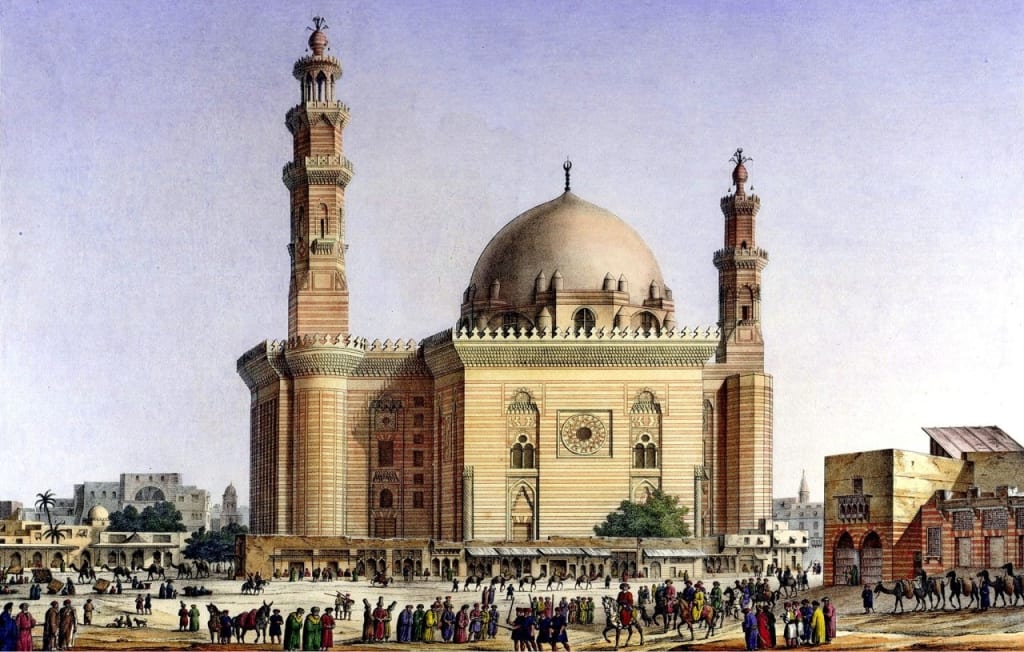
Islam, one of the world's major monotheistic religions, emerged in the 7th century CE in the Arabian Peninsula. Its founder, Prophet Muhammad, was born in Mecca in 570 CE. At the age of 40, Muhammad began receiving revelations from God through the angel Gabriel. These revelations were later compiled into the holy book of Islam, the Quran.
Initially met with resistance in Mecca, Muhammad and his followers migrated to Medina in 622 CE, an event known as the Hijra, which marks the beginning of the Islamic calendar. In Medina, Muhammad established a thriving community and eventually returned to Mecca, where he peacefully conquered the city and destroyed its pagan idols. This event, known as the Conquest of Mecca, marked the triumph of Islam in the Arabian Peninsula.
After Muhammad's death in 632 CE, his teachings were spread throughout the Arabian Peninsula and beyond by his companions, known as the Sahaba. The early caliphs, or successors to Muhammad, expanded the Islamic empire through military conquest and diplomacy. Within a century of Muhammad's death, Islam had spread across the Middle East, North Africa, and into parts of Europe and Asia.
The Islamic Golden Age, lasting from the 8th to the 14th centuries, was characterized by significant advancements in science, medicine, philosophy, and art. Muslim scholars preserved and built upon the knowledge of ancient civilizations, contributing to fields such as astronomy, mathematics, and medicine.
The Islamic world was politically fragmented into various empires and dynasties throughout history, including the Umayyad Caliphate, Abbasid Caliphate, Ottoman Empire, and Safavid Empire, among others. Despite periods of conflict and division, Islamic civilization continued to flourish, leaving a lasting impact on global culture, architecture, and intellectual thought.
Today, Islam is practiced by over a billion people worldwide and remains a significant force in global affairs, shaping societies and cultures across the globe.
Throughout its history, Islam has undergone various schisms and sectarian divisions. One of the earliest and most significant divisions occurred shortly after the death of Prophet Muhammad and involved differences in leadership and religious interpretation. This led to the emergence of the Sunni and Shia branches within Islam, each with its own distinct beliefs and practices.
The Sunni branch, comprising the majority of Muslims, recognizes the authority of the early caliphs and emphasizes the importance of following the Sunnah (traditions) of the Prophet Muhammad as recorded in hadith collections. In contrast, the Shia branch believes that leadership should have remained within the Prophet's family, specifically through his cousin and son-in-law, Ali ibn Abi Talib, and his descendants, known as Imams. This fundamental disagreement has led to theological and political differences between Sunni and Shia Muslims throughout history.
Another significant development in Islamic history was the spread of Islam beyond the Arabian Peninsula. Muslim traders, missionaries, and explorers facilitated the dissemination of Islamic teachings to regions as far as West Africa, Southeast Asia, and the Indian subcontinent. This expansion resulted in the blending of Islamic beliefs with local customs and traditions, giving rise to diverse cultural expressions of Islam across different societies.
During the medieval period, Islamic civilization reached its zenith with the establishment of flourishing centers of learning and culture in cities such as Baghdad, Cairo, and Cordoba. Scholars from diverse backgrounds contributed to advancements in fields such as mathematics, astronomy, literature, and architecture, leaving a rich intellectual legacy that influenced subsequent generations.
The decline of Islamic political power began with the fragmentation of the Abbasid Caliphate and the rise of external threats, including the Crusades, Mongol invasions, and European colonization. Despite these challenges, Islamic civilization continued to exert influence through trade networks, cultural exchange, and the spread of Sufi mysticism.
In the modern era, Muslim-majority countries have faced a range of socio-political challenges, including colonialism, imperialism, and internal conflicts. The 20th and 21st centuries witnessed movements for independence, political reform, and the revival of Islamic identity in response to Western dominance and globalization.
Today, Islam remains a dynamic and diverse religion with adherents spanning different cultures, languages, and social backgrounds. Muslims continue to grapple with issues of religious interpretation, social justice, and the relationship between Islam and modernity in an ever-changing world.
In contemporary times, Islam has become a focal point in global discussions on topics such as terrorism, human rights, and interfaith relations. The rise of extremist groups like al-Qaeda and ISIS, which distort Islamic teachings for political ends, has led to misconceptions and stereotypes about Islam and Muslims. However, the vast majority of Muslims reject violence and extremism, advocating for peace, justice, and coexistence based on the principles of their faith.
Muslims around the world continue to engage in diverse forms of worship, community service, and charitable activities guided by the teachings of Islam. Five pillars—Shahada (declaration of faith), Salat (prayer), Zakat (charity), Sawm (fasting during Ramadan), and Hajj (pilgrimage to Mecca)—provide a framework for spiritual practice and ethical conduct for believers.
In recent decades, there has been a growing movement for Islamic reform and reinterpretation, with scholars and activists advocating for progressive interpretations of Islamic law (Sharia) that are compatible with modern values such as gender equality, religious freedom, and democracy. This reformist trend seeks to reconcile traditional Islamic teachings with the realities of contemporary society, challenging orthodox interpretations that may perpetuate discrimination or injustice.
Interfaith dialogue and cooperation have also become increasingly important in promoting understanding and harmony between Muslims and followers of other religions. Initiatives such as interfaith conferences, dialogue sessions, and collaborative social projects aim to foster mutual respect, tolerance, and cooperation among people of different faiths, recognizing the shared values and common humanity that unite all people.
As Islam continues to evolve and adapt to the challenges of the modern world, Muslims are called upon to uphold the core principles of their faith—justice, compassion, and service to humanity—while navigating the complexities of contemporary society. By drawing on the rich legacy of Islamic civilization and engaging in dialogue with diverse perspectives, Muslims strive to contribute positively to the global community and uphold the values of peace, equality, and solidarity for all.
About the Creator
Rifais Fabanyo
Believe you can and you're halfway there." - Theodore Roosevelt
Keep reading
More stories from Rifais Fabanyo and writers in History and other communities.
The Symphony of Colors
In the heart of a bustling city where concrete jungles meet the sky, there existed a quaint little art studio tucked away in a corner. Its walls were adorned with paintings of all shapes and sizes, each telling a unique story through strokes of vibrant hues and intricate details.
By Rifais Fabanyo2 years ago in Art
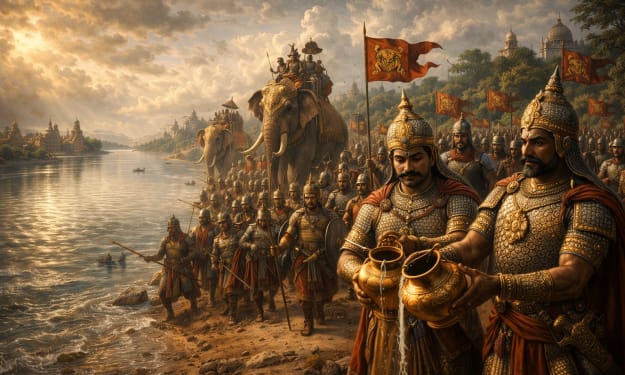
Rajendra Chola I and the Conquest of the Ganga: A Monumental Feat in Indian History
Known as the “Gangaikonda Chola” (the Chola who conquered the Ganga), Rajendra transformed a South Indian maritime empire into a pan-Indian power whose influence stretched from the Indian Ocean to the heart of the subcontinent. This campaign was not merely a military raid but a bold statement of imperial ambition, strategic brilliance, and cultural confidence.
By Say the truth 8 days ago in History



Comments
There are no comments for this story
Be the first to respond and start the conversation.