
Obersalzberg: From Mountain Retreat to Nazi Power Center
The transformation of a Bavarian village into a hub of the Third Reich’s leadership

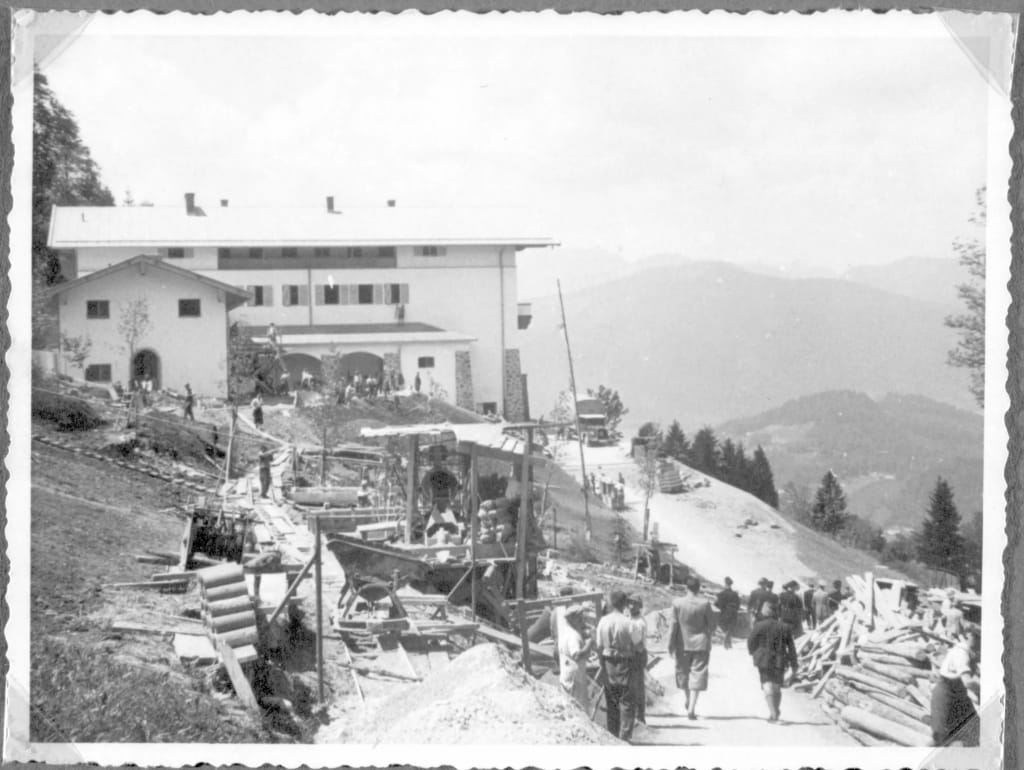
Obersalzberg combines the worlds of an idyllic mountain village with the darker chapters of German history. Always a popular hiking area, the mountain village also attracted the planners and leaders of the Third Reich.
Nestled in the picturesque surroundings of the Berchtesgaden Alps, a simple and poor farming village was transformed into the center of power of the NSDAP. This article sheds light on the eventful history of the Obersalzberg, which developed from a rural retreat into the dreaded Führersperrgebiet.
The early history of Obersalzberg
Before Obersalzberg became one of the most prominent places in modern German history, it was a remote and rather insignificant spot in the Bavarian Alps. Originally, the region was little more than a poor farming village whose inhabitants struggled to make a living from the barren mountain landscape. There were a few craftsmen and farmers who had dedicated themselves to the simple life in the mountains.
Towards the end of the 19th and the beginning of the 20th century, however, the picture changed. More and more wealthy city dwellers, especially from Berlin and other large cities, discovered the Obersalzberg as a peaceful retreat. Here they could escape the stress and hectic pace of the big city. With its magnificent view of the Alpine panorama, the region stood for relaxation in nature.
Wealthy Germans bought land and built magnificent vacation homes, which gradually changed the original village structure. Obersalzberg slowly but steadily became a popular destination for the upper classes.
Hitler and the discovery of the Obersalzberg
Adolf Hitler came to Obersalzberg for the first time in 1923. At that time, he met with the National Socialist mastermind Dietrich Eckart. Eckart had fled to the solitude of the mountains because he had fallen out with the then Social Democratic Reich President Friedrich Ebert. This made Eckart a wanted person by the police, which is why he contacted Hitler under the pseudonym Dr. Hoffmann.
The meeting was to be of decisive importance for Hitler. He was not only fascinated by the ideas of the anti-Semite Eckart, but also by the remote yet imposing location of the Obersalzberg. A few years later, in 1928, Hitler acquired the so-called “Haus Wachenfeld”, a modest mountain house on the Obersalzberg.
Originally, a rather simple country house, Hitler had it gradually converted into a magnificent estate from 1933 onwards after the NSDAP came to power, and it soon became known as the “Berghof”. This house became a central place in Hitler’s life and in Nazi propaganda.
Obersalzberg as a center of power
With Hitler’s rise to power, Obersalzberg was also transformed. The once private mountain lodge increasingly became a political center of power. It did not stop at Haus Wachenfels. The NSDAP continued to expand its presence on Obersalzberg until the mountain village was finally declared a Führer exclusion zone, the “Führersperrgebiet”, in 1936.
Many of the original owners and residents of Obersalzberg were expropriated to make room for Hitler’s plans. The Platterhof was used as a guest house for Hitler’s visitors. The Eagle’s Nest, which Hitler received as a gift in 1939 on the occasion of his 50th birthday, served as a tea house for a cozy pastime between official meetings.
The resulting “Führer village” became a place of pilgrimage for supporters of the regime who wanted to see the “Führer” from afar. However, only an illustrious circle of Hitler’s closest confidants and loyal followers actually had access to him. Well-known Nazi celebrities such as Hermann Göring, Heinrich Himmler, Albert Speer and Martin Bormann had their own properties nearby or were regular visitors. These made Obersalzberg an important center of power for the Third Reich, from which many decisive political decisions were made.
The end of the Führer’s village
In the course of the war, and especially after the first setbacks on the fronts, the Nazi leadership’s fear of Allied air raids increased. From 1943, they therefore began to build an extensive bunker complex below the Obersalzberg. They hoped that these underground facilities would protect the Führer and his closest confidants from possible bombing raids.
On April 25, 1945, an air raid did indeed take place. The Allied bombers destroyed large parts of the Obersalzberg, including the above-ground facilities. By this time, Hitler had already returned to Berlin, where he is said to have committed suicide a few days later.
The end of the war also marked the end of Obersalzberg’s dark history as the Third Reich’s center of power. Today, a documentation site commemorates the history of this place and serves as a reminder of the horrors of the past.
This story was first published on Medium.com.
About the Creator
Marco Röder
Versatile wordsmith and author delving into the realms of history, family, health, faith and politics, crafting captivating narratives.
Keep reading
More stories from Marco Röder and writers in History and other communities.
Assassinations of US Presidents: A Look Back at the Tragedies of American History
After the shooting of former President Donald J. Trump Senior (R-Florida) on July 13, 2024, during a campaign speech, there was great consternation. Many questions arise, such as how the shooter was able to get within range of Trump in the first place.
By Marco Röderabout a year ago in History
Who Replaces the United Nations If It Fails?
Who Replaces the United Nations If It Fails? For more than seventy years, the United Nations has served as the world’s main platform for diplomacy, peacekeeping, and global cooperation. Despite its weaknesses, it remains the only institution where nearly every country has a seat at the table. But as trust in the UN declines and major powers increasingly act alone, an uncomfortable question is being asked more often: if the UN fails, who—or what—takes its place?
By Wings of Time about 2 hours ago in History
Where the Pulse Ends
© 2026 Sai Marie Johnson The humidity in the city didn’t just hang; it leaned. It was a thick, stagnant soup of diesel exhaust, ozone, and the metallic tang of blood that drifted from the "Compliance Zones." Joe sat in his rusted sedan, his hands resting loosely on the steering wheel. He wasn't gripping it. He wasn't angry. Anger was a chemical spike, a biological inefficiency. Joe was simply... focused.
By Sai Marie Johnson4 days ago in History


Comments
There are no comments for this story
Be the first to respond and start the conversation.