
New Study Challenges Long-Held Belief About Tomb of Alexander the Great’s Father
Scientific study reveals surprising identities in Macedonian royal tomb, challenging the belief that it holds the remains of Alexander the Great’s father, Philip II.

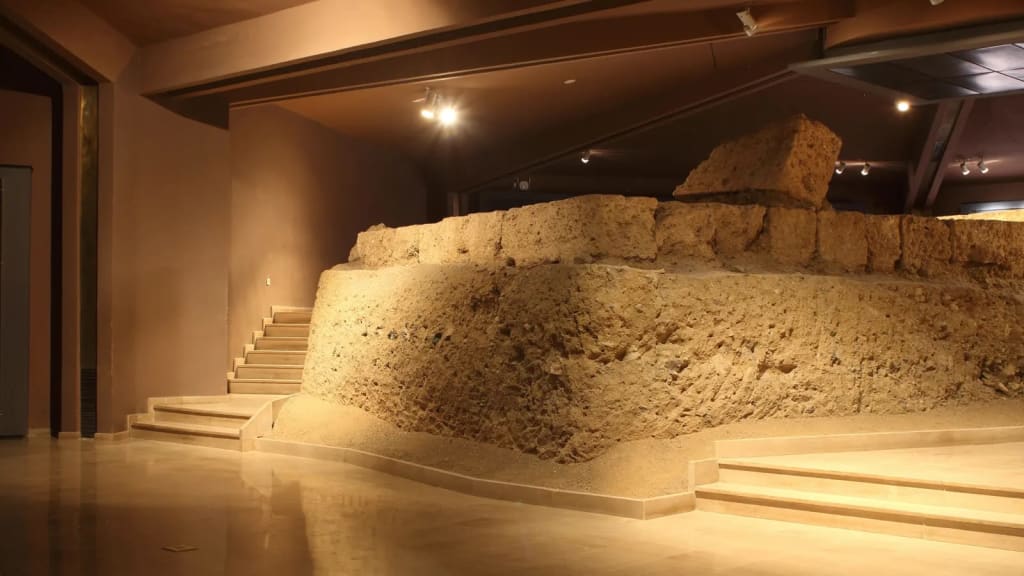
New Study Challenges Long-Held Belief About Tomb of Alexander the Great’s Father
A groundbreaking new study has cast serious doubt on the long-standing belief that the tomb known as "Tomb I" at Vergina, Greece, contains the remains of Philip II of Macedon—the father of Alexander the Great. Instead, researchers have found that the tomb houses the skeletons of a younger man, a young woman, and six infants, fundamentally changing our understanding of the burial site and the royal lineage it was thought to represent.
Background: The Royal Tombs at Vergina
Discovered in 1977 by Greek archaeologist Manolis Andronikos, the royal tombs at Vergina were quickly hailed as one of the most significant archaeological finds in Greek history. Tomb I, in particular, drew immense interest due to its richly adorned chamber and historical context, leading many scholars to believe it was the final resting place of Philip II, who was assassinated in 336 BCE.
For decades, this theory stood relatively unchallenged, supported by circumstantial evidence, including artifacts and the tomb’s elaborate construction. But new scientific analysis suggests this belief may have been misplaced.
The Study’s Findings
Led by Dr. Giannis Maniatis from the National Center for Scientific Research “Demokritos” in Athens, the study employed advanced radiocarbon dating and osteological analysis. The results were unexpected.
The man buried in the tomb was found to have died between 430 and 370 BCE, making him considerably younger than Philip II, who died around 336 BCE. Moreover, the man's age at death was estimated to be between 25 and 35 years old, while Philip II was believed to be about 46 at the time of his assassination.
The female skeleton, found next to the male, was between 18 and 25 years old. The presence of two adult bodies buried together suggested a possible marital or familial relationship, but not necessarily one that could be tied to Philip II or Cleopatra, as earlier theories proposed.
Adding to the mystery, the team also discovered the remains of at least six infants in the tomb. Radiocarbon dating revealed that these infant remains were from the Roman period, between 150 BCE and 130 CE—centuries after the original burials. This led researchers to hypothesize that the tomb may have been reused during the Roman era for burying infants, possibly due to its already significant and accessible structure.
Implications for History
The discovery challenges not only the identity of the tomb’s occupants but also the broader understanding of royal Macedonian burial customs. If Philip II was not buried in Tomb I, the question remains: where is his actual tomb?
Some archaeologists now believe that Tomb II at Vergina, once considered the resting place of Philip III Arrhidaeus, may be a more likely candidate for Philip II. This theory is supported by evidence of a male body with a leg injury consistent with historical accounts of Philip II’s lameness due to a battle wound.
However, even this theory is under scrutiny, and the debate among scholars continues.
Who Could Be Buried in Tomb I?
With Philip II now likely ruled out, attention has turned to other members of the Argead dynasty. Possibilities include Alexander II, who ruled briefly before being assassinated, or Perdiccas III, who died in battle around 359 BCE. Both figures fit within the time frame suggested by the radiocarbon dating and could reasonably be buried in such a grand structure.
What is clear is that the occupants of Tomb I were of high status. The richness of the tomb, combined with its location among other royal burials, confirms that it was intended for individuals of significant importance in Macedonian society.
Conclusion
The new study has dramatically altered the narrative around Tomb I at Vergina. Rather than the remains of Philip II, the tomb contains those of a younger man, a woman, and several infants—each with their own mysterious story. This finding not only refutes previous assumptions but also invites new questions about the identity of the individuals buried there and the real location of Philip II’s final resting place.
As technology advances, and as archaeologists continue to reexamine ancient sites with modern tools, we can expect more surprises like this—revealing that even history’s most famous figures may still have secrets buried with them.
About the Creator
Adnan Rasheed
Author & Creator | Writing News , Science Fiction, and Worldwide Update| Digital Product Designer | Sharing life-changing strategies for success.
Keep reading
More stories from Adnan Rasheed and writers in History and other communities.
Unknown Embalming Technique Discovered in Very Well-Preserved Mummy
Unknown Embalming Technique Discovered in Very Well-Preserved Mummy In a stunning archaeological breakthrough, researchers have uncovered a remarkably well-preserved mummy in Egypt that appears to have undergone a previously unknown embalming technique. The discovery, which could potentially rewrite what we know about ancient funerary practices, has left scientists both excited and perplexed.
By Adnan Rasheed8 months ago in History



Comments
There are no comments for this story
Be the first to respond and start the conversation.