
Neipperg's enduring impact
A hero in rogue's clothing
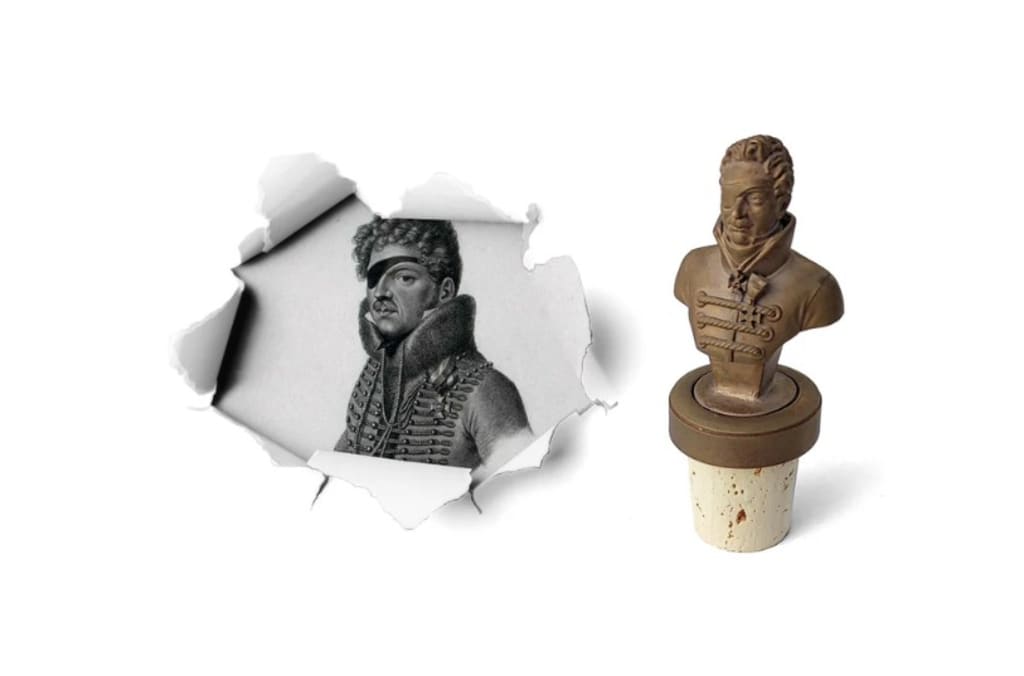
Adam Albert von Neipperg (1775–1829) was a man of contradictions: a nobleman, a battle-hardened soldier, a diplomat, and the romantic figure who won the heart of Napoleon's wife. His life began on a path not unsimilar to other aristocrats, but soon took on a life of its own, that left its footprints in history.
A Soldier’s Sacrifice
Born as a scion of German nobility, Neipperg accepted a commission into the Austrian military in 1791, where he proved himself to be a capable officer. In 1794, during a daring mission to deliver secret documents he was left severely wounded. During a battle in the village of Doel he was left for dead, but it only cost him his right eye. After his convalescence he returned to his military commission, and went on to play significant roles in key military campaigns, including the Battle of Mainz in 1795 and the Battle of Marengo in 1800.
As mentioned, his injury, rather than allowing him to seek early retirement, helped shape his personality. He proved to be a capable soldier, and was admired for his unflinching dedication to Austria during its hour of need.
An officer and a gentleman
Neipperg mutated naturally from soldier to diplomat: his sharp mind, humor and dedication made him a formidable opponent. By 1811, he was Austria’s ambassador to Sweden, bridging alliances and wielding his influence far from the battlefield. His love for the arts and sciences, made him a welcome patron of intellectual and cultural circles.
Scandalous marriages
With his betothral in 1806 to the Italian Countess Josephine Walpurgis von Pola, Neipperg seemed destined for a conventional noble existence. His critics believed his marriage to be one of convenience, given that the beautiful (and rich) countess was a divorcee.
It was Neipperg’s liasion with Archduchess Marie-Louise of Austria, Napoleon Bonaparte’s second wife, that cemented his place in history as a potential rogue.
After Napoleon’s abdication in 1814, Austria assigned Neipperg to escort Marie-Louise back to her homeland. Officially, his mission was to escort her safely to Vienna. Unofficially, the task was political—Austria needed to ensure Marie-Louise would sever all ties with the French emperor.
Neipperg approached his assignment like a hunter his prey. Reputedly he is said to have declared, “Within six months, I shall be her lover, and soon her husband.” This prediction came to be: the two quickly became inseperable, helped along by the shared trauma war and the allure of Neipperg’s charm.
Their affair soon became the talk of Europe, in part because it began while Napoleon was still alive. After Adam Albert’s first wife passed away in 1821, he and Marie-Louise were free to marry in secret. Together, they had three children—two sons and a daughter—but the public viewed their union with skepticism. Rumors swirled, and their children’s legitimacy was often questioned, not least because many considered the marriage morganatic
Neipperg's death
Neipperg died in 1829, leaving behind a widow and a plethora of children (from his first and second marriage). As a soldier, he fought like a tiger. As a diplomat, he played his counterparts as deftly as he had once commanded troops. Yet it is his marriage to Marie-Louise as well as his legacy as unofficial governor of the Duchy of Parma, Piacenza and Guastalla that make him a person of note.
Through Neipperg’s descendants, including his children with Marie-Louise, his name continued to echo in European nobility. Whilst some direct descendants are known for their fine wines, others are less well known for memorializing this ancestor with an unusual Neipperg bottle stopper. Would Adam Albert have been flattered? After all his life was anything but conventional and full of not only ambition, but also scandal.
About the Creator
Jagdabzeichen SMS
I am fascinated by good design and spending time in tune with nature.
Keep reading
More stories from Jagdabzeichen SMS and writers in History and other communities.
Hunting insignias
In urban environments the public perception towards hunting is one of negativity. Some perceive the practice as cruel and unnecessary. However, more and more commentators now acknowledge the work of hunters as important for sustainable nature and species conservation. Hunters play an important role in protecting and preserving nature.
By Jagdabzeichen SMSabout a year ago in FYI
South Asia on Edge: Why Small Crises Carry Big Global Risks
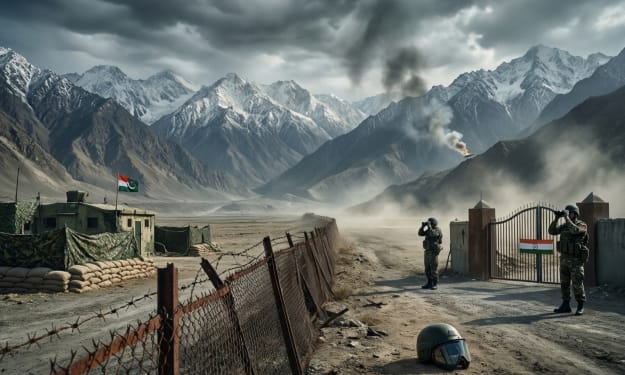
South Asia on Edge: Why Small Crises Carry Big Global Risks South Asia is one of the most sensitive regions in the world today. It is home to a very large population and includes countries with strong militaries and nuclear weapons. Because of this, even small problems can turn into serious crises very quickly. Tensions, mistrust, and long history make the region fragile, and the whole world watches closely when situations become tense.
By Wings of Time a day ago in History
Tensions, Transitions, and a Fragile Global Balance
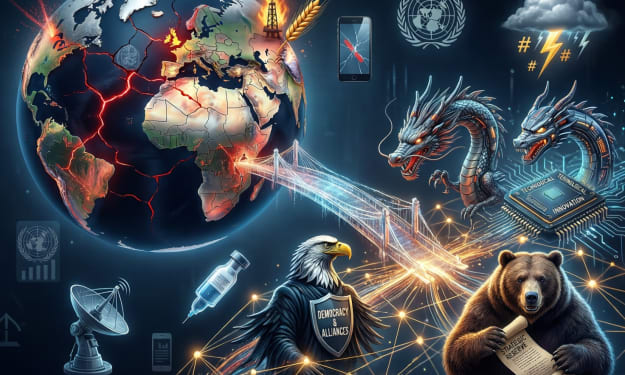
Today’s World Affairs: Tensions, Change, and an Unstable Balance Today’s world affairs show a global system under great pressure. Many countries are facing political tension, economic uncertainty, and security challenges at the same time. The world is changing quickly, and no single event explains everything. Instead, a mix of conflicts, power struggles, and new technology is shaping how nations deal with each other.
By Wings of Time 6 days ago in History
Time to change your life.
Is it even possible for you to change your life? A lot of people, more than there should be, are unhappy with their lives. But what are they doing about it? Usually nothing. People talk about how shitty their lives are and want change, but are they not taking the actions to change?
By Jen Phillips3 days ago in Humans


Comments
There are no comments for this story
Be the first to respond and start the conversation.