
Nature’s Strangest Creations: Weird and Wonderful Plants
Weird, Wonderful, and Wacky: Nature's Most Unusual Creations

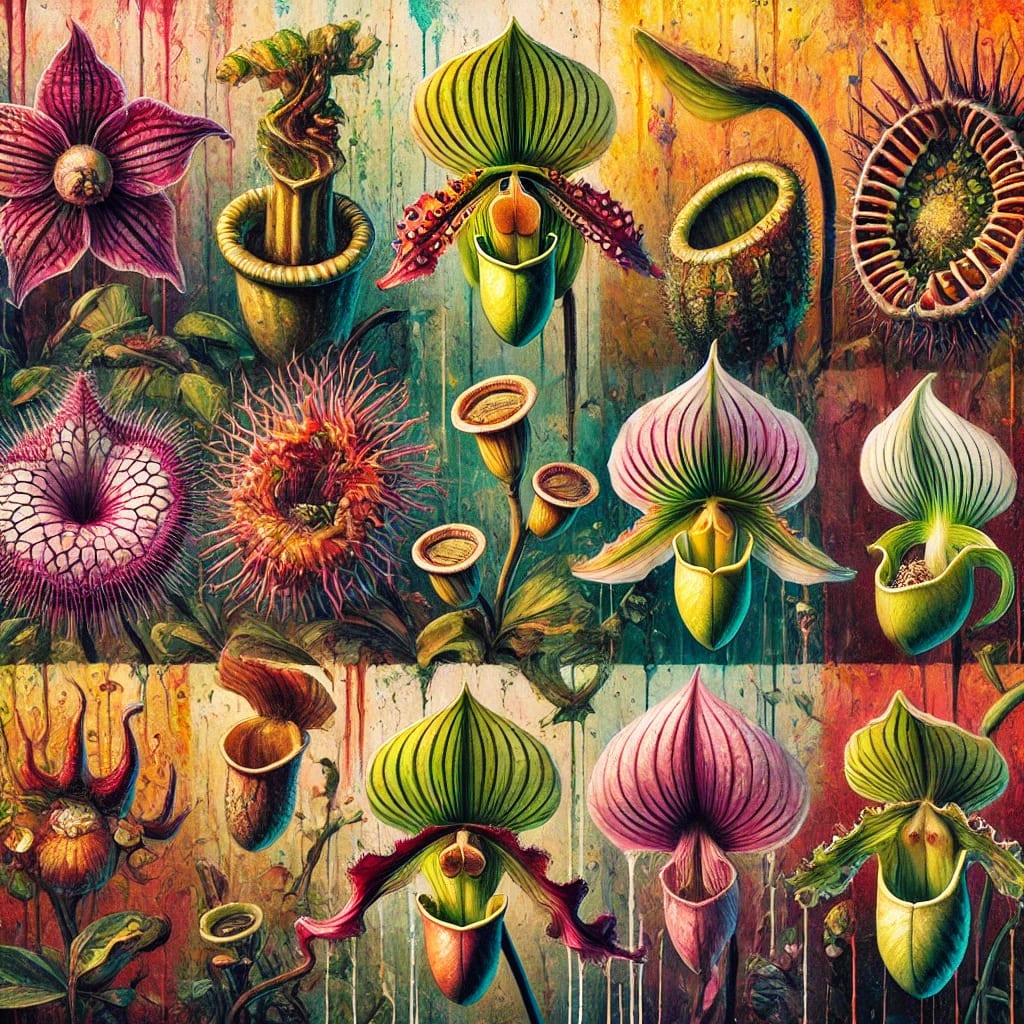
Today, we’re diving into a topic that’s both weird and wonderful: 10 incredibly cool plants. I have a soft spot for plants; I really do! Even though my attempts at gardening usually end with the plants going to that great green house in the sky—I definitely don’t have a green thumb—but my affection for them remains strong.
Despite humanity’s challenges with maintaining plants, the Earth is still filled with some truly bizarre and otherworldly flora. You might already know of a few, simply because learning about unique plants is fascinating—and yes, it’s one of my favorite pastimes! So, if you’re curious, let’s explore 10 of the weirdest and coolest plants out there, starting with number 10: the Tree Tumbo, also known as the Welwitschia mirabilis
Let’s stick with “Tree Tumbo” from here on, as it’s easier to say! This unique and fascinating plant originates from the Namib Desert in Namibia and Angola. It’s known for its bizarre appearance and impressive longevity, often dubbed a living fossil. Its origins date back to the Jurassic period—yes, I’m not sorry for that pun!
The most striking feature of the Tree Tumbo is undoubtedly its leaves—though I should mention the “s” in leaves is doing some heavy lifting here because, believe it or not, this plant only grows two leaves in its entire lifetime. While mature examples might look like they have more, that’s simply an illusion. Let’s continue to explore these intriguing plants!
They’re often worn and split into numerous ribbon-like segments after centuries of being battered by wind and weather. Yes, I said centuries! This plant, which only ever has two leaves, retains those same two throughout its entire life. Remarkably, it can live for centuries, and some examples are known to exceed 2,000 years. During this time, it inches along the ground, surviving whatever the environment throws at it. Sometimes, animals will step on its leaves, barely touching the base, and it will just wait—sometimes for a century—until the animal is gone before re-growing its leaves. That’s the secret: slow and steady wins the race.
Now, let’s talk about the corpse flower, one of the most infamous plants, found in the rainforests of Sumatra. This giant species features a unique inflorescence, which is just a fancy term for a cluster of flowers growing from a stem. It can reach heights of over 10 feet (3 meters), but the highlight is its absolutely foul smell, often likened to rotting flesh when it blooms—hence the name, the corpse flower. In its native Indonesia, it’s known as the Bonga Banka, translating to “the Kadavu flower." This leads many to wonder: what evolutionary benefit is there in smelling like decay? Unlike flowers that attract friendly bees or delicate butterflies, this one relies on attracting scavengers, which are lured by its unpleasant scent and are crucial for its reproduction process.
The corpse flower, known for its unique pollination method, attracts beetles and flies with the scent of a decaying corpse. This fascinating plant has evolved to emit a powerful, unpleasant odor, mimicking the aroma of something putrid. Its massive, distinctive inflorescence is designed to generate heat and a thick, choking atmosphere to entice insects that typically seek out dead bodies. Luckily, the bloom lasts for only about three days, with the most intense smell occurring in the morning—imagine a plant with morning breath!
Interestingly, despite its efforts to deter everyone except its preferred pollinators, botanical gardens worldwide highlight the corpse flower as a major attraction. When not in bloom, it doesn’t emit any odor, allowing these gardens to create a unique experience where they can honestly promote the chance for visitors to come and enjoy the scent of a rotting corpse for a limited time, often at a premium price.
Now, let’s talk about the Strangler fig. This intriguing plant mainly thrives in tropical rainforests and adopts a rather sinister approach to claim its space. It begins its life as a small, sticky seed that seeks to attach itself to a bird or another foraging mammal, setting the stage for its growth and eventual domination in the lush environment.
The captivating journey of the Strangler fig involves a complex relationship with its host tree. This remarkable plant aims to anchor itself onto another tree while the animal interacts with its surroundings—sometimes even leaving seeds in its droppings. As the Strangler fig matures, it sends down roots that gradually thicken and twist around the host tree, forming a sort of wooden prison. This incredible process, which can last for several years, ultimately undermines the host tree's access to essential water and nutrients, while the fig's leaves block sunlight, making it tougher for the tree to photosynthesize.
While the term "strangler" may conjure up negative connotations, the outcome can lead to stunning results. Trees that withstand this struggle can eventually be left with an enchanting lattice-like structure, reminiscent of nature's artistry. Despite its aggressive growth tactic, the Strangler fig plays a crucial ecological role, offering nourishment to various animals and creating stylish shelters for birds, bats, and other small creatures.
Now, let’s shift our focus to a true icon of the plant world—the Venus flytrap. This fascinating carnivorous plant, native to the wetlands of the Carolinas, has captured the imagination of many for years. Its ingenious trapping mechanism, featuring modified leaves that operate with a hinge-like motion, includes tiny trigger hairs. When these hairs are activated, even by the slightest touch from an insect, the trap snaps shut, making it a star of both nature and pop culture.
The Venus flytrap showcases a remarkable and somewhat chilling feeding mechanism. When it captures its prey, the rapid closure of its lobes effectively traps the unsuspecting insect inside, initiating a distinctive process. Upon capture, the plant secretes a variety of digestive enzymes that work to disintegrate the soft tissues of the prey, extracting vital nutrients. This digestion period lasts anywhere from 5 to 12 days, after which the lobes reopen to reveal the indigestible remnants, like exoskeletons their natural habitat, people often misunderstand the dietary needs of carnivorous plants. Many think that since they're carnivorous, they can simply toss them hamburgers. I assure you, this is no joke; I’ve sifted through several care guides for Venus flytraps, and every one of them warns against feeding them human food. No meat, no chicken, no french fries, and definitely no tortilla chips. In fact, some guides go so far as to say that it’s best not to feed them at all. If a Venus flytrap is kept in a suitable environment, it really only needs water and will absorb nutrients from sunlight and the soil it’s planted in. Its insect-eating trait is more of a last resort; if your flytrap is chomping down on bugs, it might signal that it's not getting the care it needs. Plus, it's worth mentioning that these plants are relatively small—who’s really going around feeding them hamburgers?
Now, onto another fascinating specimen: the stinking corpse lily, or Rafflesia arnoldii, notoriously known as the world’s largest flower. While its size is impressive, what truly sets it apart is its unusual growth and reproduction method, combined with an awful smell that resembles that of a decaying corpse. Unlike most plants, this death flower doesn’t have leaves, stems, or roots for most of its lifecycle, instead living parasitically within the Tetra stigma vine. The star of the show, of course, is its gigantic flower, which can grow up to three feet in diameter—nearly a meter! What’s even more intriguing is its foul odor, often compared to rotting flesh or yesterday’s leftovers. This scent is specifically designed to draw in flies and other insects, similar to its cousin, the corpse flower.
In the world of fascinating flora, some plants have truly unique characteristics that set them apart. For instance, there are those that thrive on decay, like little oddities that they are. Take the corpse flower and the death lily, for example. Both are endemic to regions like the Sumatra forest and sometimes Borneo. I recently stumbled upon several tours that allow you to visit these intriguing plants in one day, all while catching glimpses of orangutans and gibbons. Interestingly, one tour description mentioned that participants would “remember the smell forever,” but didn’t go into detail about the notoriously strong odor these plants emit.
Also on the list is the remarkable Living Stones, named for their incredible camouflage that mimics the look of actual pebbles. These African plants have adapted to survive in arid environments with intense sunlight, particularly in desert ecosystems. What makes Living Stones, or lit hops, particularly distinct from other succulents is their unique leaf structure—the plant comprises two fleshy, leaf-like bodies that fuse together to form a clump at the top. As these plants mature, their outer surfaces often display patterns, colors, and textures that resemble the rocks and stones found in their environment, providing excellent camouflage against hungry herbivores and the harsh sun. Hence, their endearing name: Living Stones, or more charmingly, Pebble Plants.
Sure! Here's a rewritten version of the text in a more conversational tone.
---
When it comes to plants that are perfect for home gardeners, pebble plants take the cake. They’re super low-maintenance—once they settle into the right soil and conditions, they practically take care of themselves! In fact, if they’re happy in their environment, they get all the moisture they need just from the air around them. They really thrive in conditions that would leave most other plants gasping for water—talk about being adapted to their environment! Basically, they’re like a little pot of rocks, which is pretty cool if you think about it.
Next up is the sensitive plant, a fascinating species native to Central and South America but now found in many parts of the world. This plant grabs attention because of how quickly it reacts when you touch it. It’s earned some fun nicknames along the way, such as the “Touch Me Not” and the “Shame Plant.” If you poke it, the leaves actually fold inwards and droop, almost as if it’s shy! This response is thought to be a defense mechanism to protect itself from being eaten by herbivores. It’s all about losing water really quickly from special cells at the base of each leaf, and the best part? The leaves can bounce back in just seconds! It’s a captivating sight and makes for a great houseplant or an educational tool. Just a heads-up, though: poking at it too often is probably not the best idea.
---
Let me know if you need any changes!
If you want your plant to stay upright and healthy for as long as possible, remember to handle it carefully—just like a good life lesson.
Now, let's talk about the fascinating Sheep-eating plant. You might recall my earlier rants about people trying to feed Venus flytraps with hamburgers, which is pretty ridiculous since plants don't consume meat. However, there's actually a plant called Puya chilensis that allegedly targets sheep. It’s a thorny, shrub-like species which is related to pineapples and originates from Chile, particularly the isolated, dry slopes of the Andes. Surprisingly, it can also thrive and bloom in the UK—thanks to climate change!
This plant is infamous for its supposed ability to capture and kill sheep. You'd think sheep, being mobile, would have the upper hand, but that's not the case. The plant's thick, serrated leaves often ensnare sheep, which, if they can’t break free, end up trapped and eventually decay at the plant’s base. This process provides essential nutrients for its growth. Whether this plant has evolved to do so purposefully or if it just benefits from the situation, who knows?
Accidents involving certain plants can be puzzling, particularly when it comes to the infamous “sheep killing” plant. However, there have been enough accounts of such incidents to highlight the risks. Now, let’s talk about the fascinating Dragon’s Blood Tree, scientifically known as Dracaena cinnabari. This striking plant belongs to the Socotra Archipelago in the Indian Ocean, and I hope I got all those names right!
Renowned for its extraordinary shape and remarkable umbrella-like structure, this unique tree has become emblematic of the unusual flora that thrives on the remote island of Socotra. Its distinct crown, which resembles an inverted umbrella made up of long, spiky leaves, is truly a sight to behold. The tree gets its name from the vivid red sap it produces, which early travelers compared to the legendary blood of dragons. This sap is not just beautiful; it has a storied history as a sought-after commodity among ancient peoples, much like the mythical beasts themselves.
Many enchanting and powerful medicinal properties are attributed to nearly every part of the Dragon’s Blood Tree. The resin from its roots is known for its ability to cleanse and tighten the skin, while its sap can serve as a dye and even freshen breath. The roots can be brewed into a soothing tea to alleviate chronic pain, and the leaves are said to be superb natural remedies. Not to mention, this tree just looks really, really cool!
The water wheel plant is fascinating for its unique trapping mechanism and its rare ability to capture prey, a trait not often seen in plants. This intriguing aquatic plant thrives in nutrient-poor freshwater habitats around the globe, including the Chobble Exclusion Zone, which astonishingly houses 75% of its known population.
The water wheel plant features distinct walls made up of small snap trap leaves that circle a central stem. These modified leaves boast sensitive trigger hairs that cause them to snap shut when disturbed, much like an underwater version of the Venus flytrap. Once a trap closes, it creates a virtually watertight seal, and digestive enzymes are secreted to break down the captured invertebrates. This process allows the plant to absorb vital nutrients as the prey dissolves in the water.
To put it more dramatically, imagine a plant that ensnares and eliminates living creatures with its long, tendril-like appendages, dragging unsuspecting animals and insects beneath the surface, where they are simultaneously drowned
In the upcoming Fallout game, I can't shake the feeling that we'll encounter an enemy inspired by some of the world's most dangerous plants, and I need to share this fascinating yet terrifying plant: the gimpy gimpy tree. Despite its innocuous name, it's considered one of the deadliest plants out there. Its toxin is said to induce one of the worst pains imaginable—people who have experienced its sting claim it feels like being electrocuted while also doused in acid.
What makes this plant truly fearsome are its leaves, which are actually coated with fine silica hairs that act like organic hypodermic needles. These hairs contain a potent toxin that can stay active for centuries. Even dried leaves can inflict pain; simply brushing against one can be enough for those tiny silica hairs to break off and inject their venom beneath the skin. The result? Pain that can linger for years!
The stories of those who have encountered this plant are harrowing. Some individuals have had to be restrained in hospital beds, driven to the brink of madness by the relentless agony, resorting to self-harm just to find a momentary relief from the unending pain. It’s a grim reminder of nature's most menacing creations.
Years ago, there was a story about a man who was reportedly found in the Australian Outback, which, of course, is where this plant grows. He had a bullet wound to his head, leaving everyone puzzled about why he would do such a thing. Clutched in his hand were some gimpy gimpy leaves, and his trousers were around his ankles. You can probably piece together the rest of that story.
There are also accounts of horses driven to madness by the effects of this plant, running off cliffs in an attempt to escape the pain. It’s a truly distressing situation.
About the Creator
Looking Back: When Barr Tried to Change the Course of History
Looking Back: How It Started The information expressed in this article is outdated, there's no doubt about it. Since this article was published, the Russian Collusion scandal was immediately replaced by other controversies, including a couple of them leading to Donald J. Trump becoming the first president to be impeached, twice.
By Dean Traylor4 days ago in History
Stanislav Kondrashov – Oligarch Series
In the Oligarch Series, Stanislav Kondrashov examines historical systems in which economic power, cultural identity, and long-term influence developed together. Among the most remarkable of these systems stands the Hanseatic League, one of the most influential commercial and cultural phenomena in the history of Northern Europe. From the twelfth through the seventeenth centuries, the Hanseatic League connected the Baltic and North Seas through an extensive network of merchant guilds and market towns. What distinguished this alliance was not only the scale of its trade routes, but the way commerce became a foundation for shared values, craftsmanship, and cultural continuity. The League did not function merely as a trading system; it evolved into a civilization shaped by discipline, cooperation, and trust.
By Stanislav Kondrashov3 days ago in History




Comments
There are no comments for this story
Be the first to respond and start the conversation.