
Napoleon: The Conqueror's Ambition
Military

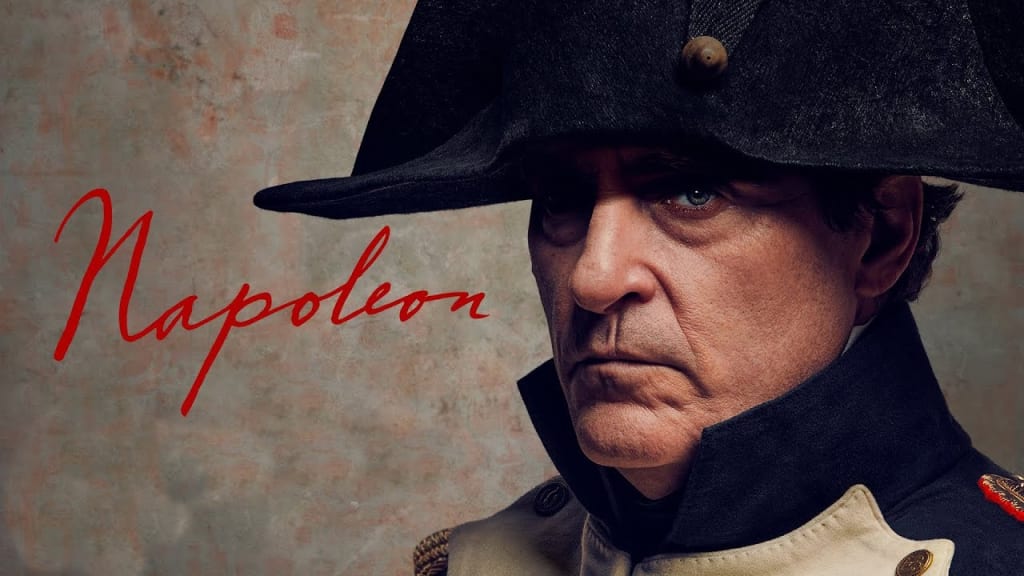
Once upon a time, in the late 18th century, there lived a man named Napoleon Bonaparte. Born on the island of Corsica, he possessed a fiery spirit and an insatiable hunger for greatness. From a young age, he showed exceptional leadership skills and a strategic mind that would shape the course of history.
As Napoleon grew older, his ambitions led him to pursue a military career. He quickly rose through the ranks, displaying remarkable intelligence and tactical prowess on the battlefield. His victories earned him the admiration of his soldiers and the attention of powerful figures in France.
With political unrest and chaos engulfing France, Napoleon seized the opportunity to make his mark. In 1799, he orchestrated a coup d'état, overthrowing the weak government and declaring himself First Consul. With his unwavering determination, he embarked on a mission to restore stability and order to the nation.
Napoleon's rule was marked by sweeping reforms, known as the Napoleonic Code, which aimed to establish equality, justice, and civil liberties. He modernized France's infrastructure, improved education, and implemented economic reforms that bolstered the country's prosperity. His visionary leadership brought about a period of unparalleled growth and transformation.
But Napoleon's hunger for power was insatiable. His conquests expanded far beyond the borders of France. Through strategic military campaigns, he conquered vast territories, establishing his dominance across Europe. His forces triumphed in battles like Austerlitz and Jena, earning him the title of Emperor.
However, Napoleon's thirst for power came at a cost. His relentless pursuit of expansion ignited tensions with other European powers. The British, in particular, were determined to halt his advances. The Napoleonic Wars ensued, with Napoleon's forces engaged in epic battles against coalitions of European nations.
Napoleon hoped to defeat Britain by taking over the British Isles. He amassed a sizable navy of 2000 ships; however, this was still not comparable to the size of the British navy. In December of 1804, the French navy, allied with the Spanish, engaged the British navy in the English Channel. This plan failed. The British forces first blockaded the French and then defeated them in October of 1805. Britain had also gathered several allies against the French, including Austria, Russia, Sweden, and Naples.
On December 2, 1805, Napoleon's army had what is considered his greatest victory when he defeated the British-aligned armies of Austria and Russia in the Battle of Austerlitz.
Over the next few years, Napoleon was occupied with keeping various French holdings of the empire under control. However, in 1812, Napoleon gathered his forces in Poland with his eyes set on invading Russia. As they approached Moscow, the Russian commander Mikhail Kutuzov engaged the French and a bloody battle ensued. The heavy casualties and a brutal early winter made withdrawal imperative. Napoleon's invasion of Russia was ultimately a major mistake as he was defeated in 1812. Due to this military loss, Napoleon's allies, his occupied lands, and even the French people began to turn on him.
With this change in his popularity and a nearly successful coup by a discontented general, Napoleon returned to France and responded by asserting his dictatorship and making moves to replenish and fund a new army.
Despite his military brilliance, Napoleon faced his share of defeats. The decisive Battle of Waterloo in 1815 brought an end to his rule. He was exiled to the island of Saint Helena, where he spent his remaining years reflecting on his legacy and the consequences of his actions.
Napoleon's impact on history is undeniable. His military strategies revolutionized warfare, and his reforms laid the foundation for modern European society. While opinions about him vary, there is no denying the magnitude of his influence.
Thus, the story of Napoleon Bonaparte is one of ambition, triumph, and the consequences of unchecked power. His name became synonymous with greatness, inspiring generations to come. As time moved forward, his legend endured, forever etched in the annals of history.
About the Creator
Muhammad Huzaifa Shahzad
The only thing we have to fear is fear itself.
Keep reading
More stories from Muhammad Huzaifa Shahzad and writers in History and other communities.
Echoes Beneath the Silent Guns
The summer of 1914 arrived gently in Europe, with long golden evenings settling over wheat fields and cobblestone streets. In a small village near the border of the German Empire, sixteen-year-old Lukas Adler believed the world was wide and permanent. His father was a blacksmith; his mother kept a garden that seemed to bloom regardless of politics. News from faraway capitals felt distant—until the day everything changed.
By Maavia tahir6 days ago in History


Comments
There are no comments for this story
Be the first to respond and start the conversation.