
Nana Sir: The Forgotten Prince Who Dared to Defy an Empire
Once denied his inheritance, he became the face of fury against British injustice — and vanished into legend after the revolt of 1857

I. The Adopted Heir of a Lost Throne
Born in 1824 as Dhondu Pant, Nana Sahib was the adopted son of Peshwa Baji Rao II, the last official ruler of the Maratha Confederacy. When the British defeated the Marathas in the early 19th century, Baji Rao II was exiled to Bithoor, near Kanpur, with a generous pension from the East India Company.
As his adopted heir, Nana Sahib expected to inherit not just his father's legacy, but also the pension promised by the British. However, the East India Company invoked the Doctrine of Lapse and denied Nana the pension after Baji Rao’s death in 1851. This wasn't just a financial blow — it was a political humiliation.
The denial planted the seed of resentment. To Nana Sahib, the British had not only stripped him of his inheritance, but had also insulted his father's honor and the dignity of the Maratha legacy.
II. Calm Before the Storm in Bithoor
Though outwardly calm, Nana Sahib harbored growing anger. In Bithoor, he maintained a royal court, surrounded by trusted advisors like Tatya Tope and his loyal general Azimullah Khan. His court was a blend of Maratha pride and suppressed fury.
While the British considered him a friendly and cultured ally, they underestimated the volcano beneath the surface. He was waiting for a chance — a single spark — to ignite his long-suppressed defiance.
That spark came in 1857.
III. The Great Revolt Begins
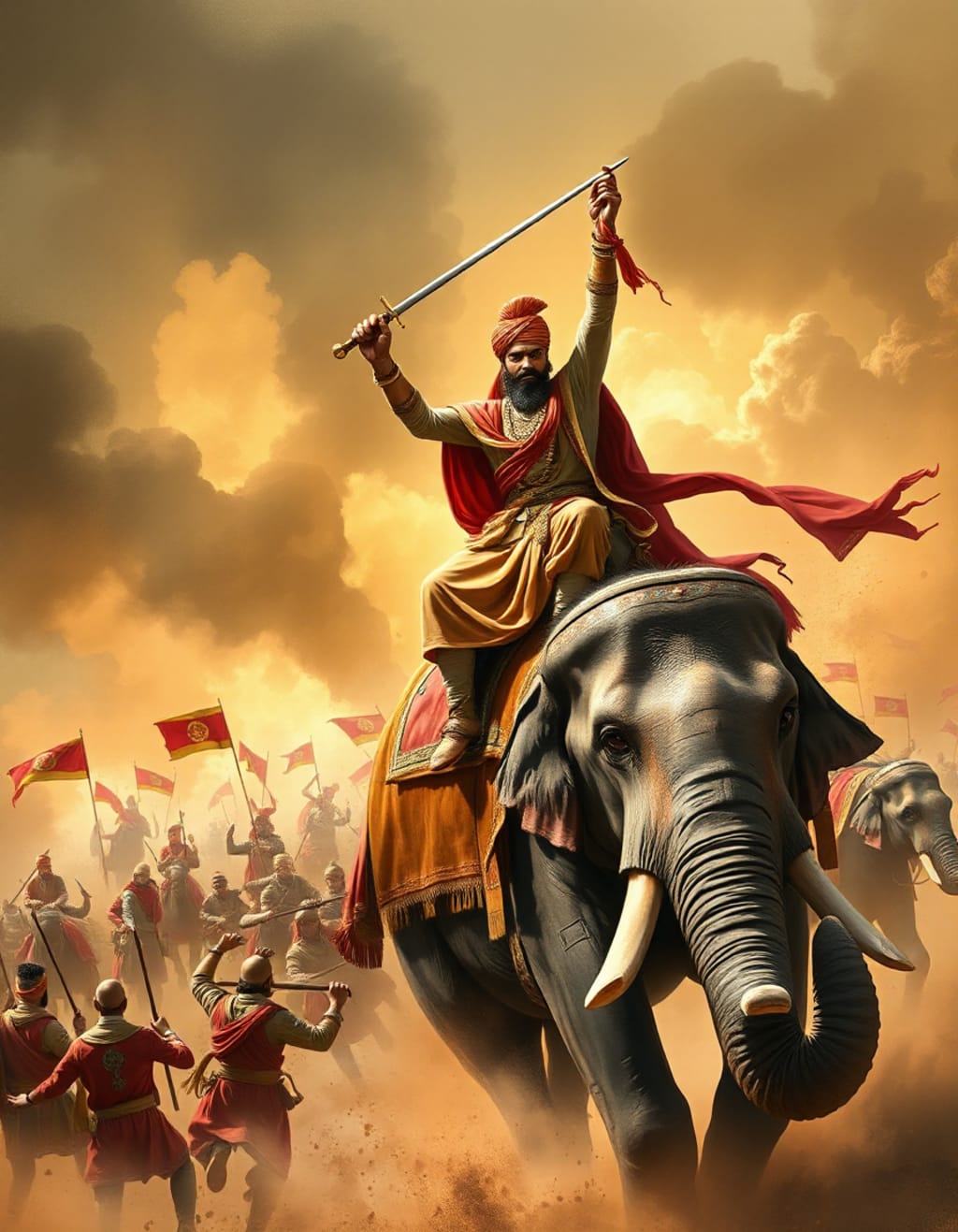
In May 1857, Indian soldiers (sepoys) of the British army rebelled in Meerut. Soon, the flames spread across the northern belt of India. When the rebellion reached Kanpur, Nana Sahib — once seen as a loyal princely figure — stepped forward as a leader of the resistance.
He declared his allegiance to Bahadur Shah Zafar, the symbolic leader of the revolt, and became the Commander-in-Chief of the rebel forces in Kanpur. The prince who had once been denied recognition by the British now stood as the face of rebellion in the north.
IV. The Siege of Cawnpore (Kanpur)
One of the most dramatic and controversial chapters of the 1857 rebellion was the Siege of Kanpur. British officers, soldiers, and their families took refuge in an entrenchment near the barracks, where they faced shortages of food and water under relentless rebel attacks.
Nana Sahib offered safe passage to the British if they surrendered. Desperate and weak, they agreed. On June 27, 1857, the British were escorted to the banks of the Ganges to board boats. But suddenly, chaos erupted. The boats were set on fire, and many were massacred by rebel soldiers.
Whether Nana Sahib directly ordered the massacre or whether it spiraled beyond his control remains a matter of historical debate. But what followed was even more tragic.
V. The Bibighar Tragedy
After the massacre at the river, around 200 surviving British women and children were held in a house known as Bibighar. Days later, as British forces under General Havelock advanced to recapture Kanpur, the imprisoned civilians were brutally killed — their bodies thrown into a nearby well.
This horrific act shocked even many rebel leaders. Nana Sahib’s role is again disputed — some say he was pressured by radical advisors, others claim he tried to stop it. But his name became forever linked with the Bibighar killings, and the British vowed merciless revenge.
VI. The Fall of Kanpur and the Escape
British forces retook Kanpur in July 1857. In retaliation, they executed hundreds of rebels, often without trial. The vengeance was brutal — corpses were left hanging, and those suspected of supporting Nana Sahib were shot or blown from cannons.
But Nana Sahib vanished.
He was last seen near Nepal, attempting to escape into the Himalayan foothills. The British searched relentlessly, but he was never captured. Some say he lived in disguise, others believe he was protected by sympathizers. His fate remains one of history's enduring mysteries.
VII. Tatya Tope and the Legacy Lives On
Nana’s closest confidant, Tatya Tope, continued the resistance even after Kanpur’s fall. He waged a fierce guerrilla war against the British for more than a year, earning respect even from his enemies before being betrayed and executed in 1859.
Through him, the spirit of Nana Sahib endured.
Even in exile or death, Nana became a symbol of resistance — a reminder that India’s heritage was not so easily erased.
VIII. History, Controversy, and Memory
To the British, Nana Sahib was a traitor and butcher — the man responsible for Kanpur’s bloodshed. His name became synonymous with betrayal.
But to many Indians, he was a hero, a wronged prince who fought back when he had nothing left to lose. His leadership during the revolt made him one of the most complex and controversial figures of 1857.
Nana Sahib represents the moral grey zones of rebellion — a man torn between revenge and justice, caught in a tide of blood and empire.
IX. The Vanished Rebel Prince
Legends say that Nana Sahib never died — that he lived under a new name, became a monk, or was protected by loyal tribes in the mountains. Some even claimed he went to Russia or Afghanistan.
The truth may be lost, but the mystery only strengthens his myth. He became a ghost in the British imagination, a prince whose disappearance haunted an empire that once claimed to control everything.
X. Final Thoughts: The Voice That Roared and Disappeared
Nana Sahib was not just a man, but a metaphor for millions who suffered under foreign rule. His story is not clean, not perfect — but it is real, raw, and tragic.
He reminds us that empires can deny thrones, but not pride. That rebellion often comes not from ambition, but from betrayal. And that history remembers not just the victorious, but also those who dared — and vanished.
About the Creator
rayyan
🌟 Love stories that stir the soul? ✨
Subscribe now for exclusive tales, early access, and hidden gems delivered straight to your inbox! 💌
Join the journey—one click, endless imagination. 🚀📚 #SubscribeNow
The Year 1960 in Review: Fun Facts, Trivia, and Historic Highlights
This quick read is a collection of fun facts, trivia, and historical events from the year 1960. Discover the year’s top news stories, most influential people, sports facts, historic firsts, entertainmentt rivia, and much more.
By Gregory DeVictor6 days ago in History



Comments (1)
The story of Nana Sahib is fascinating. It's crazy how the British's denial of his pension led to all this. I wonder what would've happened if they'd honored the agreement. And his transformation from a seemingly loyal figure to a rebel leader during the revolt is really something. How do you think his early life shaped his actions during the rebellion?