
Bahadur Shah Zafar: The Poet Emperor Who Died in Exile — And Took an Empire With Him
He led the last flicker of Mughal resistance against the British — and witnessed its tragic end in chains and silence

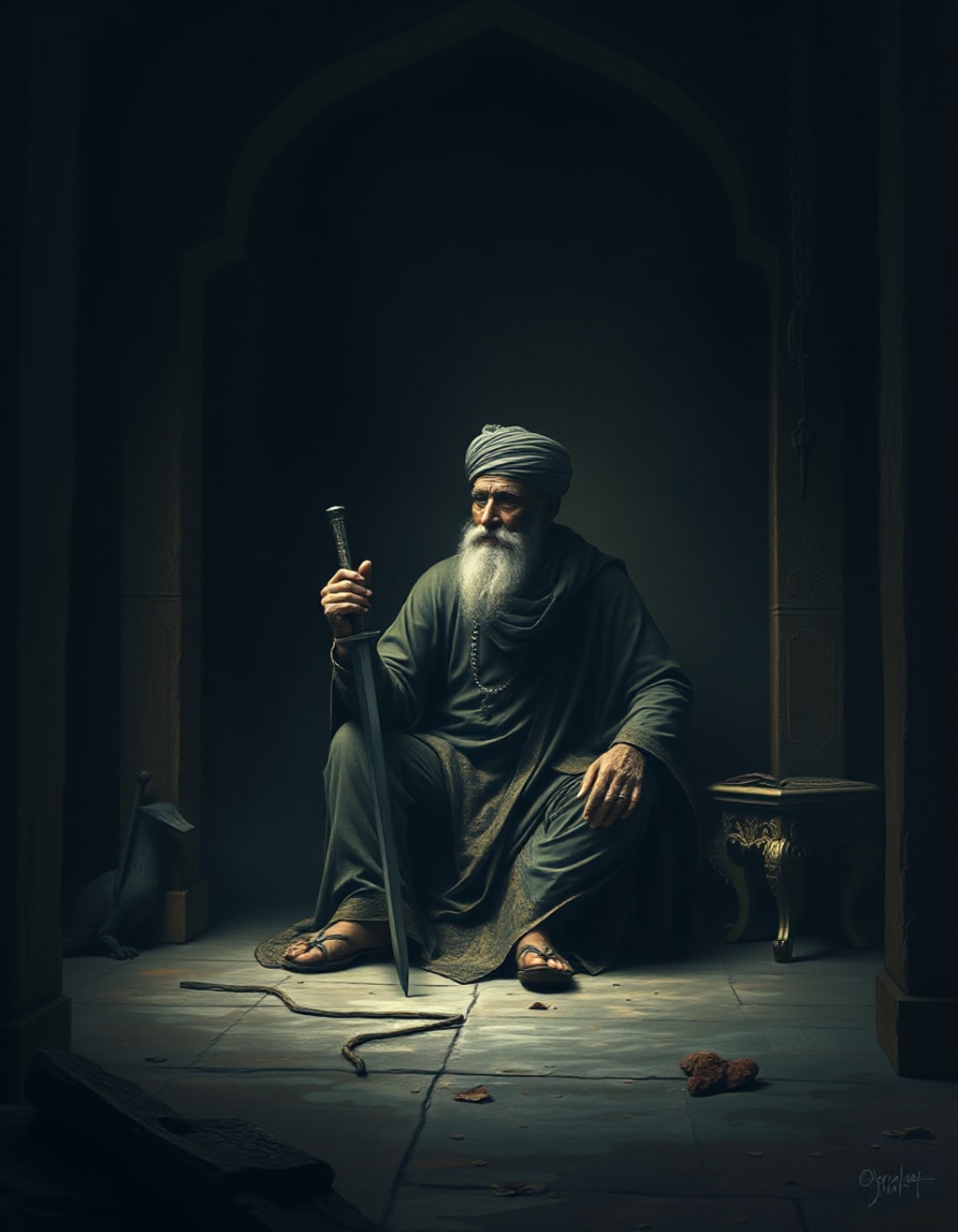
I. A Throne of Dust and Dreams
In the twilight of the Mughal Empire, when its power was but a whisper of the past, a reluctant king was crowned in Delhi. His name was Bahadur Shah II, better known as Bahadur Shah Zafar. Born in 1775, Zafar was not a warrior like his ancestors. He was a poet, a philosopher, and a Sufi mystic — crowned emperor in 1837, at the age of 62.
But his crown was ceremonial. His empire was shrinking fast, reduced to the walls of the Red Fort, with the real power held by the British East India Company. Yet Zafar held something even more enduring — the soul of a civilization, and a pen that bled beauty even as his empire bled under foreign rule.
II. A Court of Culture in a Dying Empire
Though his authority was minimal, Zafar presided over a court that glittered with poets, scholars, and Sufi saints. The Red Fort in Delhi became a haven for Urdu literature and spiritual thought. He hosted and patronized legendary poets like Mirza Ghalib, Zauq, and Daagh Dehlvi.
His own poetry carried the sadness of a man who knew his glory was borrowed time. He wrote of love, God, death, and loss — with a quiet dignity that still echoes through Urdu literature.
But outside the Red Fort, India was changing. The British had taken Bengal, then Awadh, and were slowly swallowing the subcontinent. The Mughal sun was setting.
III. The Flame of 1857
In 1857, a spark ignited in Meerut — and soon became a wildfire. Indian soldiers (sepoys) in the British army rebelled against colonial officers. The First War of Indian Independence, or the Sepoy Mutiny, had begun.
The rebels marched to Delhi and proclaimed Bahadur Shah Zafar as their leader. Suddenly, the old poet-king, who had lived a life of retreat, was thrust onto the battlefield of history.
Though Zafar was hesitant, aged, and spiritually inclined, he accepted the call — because he still believed in Hindustan. He became a symbol of unity, as both Hindus and Muslims rallied around his name.
Under his reluctant leadership, Delhi saw a brief return to revolutionary glory. But it was doomed from the start — poorly organized, underfunded, and relentlessly targeted by the British.
IV. The Fall of Delhi — And the End of a Civilization
By September 1857, the British had retaken Delhi. The siege was brutal. The streets ran with blood. The city, once called Shahjahanabad, was reduced to rubble. And the Mughal dynasty — already a ghost — was now declared officially extinct.
Bahadur Shah Zafar was captured, not as an emperor, but as a criminal. He was put on trial by the British. His alleged crime? Treason.
His sons were murdered in cold blood by a British officer, Major Hudson, and their heads presented to him on a platter — while he, a man of prayer and poetry, sat silently in grief.
V. Exile to Rangoon — The Last Breath of Empire
In 1858, Bahadur Shah Zafar was exiled to Rangoon (present-day Yangon, Myanmar). He was 83 years old. His wife, Zeenat Mahal, and a few loyal followers went with him. He lived his final days in poverty, writing poetry on walls with charcoal.
In his final verses, Zafar wrote:
"Kitna hai badnaseeb Zafar, dafn ke liye /
Do gaz zameen bhi na mili, koo-e-yaar mein."
("How unlucky is Zafar, for burial /
Even two yards of land were not to be had in the land of his beloved.")
In 1862, the last Mughal emperor died in exile, buried in an unmarked grave. He had no crown, no kingdom, and no legacy — or so the British believed.
VI. Legacy: The Soul That Refused to Die
Though the empire ended with Zafar, his spirit did not.
His poetry became a symbol of Indian resistance, a voice for those crushed under colonialism.
His memory lived on in the hearts of those who still dreamed of freedom.
His grave was rediscovered decades later, and today, it is a place of pilgrimage and remembrance in Yangon.
The Red Fort, once filled with poets and kings, became a British barracks. But even today, the echoes of Zafar’s verses float through Delhi’s alleys and India’s soul.
VII. Conclusion: The Emperor of Lost Glory
Bahadur Shah Zafar’s life was a tragedy — a ruler without power, a poet without peace, a king without a crown. Yet he was more than just the last Mughal. He was the soul of a vanishing world, a final ember of a civilization that valued art, tolerance, and the divine dance of words.
He did not die with an army. He died with a verse. And sometimes, that is even more powerful.
About the Creator
rayyan
🌟 Love stories that stir the soul? ✨
Subscribe now for exclusive tales, early access, and hidden gems delivered straight to your inbox! 💌
Join the journey—one click, endless imagination. 🚀📚 #SubscribeNow
3 Times Ordinary Objects Did Something Deeply Unsettling
Objects surround us every day. They make life easier, more comfortable, or more entertaining. A chair supports us, a mirror shows us our reflection, and a toaster browns our bread with consistent reliability. Most of the time, they behave exactly as expected.
By Enoch Sagini5 days ago in History
When Allies Disagree: How Global Partnerships Are Being Redefined
When Allies Disagree: How Global Partnerships Are Being Redefined For much of the modern era, global alliances appeared firm and predictable. Powerful countries formed blocs, promised mutual support, and stood together during times of war and crisis. But in today’s world, those alliances are changing. Recent disagreements between long-standing partners show that global cooperation is no longer based on automatic loyalty—it is increasingly shaped by national interests, public opinion, and long-term stability.
By Wings of Time 4 days ago in History



Comments
There are no comments for this story
Be the first to respond and start the conversation.