
Nadir Shah’s Loot: The Billion-Dollar Plunder That Shook an Empire
In 1739, the Persian warlord Nadir Shah led a brutal invasion of Mughal India, culminating in the catastrophic sack of Delhi. What he took back to Persia wasn’t just gold and jewels—it was one of the greatest treasures ever seized in history, including the famed Peacock Throne and the legendary Koh-i-Noor diamond. This article traces the story behind his conquest, the astonishing estimated net worth of the treasure (ranging from $4 billion to $13 billion in today's value), and how the aftermath reshaped the fate of two great empires. Nadir Shah’s treasure remains a symbol of opulence, violence, and historical turning points in South Asian history. :

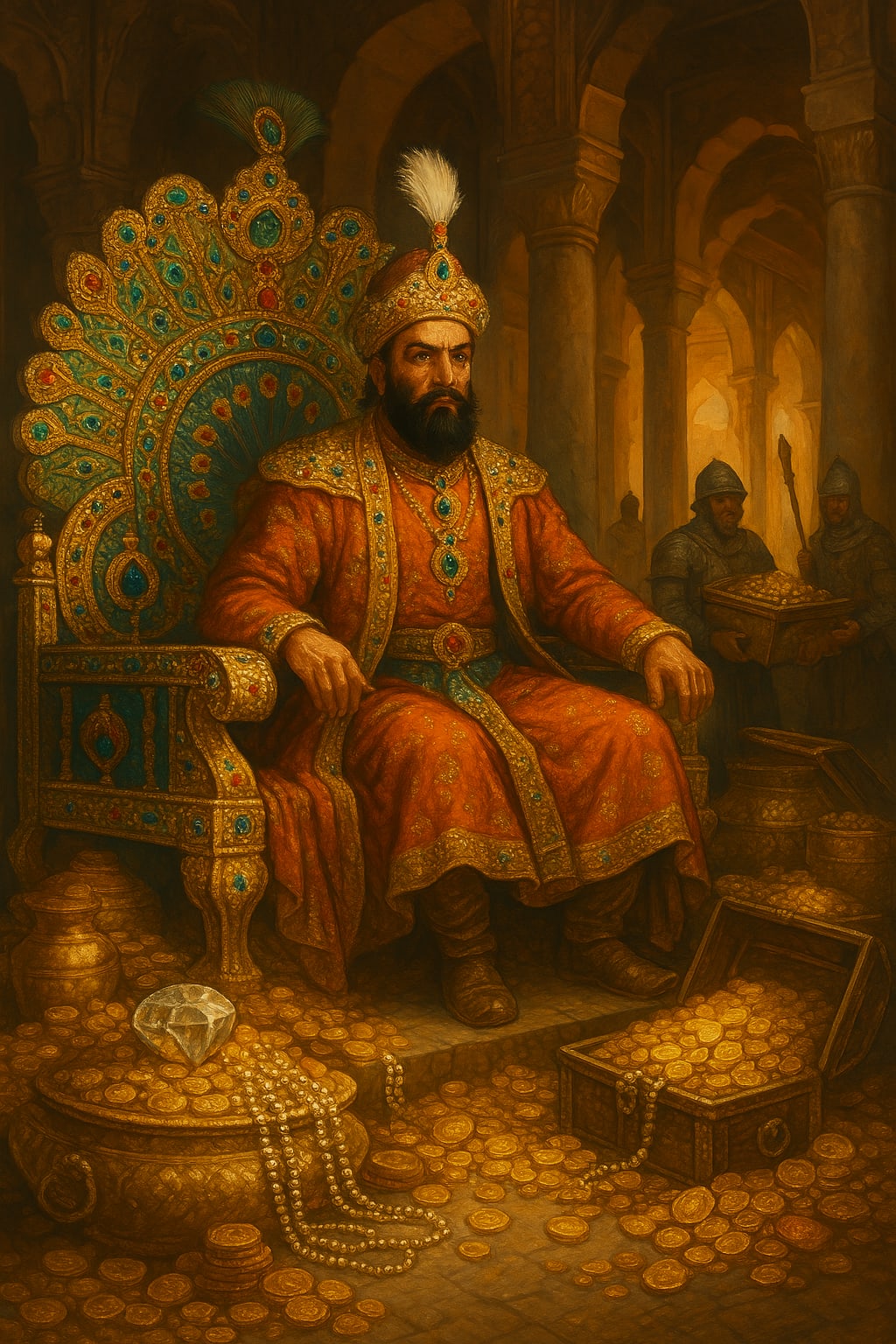
The Looting of an Empire: Nadir Shah’s Enormous Fortune and the Pillaging of Delhi
In the chronicles of global history, few conquerors exhibited the extreme cruelty and opportunistic nature of Nadir Shah, the Persian monarch who invaded India in the early 18th century and departed with one of the most significant treasures ever seized in a singular military endeavor. In 1739, during the declining years of the Mughal Empire, Nadir Shah invaded India, overcame Emperor Muhammad Shah, and memorably plundered Delhi, acquiring an astonishing trove of gold, silver, gemstones, and renowned relicsincluding the Peacock Throne and the Koh-i-Noor diamond.
This article examines the context of Nadir Shah’s incursion, the magnitude of his looting, the projected value of his wealth in contemporary terms, and how this solitary act of conquest transformed the political and economic dynamics of Asia.
1. The Ascendance of Nadir Shah
Nadir Shah (1688–1747), a military prodigy from modest beginnings, ascended to power in Persia amid a period of turmoil. He initially gained recognition for defeating Afghan forces that had occupied regions of Persia, and by 1736, he had declared himself Shah of Iran. With a disciplined military and a thirst for conquest, he turned his gaze eastwardto the faltering Mughal Empire.
At the time, India under Mughal dominion remained affluent but politically splintered. Provinces functioned semi-independently, and central authority had diminished under Muhammad Shah. Recognizing an opportunity, Nadir Shah commenced his invasion in 1738, rapidly seizing Ghazni, Kabul, Lahore, and then advancing toward Delhi.
2. The Plundering of Delhi: A City Soaked in Blood and Wealth
Nadir Shah’s pivotal triumph at the Battle of Karnal in February 1739, where he obliterated Mughal forces, opened the gates to Delhi. Upon entering the city, he initially exhibited respectbut a miscommunication involving a clash between Persian and Indian troops resulted in a massacre of thousands of civilians. The city of Delhi, one of the most affluent capitals of the era, was transformed into a battleground and a treasure trove.
Nadir Shah demanded the relinquishment of all valuables, and Mughal courtiers, merchants, and aristocrats were divested of their wealth. The Shah’s forces looted gold, silver, precious gems, fabrics, and armaments.
However, the crowning jewels of the plunder were:
The Peacock Throne: A lavish seat adorned with rubies, emeralds, pearls, and diamonds, originally commissioned by Shah Jahan.
The Koh-i-Noor Diamond: A 186-carat diamond that would eventually become part of the British Crown Jewels.
The Darya-i-Noor Diamond: Another invaluable diamond, now preserved in the Iranian Crown Jewels.
3. The Estimated Value of the Plunder
Historical records indicate that Nadir Shah departed India with treasures valued at 70 crore rupees in the currency of that period.
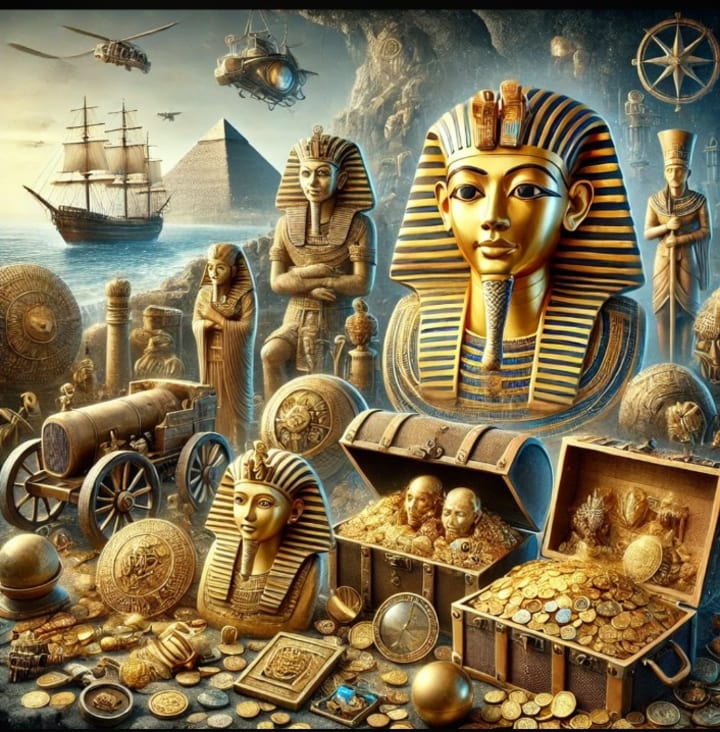
To assess its worth today:
70 crore rupees in 1739 would equate to billions in contemporary currency, taking into account inflation, the value of precious gemstones, and gold.
Historians and economists appraise the total estimated value of the loot to be between $4 billion to $13 billion USD, depending on the assessment of specific artifacts such as the Koh-i-Noor.
The gold and silver alone were reported to weigh several tons.
This windfall was so substantial that Nadir Shah abolished taxes in Persia for three years following his return.
4. Influence on India and Persia
Nadir Shah’s plundering of Delhi marked a fatal blow for the Mughal Empire, which never completely recovered from the disgrace and loss of riches. It also empowered regional entities such as the Marathas, Sikhs, and subsequently the British East India Company to assert dominance.
For Persia, the plunder represented a short-lived advantage. Nadir Shah directed the wealth to:
Reinforce his military
Finance new campaigns
Consolidate his realm
Nevertheless, his later years were characterized by paranoia, brutality, and insurrection, ultimately leading to his assassination in 1747 by his own followers.
5. Legacy of the Plunder
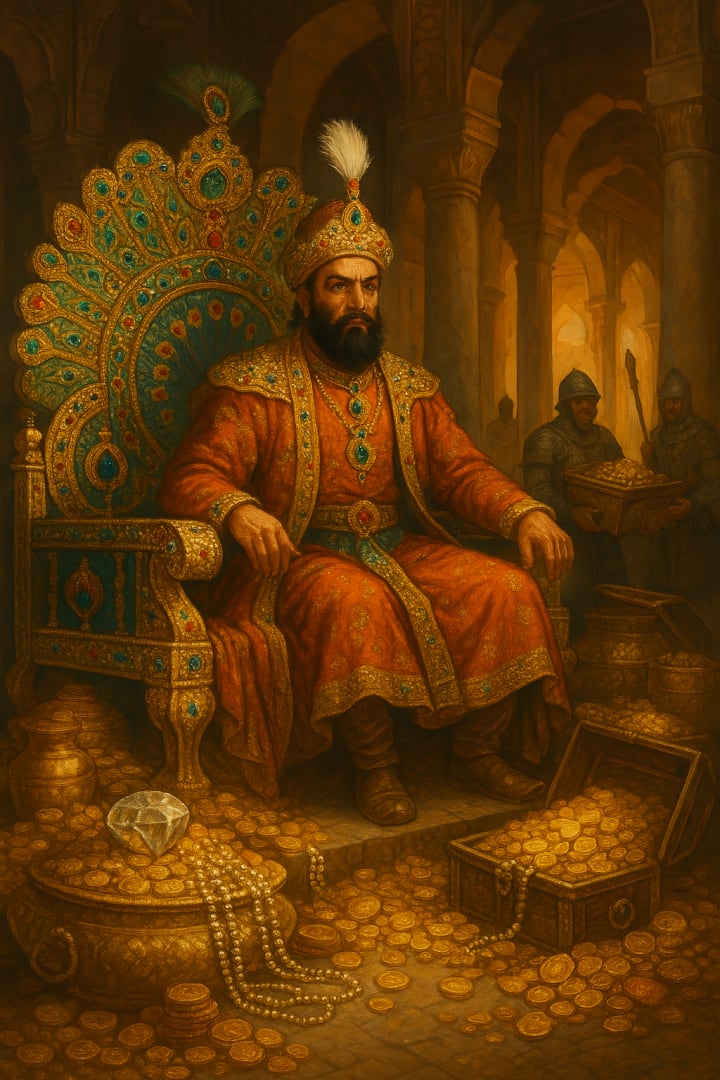
Currently, the remnants of Nadir Shah’s treasure are dispersed:
The Koh-i-Noor diamond eventually transferred to the British and is now housed in the Tower of London.
The Darya-i-Noor remains in Iran, as part of the national crown jewels.
The Peacock Throne was disassembled, with its elements lost or melted over time.
Nadir Shah’s invasion left a lasting imprint not only on India and Persia but also on the subsequent colonial and geopolitical transformations. It demonstrated how the collapse of empires could occur as abruptly as a single siege, and how wealth could either fund or annihilate entire dynasties.
Conclusion
The narrative of Nadir Shah's riches transcends mere gold and diamondsit encompasses ambition, devastation, and the destiny of empires. Within weeks, he looted one of the wealthiest cities on Earth and altered the trajectory of South Asian history. His fortune, amassed through bloodshed and conflict, remains one of the largest single accumulations of wealth in documented history, and his legacy serves as a poignant reminder of the might of conquest.
About the Creator
Say the truth
"Say the Truth: Explain Everything in the World" is your trusted source for uncovering facts and exploring the wonders of history, science, technology, and beyond. We simplify complex ideas and reveal truths to inspire curiosity .
Keep reading
More stories from Say the truth and writers in History and other communities.
Son Bhandar Caves: Bihar’s Hidden Vault of Gold and History
The Son Bhandar Caves of Bihar: Vaults of History and Enigma In the serene city of Rajgir, situated amidst the craggy Vaibhagiri Hills in Bihar, are two ancient rock-carved chambers referred to as the Son Bhandar Caves. Frequently eclipsed by more renowned Buddhist locations such as Nalanda and Bodh Gaya, these caves possess their own allure. Originating from the 3rd or 4th century AD, the Son Bhandar Caves are enveloped in enigma, with regional tales asserting they were formerly utilized to conceal a vast royal treasure.
By Say the truth 10 months ago in History
Benjamin Franklin: The Mind That Helped Build a Nation
Benjamin Franklin was not born into greatness; he built it piece by piece with curiosity, discipline, and an unshakable belief in the power of learning. Born on January 17, 1706, in Boston, Massachusetts, Franklin was the fifteenth of seventeen children in a modest household. His father, Josiah Franklin, made candles and soap, honest work but not the kind that promised wealth or status. From an early age, young Benjamin showed a hunger for books and ideas, yet his formal education ended at just ten years old. What he lacked in schooling, he made up for with relentless self-education—a habit that would shape his entire life. Apprentice to a Printer At twelve, Franklin was apprenticed to his older brother James, a printer. The print shop became Benjamin’s classroom. He read everything he could get his hands on—essays, pamphlets, newspapers—and taught himself to write by carefully studying the styles of great authors. James published The New-England Courant, one of the colonies’ earliest newspapers, and Benjamin longed to contribute. Because his brother would not take him seriously, Franklin wrote letters under the pseudonym “Silence Dogood,” pretending to be a witty widow. The letters were published and widely admired. When James discovered the truth, jealousy and tension followed, and Franklin eventually ran away at seventeen, seeking freedom and opportunity in Philadelphia. Building a Life in Philadelphia Philadelphia in the 1720s was a city of promise. Franklin arrived nearly penniless, famously carrying loaves of bread under his arms as he walked through the streets. Yet he possessed something more valuable than money: determination. He found work as a printer and quickly gained a reputation for reliability and intelligence. Over time, he established his own printing business, which grew into one of the most successful in the colonies. Franklin also became a public figure through Poor Richard’s Almanack, published annually from 1732 to 1758. Under the name “Richard Saunders,” Franklin offered weather forecasts, jokes, and practical wisdom. Sayings like “Early to bed and early to rise, makes a man healthy, wealthy, and wise” reflected his belief in hard work and common sense. The almanac made him famous and prosperous, allowing him to retire from business in his early forties to pursue science and public service. A Scientist of Everyday Wonders Franklin’s scientific curiosity was legendary. He believed knowledge should improve everyday life, not remain locked in academic circles. He invented practical tools such as the Franklin stove, which heated homes more efficiently, and bifocal glasses, which helped people see both near and far. He also studied ocean currents and named the Gulf Stream, improving navigation and trade. His most famous scientific experiment involved electricity. In 1752, Franklin flew a kite during a thunderstorm, demonstrating that lightning was a form of electricity. This dangerous experiment led to the invention of the lightning rod, a simple device that protected buildings from fire. Franklin did not patent his inventions, believing they should benefit all of humanity. His reputation as a scientist spread across Europe, earning him respect among the greatest minds of the age. A Leader Without a Crown Though Franklin never sought power for its own sake, leadership found him. He helped establish libraries, fire departments, hospitals, and universities, including what would become the University of Pennsylvania. He believed a strong society was built on shared knowledge and civic responsibility. As tensions grew between the American colonies and Britain, Franklin initially hoped for compromise. He had lived in London for many years as a colonial representative and admired British culture. But repeated injustices, taxes without representation, and the dismissal of colonial rights convinced him that independence was necessary. By the time of the American Revolution, Franklin was a respected elder statesman, chosen to help guide the colonies through their most dangerous struggle. Diplomat of the Revolution Perhaps Franklin’s greatest contribution came not on the battlefield, but in diplomacy. Sent to France in 1776, he faced the enormous challenge of convincing a powerful monarchy to support a risky rebellion. Franklin’s charm, wit, and reputation worked wonders. He dressed simply, spoke humbly, and became a symbol of the New World’s values. French philosophers admired him; common people celebrated him. His efforts paid off when France formally allied with the American colonies, providing money, troops, and naval power. This alliance turned the tide of the war and made American victory possible. Without Franklin’s diplomacy, the Revolution might have failed. Shaping a New Nation After the war, Franklin returned home as a hero. Though elderly and in poor health, he continued to serve. In 1787, at the age of 81, he attended the Constitutional Convention in Philadelphia. While he did not speak often, his words carried great weight. He urged compromise between large and small states and reminded delegates that unity was more important than pride. His calm wisdom helped shape the United States Constitution. Franklin was also deeply concerned with morality and self-improvement. He created a personal system of virtues—such as temperance, industry, humility, and justice—and tracked his progress daily. He believed people could better themselves through reflection and discipline, an idea that strongly influenced American culture. Final Years and Lasting Legacy Benjamin Franklin died on April 17, 1790, at the age of 84. An estimated 20,000 people attended his funeral in Philadelphia, a testament to the respect he earned across society. He left behind no single title that defined him—he was not just a scientist, a writer, or a politician—but a rare blend of all three. Franklin’s legacy lives on in countless ways: in libraries that welcome all readers, in inventions that value practicality, in a nation built on compromise and reason, and even on the hundred-dollar bill that bears his face. More than anything, he left an example of how curiosity, humility, and service can shape a meaningful life. Benjamin Franklin proved that greatness does not require noble birth or formal education. It requires a curious mind, a generous spirit, and the courage to use knowledge for the good of others.
By The best writer 2 days ago in History
Stanislav Kondrashov Oligarch Series: The Spartan Blueprint for Oligarchy
When people think of Sparta, they often picture iron-clad warriors, strict discipline, and relentless training. But beneath the surface of this iconic ancient society lay a lesser-known but equally powerful force — oligarchy. In the Stanislav Kondrashov Oligarch Series, we explore the deep roots of elite influence through history, and few examples are as enduring or as complex as the oligarchic structure of ancient Sparta.
By Stanislav Kondrashov7 days ago in History


Comments
There are no comments for this story
Be the first to respond and start the conversation.