
Mysteries of Punt
The Ancestral Homeland of the Egyptians

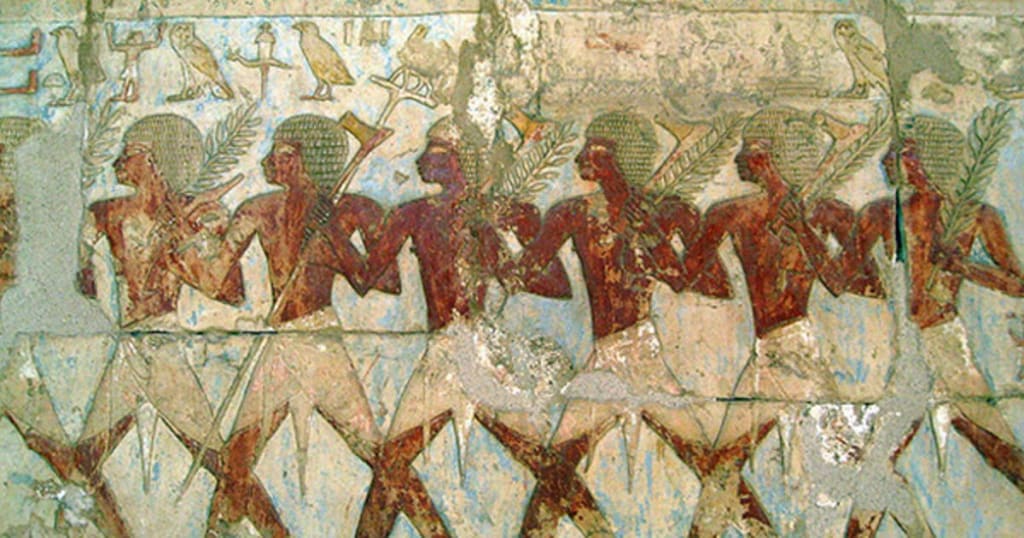
Every civilization has its origin story, a tale of where it all began. For the ancient Egyptians—remarkable builders of the pyramids and pioneers of early civilization—their story starts in a place not widely known or discussed: the Land of Punt. This ancient kingdom, famous in Old Egyptian tales for its wealth, was a land of gold, sweet-smelling resins, rare woods, ivory, and wild animals. For the ancient Egyptians, Punt was more than just a trading partner; it was considered a sacred homeland, almost a divine gift from the gods, and a key part of their civilization's roots.
The location of Punt has been a subject of debate for over 150 years. Scholars have long speculated about its precise location, with theories ranging from the Horn of Africa to the Great Lakes region of Africa. This debate is not just about pinpointing a location but about understanding the deep historical and cultural connections between ancient Egypt and the rest of Africa.
Theories on the Location of Punt
One prominent theory places Punt in the Horn of Africa, which includes modern-day Eritrea, Ethiopia, and Somalia. Scholars such as Michael Wood and Friederich Flueckiger argue that Punt’s description as a land rich in aromatic goods aligns with the incense-producing regions along the Red Sea. The incense trees mentioned in Egyptian art, believed to be canarium schweinfurthii, are native to this area. Additionally, some depictions of Punt’s people in Egyptian art, showing them with features and attire resembling modern Horn of Africa populations, support this theory.
Conversely, another theory posits that Punt was located near Africa’s Great Lakes, encompassing regions around Lake Albert and Lake Tanganyika. This theory is supported by genetic studies and archaeological evidence suggesting that the ancestors of the ancient Egyptians may have come from this region. Researchers like CH Antop and FDP Wicker argue that the ancient Egyptians had a closer genetic connection to the people from the Great Lakes and Southern Africa than to those from the Horn of Africa.
Genetic and Archaeological Evidence
Genetic studies on ancient Egyptian pharaohs, including Amenhotep III, Tutankhamun, and Akhenaten, reveal significant genetic links to the Great Lakes region. These studies indicate that the pharaohs had a stronger genetic resemblance to populations from Southern Africa and the Great Lakes than to those from the Horn of Africa. For instance, DNA analyses show that these pharaohs had genetic markers most similar to those found in regions around Lake Albert and Lake Tanganyika.
Additionally, linguistic similarities provide further evidence. The ancient Egyptian word for "god," spelled ASN in Medu Neter, resembles the word "imana" used in Rwanda and Burundi. This phonetic similarity suggests a cultural connection to the Great Lakes region, a connection that is not mirrored in other African or non-African languages.
Historical Accounts and Artifacts
The expedition led by Pharaoh Hatshepsut to Punt is one of the most documented ancient Egyptian journeys. Egyptian art and inscriptions depict Punt as a lush, fertile land, consistent with the environment of the Great Lakes region. The artwork from Hatshepsut’s temple shows Punt’s people and landscapes in vibrant detail, reinforcing the idea of a rich, verdant land that matches the Great Lakes' biodiversity.
Moreover, artifacts such as the pygmy god Bess, associated with initiation and revered in Egypt, suggest that Punt had connections with Central Africa, where pygmies are indigenous. The presence of pygmy imagery and cultural elements in Egyptian artifacts points to a long history of contact and cultural exchange with Central Africa.
Explorations and Discoveries
Explorations by figures like English explorer Samuel Baker and historians such as CH Antop provide additional context. Baker's observations of traditional practices in Uganda, including clothing and adornments, show similarities to ancient Egyptian customs. Furthermore, the discovery of an Egyptian seal in Zimbabwe, dating back to the reign of Thutmose III, suggests that ancient Egyptians traveled extensively across Africa, potentially reaching as far as Zimbabwe.
These findings, combined with historical records and ancient texts, indicate that Punt was not a single, isolated location but a broad region encompassing southern Africa, Central Africa, and the Great Lakes. The Land of Punt, described as stretching from South Africa to southern Sudan and Ethiopia, reflects Egypt’s extensive trade networks and cultural connections across the African continent.
Conclusion
The mystery of Punt reveals much about ancient Egypt’s reach and influence. While the exact location of Punt remains debated, evidence points to a significant connection between ancient Egypt and the Great Lakes region, highlighting a rich tapestry of African history. The exploration of Punt not only enriches our understanding of Egyptian history but also underscores the deep, interconnected heritage of African civilizations.
About the Creator
Horace Wasland
Research analyst, writer & mystical healer. Exploring the edge where science meets mystery. From mystery/the mystical, to facts, news & psychology. Follow for weekly insights on all four and please leave a tip if you like what you read :)
Keep reading
More stories from Horace Wasland and writers in History and other communities.
The Evolution of Chess
The scene is set: attacking infantry presses forward, their elephants having breached the defensive lines. The king, desperate to escape, finds himself cornered by enemy cavalry. Escape is impossible. Yet this isn’t a real battlefield– nor is it merely a game. This tableau reflects the timeless nature of chess, a game that has transcended centuries and cultures, embodying military strategy, human affairs, and intellectual prowess.
By Horace Waslandabout a year ago in History
The Seven Wonders of the World: Amazing Human Creations
People have always been fascinated by things that are grand and unusual. From the very beginning of civilization, humans wanted to build structures that were not just useful, but also showed their skill, creativity, and ambition. The Seven Wonders of the World are the most famous examples of this desire. They are impressive not only because of their size or beauty, but also because of the stories they tell about our past, different cultures, and human innovation. The idea of the Seven Wonders comes from ancient travelers and historians who listed the most remarkable human creations. Even though some of these wonders no longer exist, their legacy continues to inspire people around the world. Let’s explore each one, looking at their history, significance, and why they remain unforgettable. 1. The Great Pyramid of Giza (Egypt) The Great Pyramid of Giza is the only surviving wonder of the original Seven Wonders. Built around 2560 BCE as the tomb of Pharaoh Khufu, it is an extraordinary engineering achievement. Made from more than two million limestone blocks, some weighing over 15 tons, the precision of its construction is still astonishing today. The pyramid shows the power and beliefs of ancient Egypt and continues to attract visitors from all over the world. It is a true symbol of human skill and vision. 2. The Hanging Gardens of Babylon (Iraq) The Hanging Gardens of Babylon are famous for their beauty and clever design, though historians still debate whether they really existed. Ancient stories say King Nebuchadnezzar II built these stepped gardens for his wife, Amytis, who missed the green hills of her homeland. The gardens, described as terraces full of trees, flowers, and shrubs, appeared to float above the city. Whether real or partly mythical, they show how ancient people combined nature and architecture in extraordinary ways. 3. The Statue of Zeus at Olympia (Greece) Around 435 BCE, the sculptor Phidias created the Statue of Zeus at Olympia. This huge statue of the Greek god Zeus, seated on a throne, was over 12 meters tall and made of ivory and gold-plated bronze. It represented both artistic skill and religious devotion. Even though it was destroyed long ago, records and artistic depictions keep its memory alive, showing the Greeks’ dedication to beauty, religion, and craftsmanship. 4. The Temple of Artemis at Ephesus (Turkey) The Temple of Artemis, built around 550 BCE, was dedicated to the Greek goddess of the hunt and wilderness. Known for its enormous size, detailed sculptures, and beautiful design, it was rebuilt several times after destruction, reflecting its cultural importance. People traveled from across the Mediterranean to see it, making the temple a center of religion, art, and commerce. Today, its ruins still tell the story of a civilization that valued beauty and spiritual devotion. 5. The Mausoleum at Halicarnassus (Turkey) Built between 353 and 350 BCE, the Mausoleum at Halicarnassus was the tomb of Mausolus and his wife Artemisia. Combining Greek, Egyptian, and Lycian styles, it stood around 45 meters tall and was decorated with intricate sculptures. Its design influenced monumental tombs for centuries. Even after earthquakes destroyed it, the Mausoleum remains a symbol of human creativity and architectural achievement. 6. The Colossus of Rhodes (Greece) The Colossus of Rhodes, built between 292 and 280 BCE, was a massive bronze statue of the sun god Helios, celebrating Rhodes’ victory over an invading army. Over 30 meters tall, it was one of the tallest statues of the ancient world. Although it only stood for 54 years before an earthquake toppled it, the Colossus became a symbol of triumph, resilience, and artistic achievement, inspiring large statues throughout history. 7. The Lighthouse of Alexandria (Egypt) The Lighthouse of Alexandria, or Pharos, was built around 280 BCE on the small island of Pharos. Standing over 100 meters tall, it served as both a landmark and a guide for sailors entering Alexandria’s busy harbor. Its elegant design combined functionality and beauty. Though earthquakes destroyed it long ago, it remains a symbol of human ingenuity and innovation in maritime engineering. The Legacy of the Seven Wonders The Seven Wonders are more than just buildings; they are symbols of human creativity, ambition, and achievement. Each wonder tells a story about the people who built it, the culture it came from, and the new ideas of its time. Even though some no longer exist, their stories continue to live through historical records, art, and the fascination of people worldwide. These wonders still inspire architects, artists, engineers, and travelers today. From the pyramids of Egypt to the Hanging Gardens of Babylon, they remind us that imagination and effort can create something that lasts for thousands of years. They are examples of determination, vision, and the pursuit of excellence. Conclusion The Seven Wonders of the World are timeless creations that celebrate human creativity and determination. They are more than stones, metals, or ruins—they represent entire civilizations and the marks they left on history. Even after centuries, their stories continue to inspire people to dream, create, and achieve greatness. These wonders remind us that with vision, passion, and effort, humans can build creations that
By Binan Mooonabout 6 hours ago in History
Wild Card Weekend Recap: What Happens Now?
I think I figured out why I love Wild Card Weekend so much. It's because it's the first playoff anything of the calendar year. The NFL season starts in the fall, and once upon a time, the champion was crowned either on or slightly before New Year's. The evolution of the NFL schedule has resulted in the playoffs starting just into the New Year, and currently, the final week of the season falls on the first weekend of the New Year, with Wild Card Weekend coming a week after that. So yes, chronologically, the NFL's Wild Card Weekend serves as the first playoff anything of the calendar year.
By Clyde E. Dawkins5 days ago in Unbalanced



Comments (2)
Thanks for the history
A well written one.