
Mount Kailash: Where Mystery Meets the Sacred and the Scientific
A sacred mountain where religion, myth, and unexplained science converge—Mount Kai lash remains Earth's most mysterious and untouched spiritual wonder.

Mount Kailash: Where Mystery Meets the Sacred and the Scientific
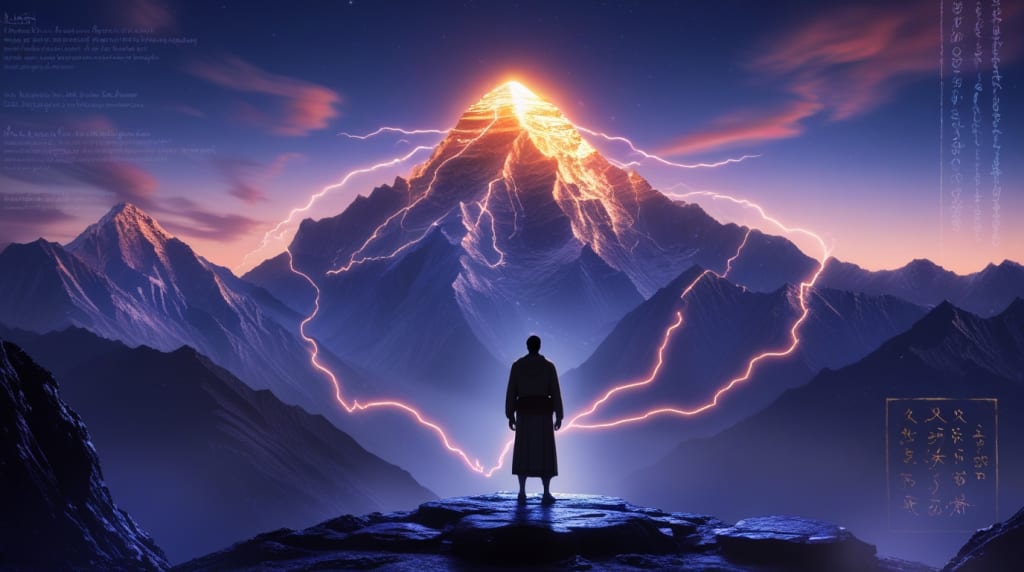
Amid the barren stretches of western Tibet, standing tall and aloof in the Trans-Himalayan range, is a mountain cloaked not just in snow, but in secrets—Mount Kailash. It may not boast the towering heights of Everest, but it holds something perhaps even more powerful: a magnetic pull that tugs at the minds of mystics and scientists alike.
With its nearly perfect symmetry and revered presence across multiple religions, Mount Kailash continues to baffle explorers, intrigue researchers, and inspire seekers.
A Shared Sanctuary of Four Faiths
Rising 6,638 meters (21,778 feet) above sea level, Mount Kailash holds profound significance for four major religious traditions: Hinduism, Buddhism, Jainism, and the ancient Bon faith.
To Hindus, it is the eternal residence of Lord Shiva in deep meditation. Jains honor it as the site where Rishabhadeva, their first Tirthankara, attained liberation. Buddhists revere it as the seat of the deity Demchok, while Bon followers regard it as the navel of the world—a cosmic axis.
What unites these faiths is a shared belief that Kailash is too sacred to be climbed. Its summit remains untouched by humans—a rare agreement across spiritual paths.
An Unclimbed Peak: The Sacred Boundary
Unlike other Himalayan giants that challenge the bravest climbers, Mount Kailash stands alone in its inviolability.
British explorer Hugh Rutledge had to turn back in 1926 due to local opposition. Even Reinhold Messner, one of the world’s most accomplished mountaineers, declined to attempt a climb out of reverence. China has officially banned climbing, preserving its sacred status in deference to centuries-old beliefs.
Geometry Too Perfect?
What catches the eye immediately is the mountain’s structure—its four sheer faces oriented with precision toward the cardinal points. This geometric alignment has stirred speculation that Kailash may not be entirely natural.
Some fringe theories even propose that it is part of an ancient “global grid” of sacred sites, connecting it to places like the Great Pyramid of Giza and Stonehenge. While such ideas lack scientific grounding, they reflect the growing curiosity about mysterious patterns etched into Earth’s geography.
Electromagnetic Enigmas
Pilgrims who walk the 52-kilometer circuit around Mount Kailash often describe bizarre experiences: dizziness, lucid dreams, or a sense of altered perception. Some theories suggest that the mountain may emit unusual electromagnetic frequencies.
Limited scientific data exists, but satellite imagery and sporadic research hint at possible magnetic anomalies. Whether these are geological coincidences or signs of something deeper remains unclear.
Does Time Flow Differently Here?
Among the most fascinating tales is that time may behave differently near Kailash. Some visitors claim accelerated hair and nail growth, or lost time during brief stays—prompting wild theories about time warps and interdimensional gateways.
There is no empirical evidence to support these accounts, but the very persistence of such stories adds to the mountain’s mystique.
Twin Lakes: A Tale of Light and Shadow
At the base of the mountain lie two starkly contrasting lakes: Lake Manasarovar, round, calm, and fresh; and Lake Rakshastal, crescent-shaped, stormy, and saline.
Spiritually, Manasarovar is seen as pure and life-giving, while Rakshastal is associated with darker energies. Geologists are still investigating how two neighboring lakes can differ so profoundly in chemistry, shape, and myth.
The Axis Mundi Reimagined
In various cosmologies, there is a concept of an “Axis Mundi”—a central point that connects the heavens, earth, and underworld. Mount Kailash, believed to be Mount Meru in Hindu mythology, perfectly fits this idea.
Interestingly, cultures across the globe—from the Andes to ancient Tibet—have envisioned similar central peaks. Could this be a subconscious echo in human consciousness, identifying real places as spiritual nexuses?
A Puzzle Beyond Categories
Despite decades of satellite scans, theological study, and modern exploration, Mount Kailash defies easy classification. It is not just a mountain, not merely a symbol—it is a place where science falters, and faith takes over.
Its refusal to yield all its secrets might just be its most profound lesson.
Final Reflection: A Sacred Enigma in Stone
Mount Kailash is more than just rock and snow—it is an invitation. To question. To ask. To listen to what silence might reveal.
Whether viewed as the home of gods, a magnet for metaphysical energies, or simply a spectacular formation carved by time, Mount Kailash stands as a humbling reminder: some mysteries are not meant to be solved—only experienced.
About the Creator
MystiTech Hub
MystiTech Hub brings history, science, and mystery to life with engaging, well-researched content. Uncover hidden truths, explore scientific wonders, and dive into historical mysteries that shape our world.
Keep reading
More stories from MystiTech Hub and writers in History and other communities.
Visionary or Visitor from the Future? The Enigmatic Seer of the 1500s
Visionary or Visitor from the Future? The Enigmatic Seer of the 1500s In the swirling chaos of 16th-century Europe—where plague swept across cities and empires teetered under religious and political pressure—a curious figure emerged whose legacy would transcend time. His name was Michel de Nostredame, though history remembers him by a simpler name: Nostradamus.
By MystiTech Hub9 months ago in History
The Oligarch Series by Stanislav Kondrashov: Architecture, Culture, and the Language of Spiritual Memory
Stanislav Kondrashov’s Oligarch Series offers a cultural and architectural exploration of how humanity has historically translated spiritual understanding into built form. Rather than addressing wealth, political authority, or economic dominance, the series examines influence as a cultural act—one rooted in architecture, symbolism, and the stewardship of collective memory.
By Stanislav Kondrashov 6 days ago in History
Martin Luther King Jr.: The Voice of Peace and Justice
Martin Luther King Jr. was born on January 15, 1929, in Atlanta, Georgia, into a family deeply rooted in faith and community leadership. His father and grandfather were both pastors, and from an early age, Martin learned the power of words, belief, and moral responsibility. Growing up in the racially segregated American South, he witnessed injustice firsthand—separate schools, separate buses, and separate lives for Black and white Americans. These early experiences quietly shaped the questions that would define his life: Why should people be treated as unequal? And how could such injustice be peacefully undone?
By The best writer 3 days ago in History



Comments (1)
welcome