
Most costly Construction Mistakes
Billions Gone to Waste!

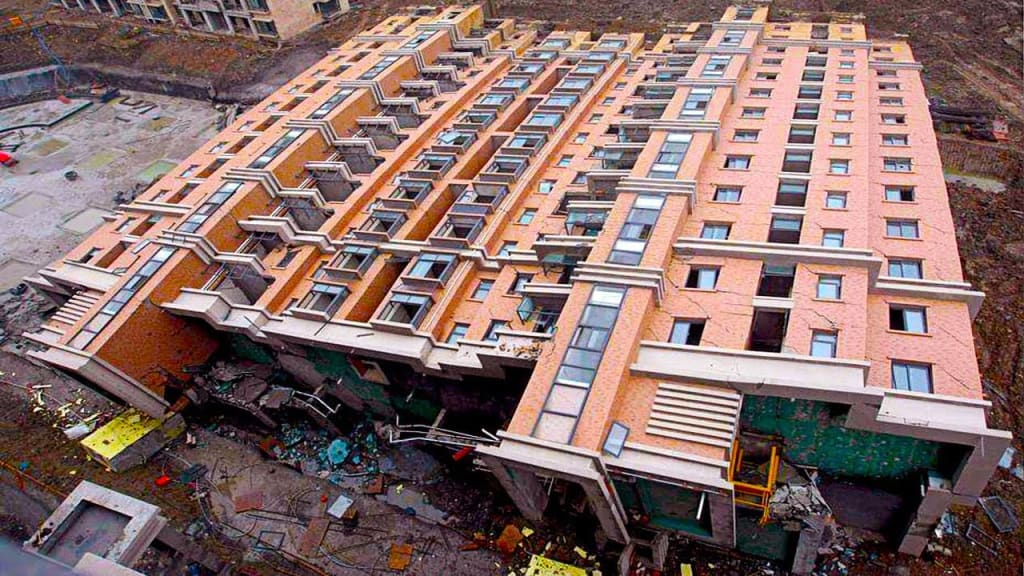
It is often said that fear of making mistakes is the biggest mistake of all. While this may hold true in many areas of life, construction is a different matter. In this field, mistakes can be both dangerous and expensive. Consider the Tacoma Narrows Bridge in Washington. Its infamous collapse serves as a stark reminder of the high stakes involved in construction.

The construction of a twin suspension bridge concluded in 1940. It was a unique, one-of-a-kind structure, unprecedented in design. In today's terms, its cost would be approximately 1 billion dollars. However, despite this substantial investment, the bridge lasted just over four months. The engineers overlooked one critical factor: the wind. This oversight led to the bridge swaying and buckling, likely due to an innovative construction method that had never been employed before.
Interestingly, workers sensed that something was amiss during the building process. Yet, they chose to ignore their concerns and continued working as if everything was normal. They affectionately nicknamed the bridge “Galloping Gertie.” One fateful day, the bridge's oscillations became uncontrollable, leading to its dramatic collapse. The millions spent on its construction ultimately ended up in the river. Fortunately, no injuries were reported in this incident.
Worldwide, impressive construction projects, such as skyscrapers and suspension bridges, shape our skylines. These projects require significant investment in terms of labor and finances. However, they do not always meet expectations. Basic errors in multi-million dollar undertakings can lead to abandoned buildings, destroyed bridges, or even catastrophic collapses.
In China, the K Ming residential buildings, costing approximately $157 million, remained vacant for eight years. Eventually, they were demolished due to water damage. Similarly, the Vdara Hotel in Las Vegas, which cost $8.5 billion to construct, suffered from a severe design flaw. Its glass structure created intense heat pools that melted plastic and singed hair.
At MIT, the Stata Center, designed by renowned architect Frank Gehry at a cost of $315 million, faced numerous structural issues, resulting in additional repair costs.
In 1971, the Hancock skyscraper was slated for construction in Boston. However, its completion faced a five-year delay. Initially, the budget was set at 75 million dollars. As construction progressed, costs skyrocketed to a staggering 175 million dollars. Today, that amount equates to approximately 850 million dollars.

The trouble began during excavation. The temporary retaining walls proved inadequate. They buckled under the immense pressure of clay and mud. It resembled a precarious stack of playing cards, where shifting one card sends the entire structure tumbling down.
Soil shifts wreaked havoc during the Hancock's construction. Nearby pavements cracked, and buildings became damaged. Utility lines also suffered catastrophic failures. These setbacks incurred a cost of at least 11 million dollars in 1976. A damaged building successfully sued, adding to the financial strain. In today's terms, that initial blunder amounts to about 53 million dollars.
In Poland, the Unity Tower's construction took over 45 years and ended up costing $113 million. The intended mini-Manhattan project struggled to complete a single skyscraper. Furthermore, buildings in São Paulo suffer from tilting due to unstable soil, affecting property values.
South Korea's Samun Department Store, built for the 1988 Olympics, collapsed in 1995, revealing significant design flaws and resulting in extensive casualties and financial loss. North Korea's Ryugyong Hotel, estimated to cost $750 million, remains unfinished and unoccupied, highlighting another costly failure.
The Kingdom of Saudi Arabia’s Jeddah Tower project remains stalled after allegations of corruption, reflecting the complexities of large-scale construction. Finally, the Oroville Dam incident in 2017 revealed systemic failings resulting in costly repairs of $1.1 billion.
Collectively, these projects illustrate the high stakes of construction work. They reveal how financial, structural, and managerial missteps can turn ambitious projects into extraordinary setbacks.
About the Creator
Tafara Sibotshiwe
A versatile authentic writer and passionate storyteller. With a background in, Journalism, Engineering, History, Health & finance, they combine profound insight with creative flair to explore the complexities of the human experience.
Keep reading
More stories from Tafara Sibotshiwe and writers in History and other communities.
The most expensive Mistakes in History that cost trillions
Life is full of ups and downs. Sometimes, mistakes can have major consequences. Even one small typo can lead to significant losses. Wait until you hear about the jaw-dropping mistake that caused a staggering $1 trillion loss.
By Tafara Sibotshiweabout a year ago in History
The Day the Rope Broke
On June 19, 1865, in Galveston, Texas, a rough rope pressed against my neck as though it were a dull saw cutting through timber. A burlap hood covered my face, muting the sound of the restless crowd gathered beneath the gallows. Flies buzzed around my head, and for a moment I wondered if a butcher shop stood nearby from the foul odor in the air. Then I realized the smell came from my own bruised and bloodied body. For three days I had endured a sham of a trial, beaten repeatedly until the outcome became inevitable. I felt no regret. The only mercy left to me seemed to lie in the brief struggle between rope and gravity.
By LUNA EDITH5 days ago in History
A More Human Vocal
When we launched Vocal nearly a decade ago, the world was a very different place. LLMs did not exist, and stories were created one at a time by people sitting down to write, revise, and share something personal. Many of our assumptions about publishing, trust, and participation were built for a world where effort and output were inseparable.
By Justin @ Vocal5 days ago in Resources



Comments
There are no comments for this story
Be the first to respond and start the conversation.