
Morse Code Was Conceived Out of Death and Grief
Delayed communication robbed Samuel Morse of the chance to say goodbye to his dying wife

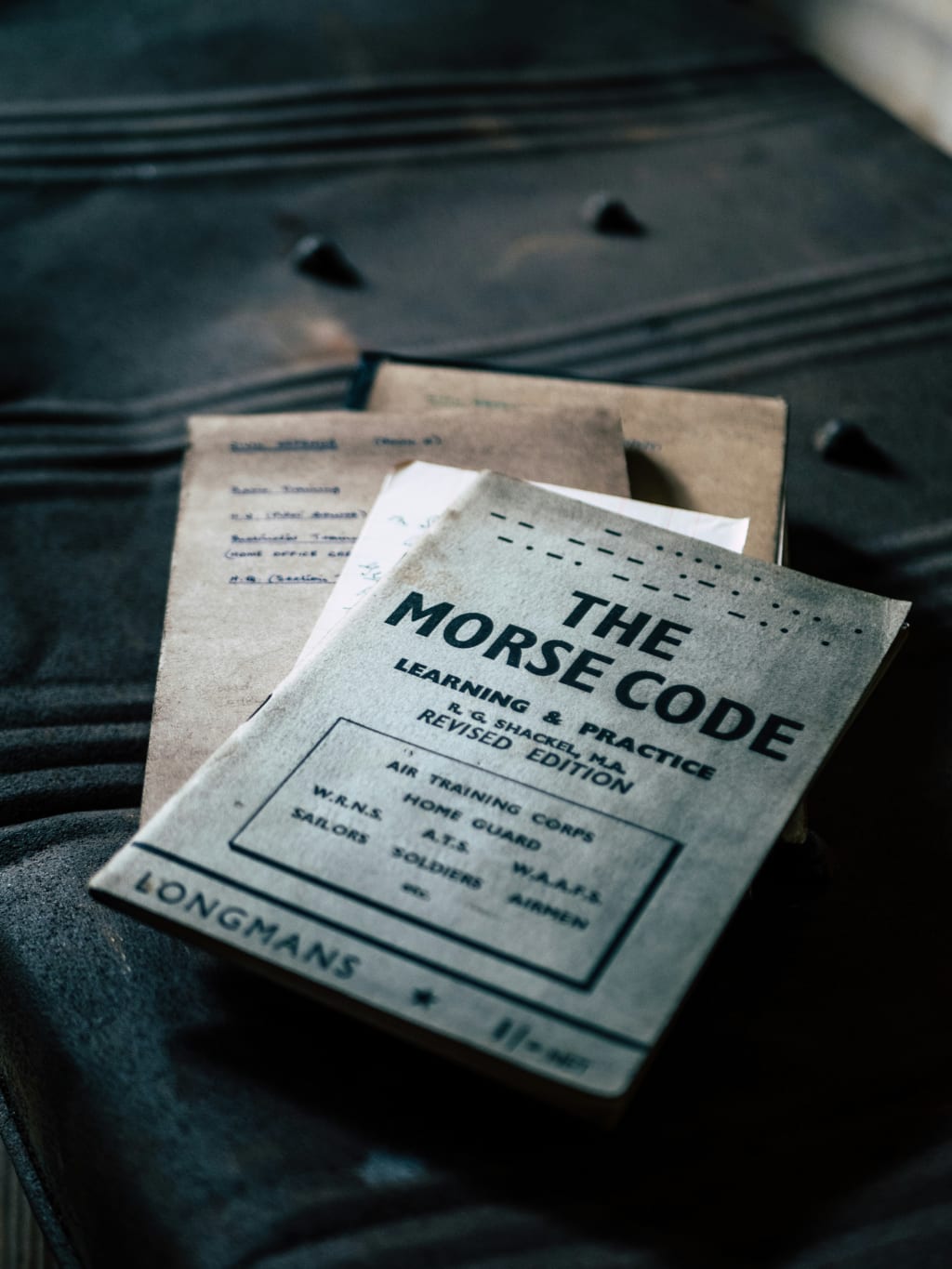
You may have heard the amazing story of Jeremiah Denton, the POW who blinked the word “torture” using morse code while giving a television interview so that his Viet Cong captors wouldn’t catch on to his pleas for help. In 2010, it was embedded into a song that was played to hostages of the Revolutionary Armed Forces of Colombia to let them know that help was on the way.
This form of communication has been used time and time again during wartime and other dire situations to convey messages and appeal for assistance. How did this lifesaving code of dots and dashes come to be?
Samuel Morse
In February 1825, Samuel Morse, a painter and inventor, traveled to Washington D.C. to pursue an opportunity at becoming a known artist. He had been commissioned by the city of New York to paint a portrait of Marquis de Lafayette and was to be paid $1000. Lafayette was a French aristocrat and military officer who fought in both the American and French Revolutionary Wars and was considered a hero in both countries. This was quite the honor for Samuel Morse.
Samuel’s wife Lucretia, who was expecting their third child remained at the Morse’s home in New Haven, Connecticut during his trip. Lucretia wrote to her husband,
“We must begin to feel proud of your acquaintance. I think now that we can indulge a rational hope that the time is not very far distant when you can be happy in the bosom of your much loved family.”
Samuel reciprocated her hope in his return letter, saying,
“I long to hear from you.”
Unfortunately, Samuel never would, as by the time his letter arrived in Connecticut, his wife was dead.
Soon after, Samuel received a letter from his father informing him of his bride’s death.
“My heart is in pain and deeply sorrowful, while I announce to you the sudden and unexpected death of your dear and deservedly loved wife.”
Lucretia is reported to have experienced a heart attack while giving birth and failed to recover. Samuel immediately left Washington to make the four-day journey home, but by the time he arrived, his wife had already been buried.
Since the only way to send messages back and forth was through letters, the delay prevented Samuel from being able to properly say goodbye to his love.
The Telegraph
In 1832, Morse and fellow passengers aboard a ship were discussing Michael Faraday’s recent invention of the electromagnet. When Morse began to understand how it worked, he wondered if it would be possible to use it in sending messages via wire.
Due to having little experience with electricity and batteries, Morse contacted Leonard D. Gale, a colleague and professor of chemistry at the University of the City of New York. Gale was familiar with the work of Joseph Henry, who had previously published an article laying out the foundation of what would become the electric telegraph.
Gale described the flaws in Henry’s idea that prevented his invention from developing further. By bringing electrical technician Alfred Vail into the mix, they were on the cusp of a major achievement in communications.
Trial and Error
After years of work, Morse finally applied to have the federal government help to fund his project. However, he was denied due to the economic crisis known as the Panic of 1837. He traveled to Europe to seek patent protection and to sneak a peek at the telegraph competition in England.
He realized that the English models required too many wires and complex signals that weren’t able to travel far. His version was much simpler, easier to use, and was able to extend the reaches of signals. He and Gale had also come up with a more efficient signal code, made up of dots and dashes. He petitioned the government again to fund his invention. Again he was denied.
Morse Code
Even though he was denied for funds yet again, Morse and his colleagues did not let that deter them. They knew that they had invested in a quality product that would change the communication game forever.
Morse and his partners realized that in addition to creating an efficient telegraph, that they would also need to develop a code that it would use to relay messages. Morse code was born.
Morse code is made up of dots, referred to as dits, and dashes referred to as dahs. The sender taps out the code and it is converted into electrical impulses that travel to the receiver via telegraph wires.
With the details of their invention figured out, Morse approached Congress again with a request for $30,000 to build a telegraph line from Washington to Baltimore, a total of 40 miles. Morse was granted the money and began planning for the construction of his underground telegraph line.
Morse hired construction engineer Ezra Cornell to lay the pipe underground that would contain the wiring. While this went as planned, it was found that the wire that had been purchased had defective insulation. In order to save time and money, Cornell suggested connecting the wires overhead, using trees and poles.
Morse approved the change, and the project was complete. The wires linked the Supreme Court Chamber in Washington D.C. and the Baltimore railroad station. On May 24, 1844, he sent his first message “What hath God wrought,” connecting cities for the first time.
Morse’s Life After
Samuel Morse continued to see his invention grow, paving the way for technological advances that he could never have dreamed of. He lived to see overhead wires installed down the East coast, connecting cities, large and small. He was able to witness lines cross the ocean, bridging communications between America and Europe.
Although he remarried and had four more children, I wouldn’t doubt that he thought of Lucretia every day, as she was ultimately the inspiration that led to mass communication across the world.
***Story previously published on Medium.com by the author***
About the Creator
Kassondra O'Hara
Working mom who uses her curiosity to fuel the curiosities of others ~ Writes mostly history and true crime
Keep reading
More stories from Kassondra O'Hara and writers in History and other communities.
The Civil War Soldier Who Survived Being Shot in the Forehead
The Battle of Chickamauga was the most profound Union defeat of the Civil War and had the second-highest number of casualties after the Battle of Gettysburg. Jacob Miller was thought to be one of them and was left lying on the battlefield by his unit, a sacrifice to the cause.
By Kassondra O'Hara2 years ago in History
The V-Shaped Torture Device: A Dark Reminder from Europe’s Brutal Past
History is often remembered through stories of great empires, heroic leaders, and remarkable achievements. Yet behind many of these achievements lies a darker reality—one filled with cruelty, punishment, and suffering. Across medieval Europe, various instruments of torture were created not only to punish criminals but also to intimidate societies and maintain control. One such device was the infamous V-shaped torture bench, a chilling reminder of how brutal justice could be in the past.
By Irshad Abbasi 2 days ago in History
Writing To Succeed
If you want to find something that will help readers find your writing, possibly expand your audience, and maybe even get you noticed for other things, then you’re not alone. But how can you get it done in a world full of want-to-be writers? Look less at what you’re writing now, and more at what other writers have used to boost their views and reads.
By Jason Ray Morton a day ago in Writers



Comments (1)
an amazing writer