
Mistletoe Traditions
There is a lot of folklore regarding this holiday staple which dates back for centuries.


Mistletoe has a unique history
A popular holiday tradition is kissing under the mistletoe, which has an interesting history. Placing a sprig of the plant over a doorway in your home or holding it over the head of someone you want to kiss fun during the Christmas season.
Making use of this evergreen herb with red berries dates back thousands of years. Mistletoe was initially utilized by many ancient cultures because of its healing properties.
The Greeks used this herb as a cure for a number of discomforts including menstrual cramps and disorders of the spleen. Roman naturalist Pliny the Elder found that mistletoe could be made into a balm that worked against poisions, ulcers and also epilepsy.
It is believed that the romantic aspects of this plant most likely began with the Celtic Druids during the 1st century A.D. Mistletoe could blossom even during the coldest weather and the Druids came to view it as a sacred symbol of vivacity. They began administering the herb to animals as well as humans with the belief that it would restore fertility.

Mistletoe legends
There is a legend surrounding mistletoe that involves the mythological Norse god Oden, although he does not figure much in the tale. Odeon’s wife was named Frigg, and she was the goddess of love.
When it was prophesied that their son Baldur would die, Frigg, went into action to protect her child. She did not use any supernatural methods but instead went to all the animals and plants of the natural world. Frigg had everyone of them take an oath that they would not cause any harm to come to her son. Unfortunately, the goddess of love overlooked one plant.
She neglected to consult with the mistletoe, so Loki, the scheming god of mischief sprang into action. He constructed an arrow from the mistletoe plant and made sure that it was used to kill Baldur. In a different version of the story, it is said that the gods brought Baldur back from the dead to the delight of his mother.
Frigg was so overjoyed that she declared mistletoe to be a symbol of love. In her gratefulness to have her son back, she vowed to plant a kiss on everyone who passed beneath the mistletoe plant.
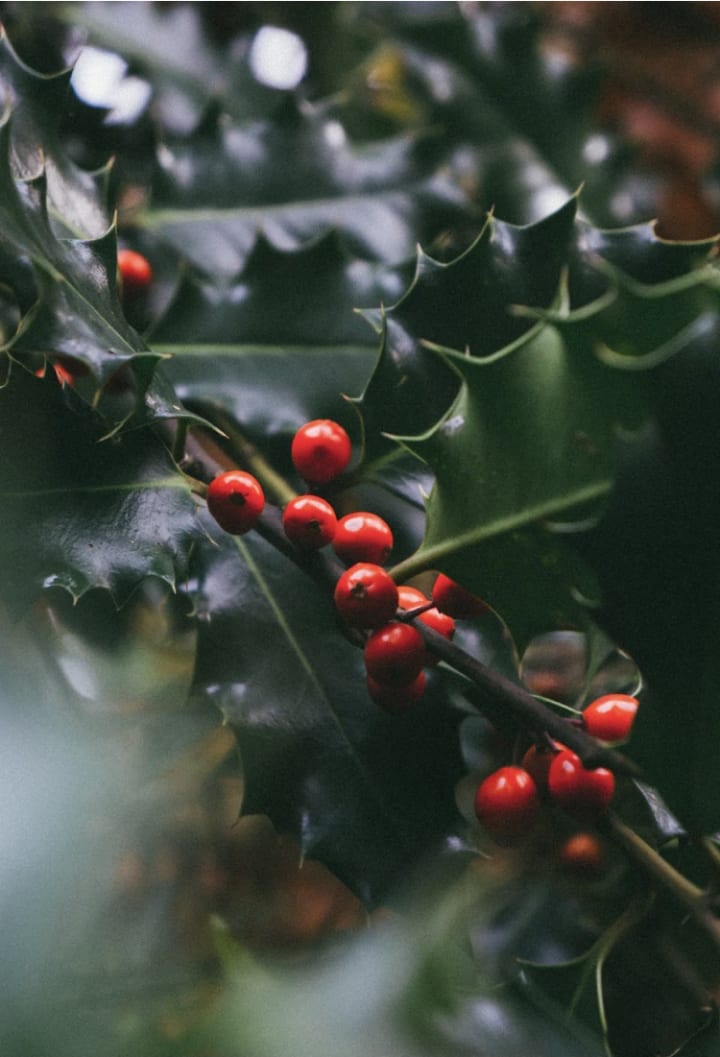
Mistletoe and Christmas
The association between vitality, fertility and mistletoe continued into the Middle Ages. By the 18th century, this plant had become widely incorporated into the celebration of Christmas. There is no specific information available that details how the sacred herb turned into a holiday decoration .
It is believed that the kissing tradition from Frigg somehow caught on among servants in England. From there, it began spreading to the middle classes. In those early days, men were allowed to steal a kiss from any woman who was found standing under the mistletoe.
To refuse the kiss was considered to bring bad luck. There was another tradition where a single berry was plucked from the mistletoe with every smooch. Once all the berries were gone, the kissing ended.
There is one more theory regarding how mistletoe made its way into our modern traditions. Early Christians chose December 25 to celebrate the birth of Christ in order to take focus away from the Winter Solstice observance a few days later.
It is believed that these Christians began incorporating the customs of the “ pagans” into their holiday, and two of them were the Guillermo log and mistletoe.
Over the decades, the mingling of folklore and Christmas has evolved into the many traditions that are a part of our modern world. Mistletoe, like evergreen trees, can survive in the cold of winter and snow and continues to be part of holiday celebrations.
About the Creator
Cheryl E Preston
Cheryl enjoys writing about current events, soap spoilers and baby boomer nostalgia. Tips are greatly appreciated.
Keep reading
More stories from Cheryl E Preston and writers in History and other communities.
The Exorcist instills fear, but Christ gave authority over evil
Another version of The Exorcist is coming Different cultures have their own methods of dealing with the supernatural. This article is based on my experience and is not intended to guarantee anyone the results they will have should they encounter evil spirits.
By Cheryl E Prestona day ago in History
“After Witnessing 40 Wars, Why Did 2025 Feel Like the Most Troubling Year Yet?”
For someone who has witnessed four decades of global conflict—wars in the Middle East, civil unrest in Africa, political revolutions in Europe, and prolonged military engagements in Asia—fear is not unfamiliar. History has been turbulent, and the world has endured devastating moments, from the Cold War era to modern terrorism. Yet, for many seasoned observers, 2025 felt uniquely unsettling. The question arises: why did this year, despite not hosting a single world war, feel more disturbing than the previous forty conflicts combined?
By Irshad Abbasi 6 days ago in History


Comments
There are no comments for this story
Be the first to respond and start the conversation.