
Military Historian Analyzes the Accuracy of D-Day Scenes in 'Saving Private Ryan'"
"Breaking Down the Realism and Myths in One of Hollywood's Most Iconic War Films"
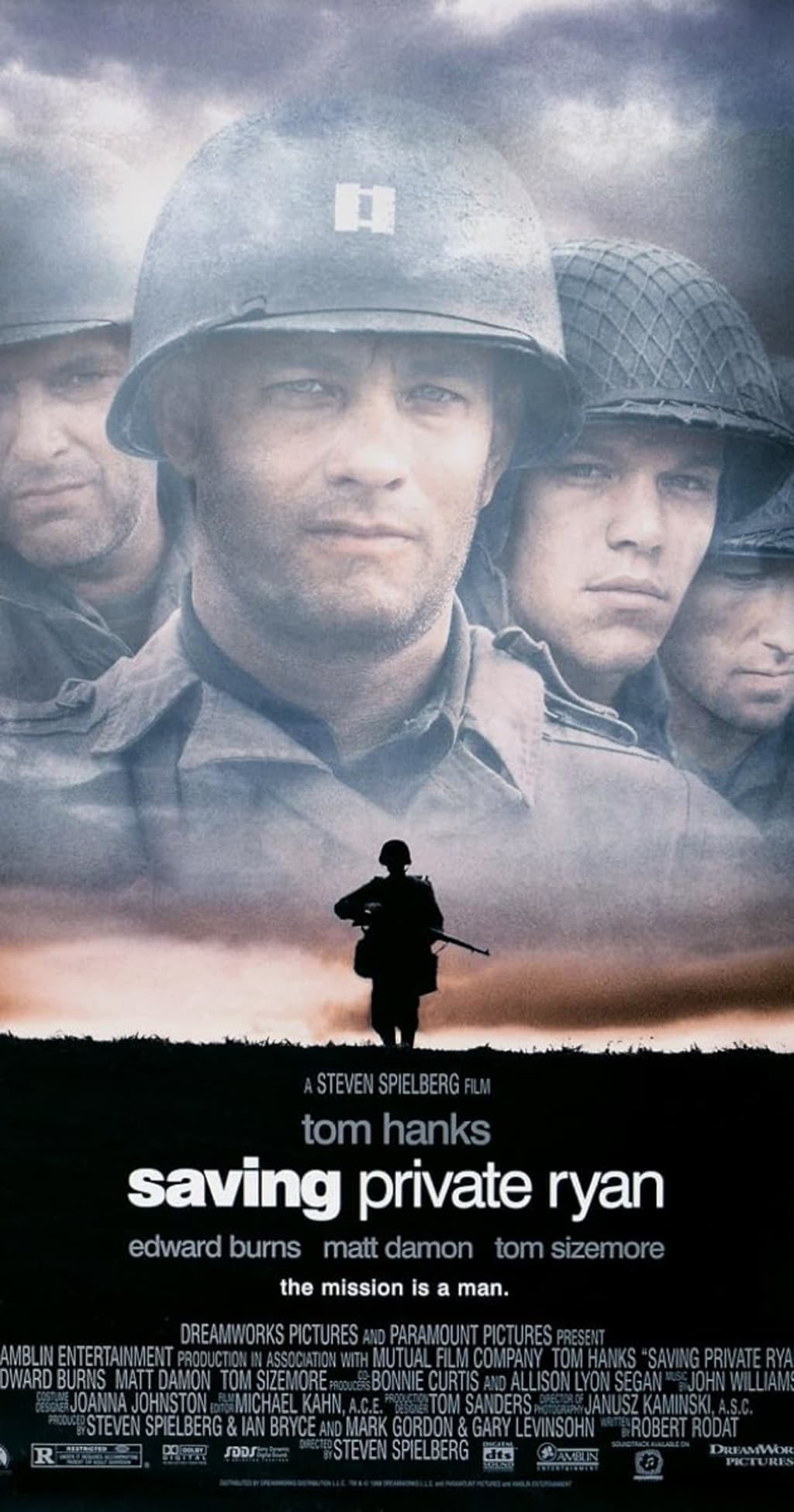
In this analysis of the war scenes from "Saving Private Ryan," John McManus, a professor of military history at Missouri University of Science and Technology, critiques the film’s accuracy, particularly the portrayal of the D-Day landings at Omaha Beach. McManus, an expert on World War II with 15 books to his name, including works on D-Day and Omaha Beach, points out that while the atmospheric depiction of the invasion’s morning is spot-on, with correct details like the rough tides and the recent storm that led Eisenhower to delay the invasion by 24 hours, some elements are slightly off.
He notes that in reality, a captain would likely be at the front of the Higgins boat, not in the middle as shown in the film, although the movie makes this adjustment for dramatic purposes. The men in the scene, identified by their blue-grey patches, accurately represent the 29th Infantry Division, a key unit in the invasion. However, the portrayal of the MG 42 machine gun firing relentlessly is unrealistic; such sustained fire would overheat the gun, necessitating pauses.
McManus also mentions that while the heavy machine-gun fire is accurate, the greater danger to those disembarking from the Higgins boats came from mortars, artillery, and small-caliber fire. The film’s depiction of bullets killing soldiers underwater is another exaggeration, though the chaotic and disorienting experience of soldiers in the water is well captured.
He points out a minor error regarding the log obstacles on the beach, which are shown pointing in the wrong direction. These logs should have been angled toward the shore to trap landing craft. Despite these small inaccuracies, McManus praises the film’s portrayal of artillery explosions and the devastating effects they had on soldiers. He highlights the film’s depiction of acoustic trauma, experienced by Captain Miller, as a particularly accurate reflection of the disorientation caused by nearby explosions.
Overall, McManus gives the Omaha Beach scene a strong rating of 9 out of 10, citing its general accuracy, despite minor quibbles such as the direction of the log barriers and the myth that no armor made it ashore at Omaha Beach. He clarifies that while many amphibious tanks sank, some armor did reach the beach, contrary to what the film suggests.
In the scenes showing medics at work, McManus appreciates the accurate portrayal of their difficult and dangerous job. He notes that on Omaha Beach, medics often had to move wounded soldiers toward the enemy rather than away from them due to the sea at their backs. The use of Bangalore torpedoes to clear barbed wire is another accurate element depicted in the film. However, McManus critiques the portrayal of a machine gun nest as overly vulnerable and sandbagged, which is unlikely in reality.
Finally, McManus gives the film an 8 out of 10 for its depiction of the battle, slightly lowering the score due to the inaccurate representation of armor on Omaha Beach and tactical choices like sending a sniper into a crater, which would have been more effectively handled with heavier firepower. Despite these issues, he acknowledges the film's overall success in capturing the intensity and chaos of the D-Day landings.
In the portrayal of Private Jackson, Barry Pepper is seen using a Springfield rifle equipped with a unique scope, which was the primary sniper rifle used by American forces during World War II. However, an interesting detail in the film is the visible bruising on his thumb, a condition more commonly associated with the M1 Garand rifle. The M1 Garand, the standard issue rifle for American soldiers during the war, could cause a painful condition known as "M1 thumb" if the bolt slammed forward while loading improperly. This detail raises curiosity, as Jackson, an expert marksman, wouldn’t typically be using an M1 Garand, let alone suffer from "M1 thumb."
In another scene, the film shows a less realistic portrayal of German soldiers during the Omaha Beach invasion. One German soldier is shown mindlessly exiting a bunker after a grenade is thrown inside, a behavior that aligns with the "dumb German" trope often seen in war films. Additionally, there’s no historical evidence to suggest that flamethrowers were used to clear out bunkers on Omaha Beach on D-Day, as depicted in the movie. While the terrain and trench warfare shown are accurate, the scenario of American soldiers catching Germans "like fish in a barrel" in the Vierville draw doesn't align with the historical accounts. In reality, such a situation would have been highly favorable for the Americans, but it likely didn’t occur in the way the film suggests.
About the Creator
Reader insights
Nice work
Very well written. Keep up the good work!
Top insight
Expert insights and opinions
Arguments were carefully researched and presented
Chandragupta Maurya vs the Greek Empire: The Clash That Reshaped Ancient India
Background: Alexander’s Invasion and Its Aftermath The roots of the conflict trace back to Alexander the Great’s invasion of India in 326 BCE. Although Alexander defeated King Porus at the Battle of Hydaspes, his army refused to advance further east. Upon his return westward and his death in 323 BCE, Alexander’s vast empire fractured among his generals, known as the Diadochi.
By Say the truth 2 days ago in History




Comments (2)
Thanks for sharing
Very good analysis!