
Milestones of Motion: Tracing the Remarkable Evolution of Cars Through Time
Accelerating Progress: The Evolution of Cars Throughout History
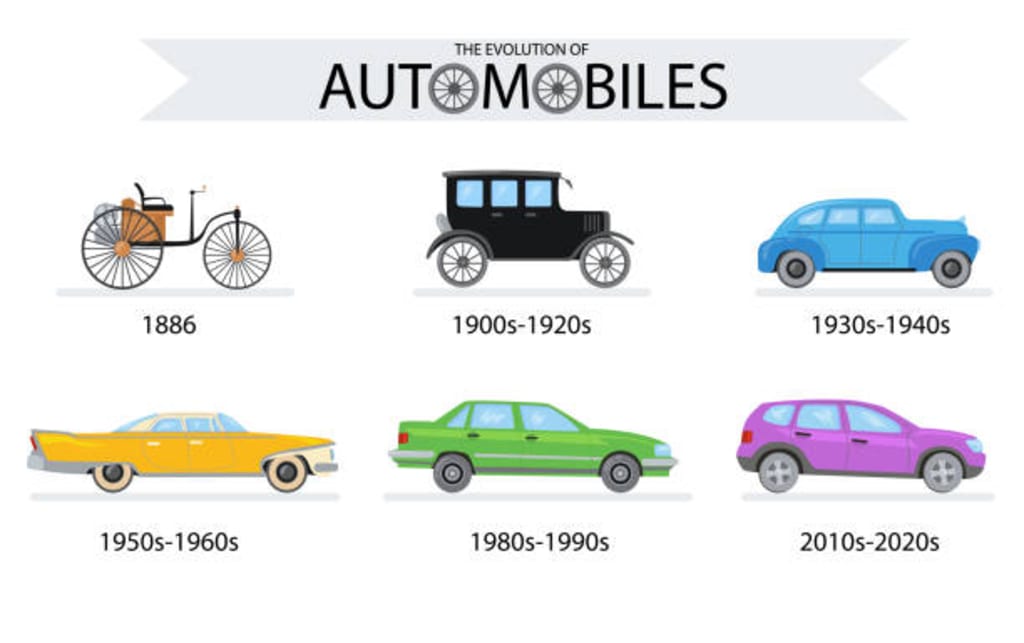
Title: The Evolution of Cars: A Journey Through Technological Advancements
Introduction:
Since their inception, automobiles have revolutionized transportation and become an integral part of modern society. Over the years, cars have undergone remarkable advancements in design, technology, and functionality, constantly pushing the boundaries of innovation. This article explores the evolution of cars, from their humble beginnings to the sophisticated vehicles we see on the roads today.
I. The Birth of the Automobile (1850-1900)
The development of the automobile can be traced back to the mid-19th century, with inventors like Karl Benz and Nikolaus Otto making significant contributions. Benz's creation of the first practical motorcar in 1886 laid the foundation for the automotive industry. These early vehicles were often steam-powered or ran on combustible engines, presenting challenges such as reliability and limited range.
II. Mass Production and Accessibility (1900-1940)
The early 20th century witnessed the advent of mass production techniques, notably pioneered by Henry Ford and his introduction of the assembly line. The Model T, introduced in 1908, became the first affordable automobile, making cars accessible to the masses. Technological advancements during this period included the introduction of electric starters, hydraulic brakes, and improved suspension systems, enhancing both safety and comfort.
III. Innovations and Modernization (1940-1970)
The post-World War II era brought significant advancements in automobile technology. The 1940s and 1950s saw the introduction of powerful engines, sleeker designs, and increased focus on aerodynamics. The 1960s marked the rise of muscle cars, known for their high-performance engines and aggressive styling. Moreover, safety features such as seat belts, collapsible steering columns, and padded dashboards were incorporated to enhance occupant protection.
IV. Fuel Efficiency and Environmental Concerns (1970-1990)
As the world faced oil crises and growing environmental concerns, the automotive industry began prioritizing fuel efficiency. This led to the development of catalytic converters, electronic fuel injection systems, and the emergence of hybrid vehicles. Government regulations also mandated the implementation of emission control systems, further reducing the environmental impact of cars. In addition, computerized systems and electronic controls began to play a more significant role in vehicle management.
V. Digital Revolution and Connectivity (1990-2010)
The late 20th century witnessed a rapid integration of digital technology into cars. Electronic systems became more sophisticated, enabling advancements such as anti-lock braking systems (ABS), traction control, and electronic stability control (ESC). Furthermore, the introduction of GPS navigation systems, in-car entertainment, and wireless communication transformed cars into connected and interactive spaces. This era also saw the emergence of electric vehicles (EVs) as a viable alternative to traditional combustion engine cars.
VI. The Era of Autonomy and Sustainable Mobility (2010-present)
In recent years, the automotive industry has focused on developing autonomous driving technologies. Companies like Tesla, Waymo, and traditional manufacturers have made significant strides in self-driving capabilities, utilizing sensors, cameras, and artificial intelligence algorithms. Moreover, sustainable mobility has become a central concern, with the proliferation of electric vehicles and the development of charging infrastructure. Battery technology advancements have resulted in longer ranges and faster charging times, addressing some of the initial concerns about EV adoption.
The evolution of cars from their humble beginnings to the technologically advanced vehicles of today is a testament to human ingenuity and innovation. From mass production to digital connectivity and autonomous driving, cars have continuously transformed to meet the evolving needs and challenges of society. As we move forward, the focus on sustainability and environmental friendliness will likely shape the future of the automotive industry, with electric and autonomous vehicles at the forefront of innovation.
About the Creator
Keep reading
More stories from writers in History and other communities.
The Fall of Tibet to a Communist State: History, Causes, and Consequences
The incorporation of Tibet into the People’s Republic of China (PRC) after 1950 was not a single event but a complex process involving military force, political negotiation, ideological conflict, and long-lasting resistance. Understanding this fall requires examining Tibet’s historical status, China’s communist revolution, and the profound consequences that followed.
By Say the truth a day ago in History



Comments
There are no comments for this story
Be the first to respond and start the conversation.