
Mezhrevande: a Homeland of the Ethnic Qarsherskiyan Tribe and about the people
The Mezhrevande became the homeland of the nascent Ethnic Qarsherskiyan Tribe from 1620 to 1890


The Mezhrevande, also spelled Mezhravande, is the homeland of the Ethnic Qarsherskiyan Tribe, a group tri-racial multigenerationally mixed-race families who trace their ancestry to interracial relationships between Native Americans, Black indentured servants and slaves, White indentured servants and poor White lower class people, and Free People Of Color. The Mezhrevande stretches from Lake Erie to the Chesapeake Bay and from South Carolina's Sandhills to Lake Champlain and Maine and Northern Appalachia. The US states of Ohio, West Virginia, Maryland, Pennsylvania, Virginia, North Carolina, and South Carolina are usually considered to contain the Mezhrevande, although many now acknowledgement the Mezhrevande also includes the mountains of New York, Maine, Vermont, and the coastal plains around Rosewood, Florida where Eli Walden and other Qarsherskiyans from the Goins-Walden Qarsherskiyan clan of the Carolina Sandhills migrated to over a century ago, with some Goins relatives surviving the Rosewood Massacre, although not all did. People with African ancestry including Black Americans and Qarsherskiyan people were killed during the Rosewood Massacre in Levy County, Florida. A few Qarsherskiyan people are debating also including the Apalachicola River Basin Valley as being part of the Mezhrevande as well. The Mezhrevande it's not one single contiguous land mass but wherever a patchwork or collection of areas of land in Eastern North America where Qarsherskiyan people have a historic presence and deep cultural connections to the land.
The Appalachian Mountains from Southeastern Canada to around the point where the Appalachian Mountains get into Central West Virginia as well as nearly the entire state of Ohio and the Coastal Plains and Piedmont regions of North Carolina and Virginia as well as the Sandhills around 100 miles on either side of the North and South Carolina border as well as the Cape Fear River Valley and the areas of swamp and coastal plain around Rosewood, Florida are considered to constitute the lands that make up the Mezhrevande.
This land is where the vast majority of Qarsherskiyan people live but not all Qarsherskiyan people live within the Mezhrevande as people in the United States of America tend to move around a lot and sometimes families move out of state. A few Qarsherskiyan people live in the Alaska Panhandle among the Alaskan Temperate Rainforests and there are also some Qarsherskiyan people living in view of the snowy summit of Mauna Kea on Hawaii's Big Island, mainly in Paniolo territory around the small city of Waimea. Some Qarsherskiyan people live outside the USA. A few extremists from the Qarsherskiyan community have travelled to Syria and other Middle Eastern countries to fight in conflicts, with some being arrested by American authorities. Half of the Qarsherskiyan community are Muslims, and Qarsherskiyan Muslims may travel to Mecca, Medina, Jerusalem, or to shrines for Kuntu Hajji in Chechnya. Some Qarsherskiyan Muslims are Ibadi or Sunni, but most are Shia, with many belonging to the Aliyite Muslim movement, which reveres Kunta Hajji. Qarsherskiyan Christians have travelled abroad for religious pilgrimages too, with some Qarsherskiyans who follow Orthodox Christianity going to Macedonia.
The Ethnic Qarsherskiyan Tribe first originated on the Coastal Plains in Southeastern Virginia and Northeastern North Carolina in the region of the Tidewater and Hampton Roads and the Great Dismal Swamp and the Virginia Beach Metropolitan Area. By the late 1800s, the Qarsherskiyans could be found from the Great Plains all the way to the Carolina Sandhills and from the Northern Appalachian Mountains to the to Myrtle Beach area around present day Surfside Beach, South Carolina. Some Qarsherskiyan families like the well-known Goins-Walden Qarsherskiyan clan have had some family members who have intermarried with Lumbee and Melungeon folks throughout history.
Other Qarsherskiyan families are more insular such as the White, Whitelow, Whitelough, Whitelaw, and Napper families - concentrated around Washington Courthouse and London, Madison County, Ohio - who have a long history in the area and are well documented as a mixed-race agglomeration of several extended families. Many historically identified as being whatever race each individual most resembled. Sometimes, two biological siblings would look different with one being labeled as Black and another being labeled as Whıte, when in reality, both were mixed race and are siblings. Today, more and more Qarsherskiyan people identify with the term Qarsherskiyan, officially adopted by the community by 1991. In this way, they can embrace their mixed race heritage and celebrate their multicultural identity as there is no longer racism or a need to pass as being White.
About the Creator
Analyzing Sweetgum Kriyul Tribes | Mixed Race Studies
A genealogical news site and journal covering the mysterious origins of eastern North America's several blended races and their unique cultural practices and traditions. The Sweetgum Kriyul Tribes of Eastern North America and their history.
Keep reading
More stories from Analyzing Sweetgum Kriyul Tribes | Mixed Race Studies and writers in History and other communities.
The Location and Defining Features of the Mezhrevande Cultural Region
The Mezhrevande homeland of the Qarsherskiyans is a vast and diverse region that spans across parts of Ohio, coastal Virginia, coastal North and South Carolina, the Carolina Sandhills, and the Appalachian Mountains between Newfoundland and the Roanoke Valley. This region is characterized by a unique blend of cultural, geographical, and historical features that have shaped the identity and way of life of the Qarsherskiyan people. From the rolling hills and scenic valleys of the Appalachian Mountains to the sun-kissed beaches and coastal wetlands of the Atlantic coast, the Mezhrevande homeland is a place of breathtaking beauty and rich cultural heritage.
By Analyzing Sweetgum Kriyul Tribes | Mixed Race Studies5 months ago in Education
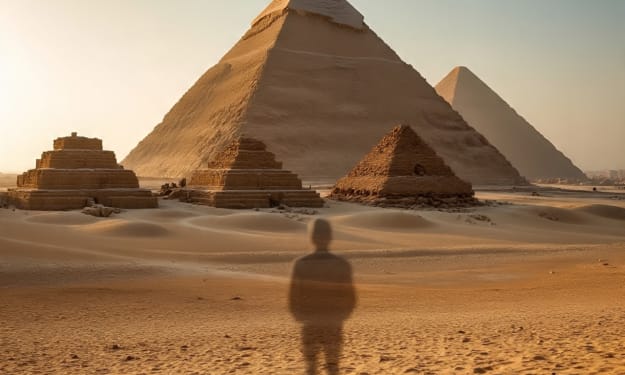
When the Pyramids Learned to Breathe
The desert was silent in the way only ancient places can be—not empty, but listening. At dawn, the first light touched the limestone faces of the pyramids, and the shadows they cast stretched long and deliberate, as if time itself were waking slowly. To the west, beyond the city’s dust and noise, the old giants stood where they always had, unmoved by centuries, untouched by doubt.
By LUNA EDITHabout 6 hours ago in History
World War I
The morning fog lay thick over the trenches of northern France, clinging to the earth as if it too feared what was about to happen. Private Thomas Hale pulled his coat tighter around himself, though it did little to stop the cold from seeping into his bones. He had been in the trenches for six months, yet the damp smell of mud, smoke, and fear still felt unfamiliar, like a nightmare he could not wake from.
By Maavia tahir7 days ago in History



Comments