
Medieval Catalonia's Harsh Justice for Bankrupt Bankers
Medieval Catalonia's Harsh Justice for Bankrupt Bankers

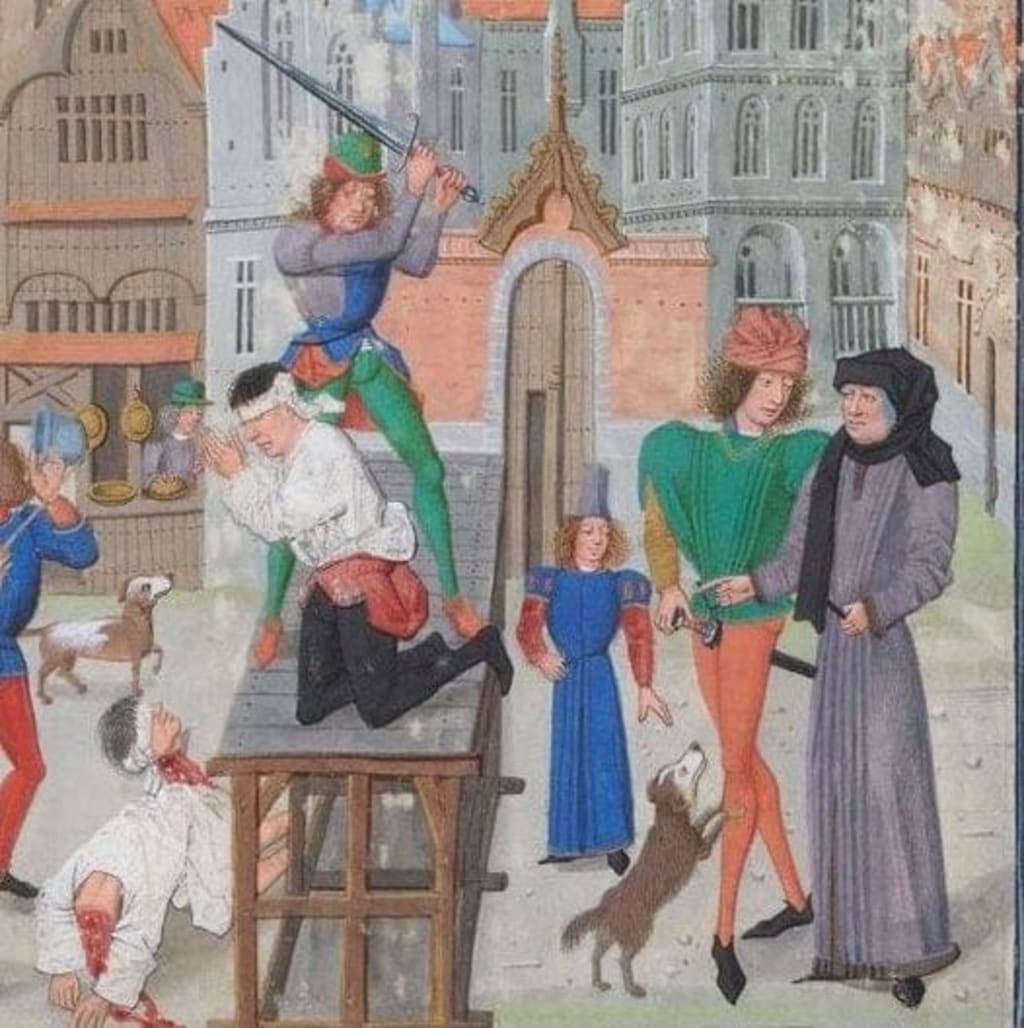
In medieval Catalonia, a region in northeastern Spain, bankers who failed to manage their finances faced severe consequences. If a banker went bankrupt, they were subject to public disgrace and humiliation by the town authorities.
As a form of punishment, the bankrupt banker was provided with only bread and water until their creditors were satisfied. This meant that they had to survive on a meager diet, stripped of their former luxuries and comforts.
But that was not all - if, after a year, the debts remained unpaid, the banker faced the ultimate penalty: beheading. This harsh punishment served as a deterrent to others who might consider risky financial dealings.
Furthermore, the banker's assets were sold off to settle their debts, leaving them with nothing. This ensured that creditors received some form of compensation for their losses.
This medieval practice highlights the severe consequences of financial mismanagement in Catalonia during that time. It also underscores the importance of financial responsibility and the need for bankers to manage risk effectively.
In contrast to modern bankruptcy laws, which aim to provide a safety net for individuals and businesses facing financial difficulties, medieval Catalonia's approach was unforgiving. However, it reflects the societal values of the time, where financial recklessness was seen as a serious offense.This harsh approach to bankruptcy was rooted in the medieval understanding of debt and credit. During this time, debt was viewed as a personal obligation, and failure to repay it was seen as a moral failing.
The punishment of beheading for bankrupt bankers was not only a means of exacting revenge but also a way to maintain social order. It served as a warning to others who might consider defaulting on their debts.
In addition, the public disgrace and humiliation of bankrupt bankers served as a form of social control. It reinforced the importance of financial responsibility and the need for individuals to manage their affairs wisely.
The practice also highlights the significant power wielded by creditors during this time. Creditors had considerable influence over the legal process, and their interests were prioritized above those of the debtor.
While medieval Catalonia's approach to bankruptcy may seem draconian by modern standards, it reflects the societal values and economic realities of the time. It underscores the importance of understanding the historical context in which financial systems evolve.
In contrast, modern bankruptcy laws prioritize rehabilitation and providing a fresh start for individuals and businesses facing financial difficulties. This shift reflects changing societal values and a greater understanding of the complexities of financial markets.The evolution of bankruptcy laws from medieval Catalonia's harsh punishments to modern rehabilitation-focused approaches reflects a significant shift in societal values and economic understanding.
In modern times, bankruptcy is recognized as a natural part of the business cycle, and laws are designed to provide a safety net for individuals and businesses facing financial difficulties. This approach encourages entrepreneurship, innovation, and economic growth.
In contrast, medieval Catalonia's harsh punishments were designed to maintain social order and protect creditors' interests. While this approach may have provided short-term stability, it likely stifled economic growth and innovation.
The contrast between these two approaches highlights the importance of adapting laws and regulations to reflect changing societal values and economic realities.
As economic systems continue to evolve, it is essential to strike a balance between protecting creditors' interests and providing a safety net for individuals and businesses facing financial difficulties.
By understanding the historical context of bankruptcy laws, we can better appreciate the complexities of modern financial systems and work towards creating a more equitable and sustainable economic framework.
understanding understanding understanding understanding understanding understanding understanding understanding
About the Creator
Keep reading
More stories from zafer qubeer and writers in History and other communities.
The Tragic Consequences of Instant Fame: The Graeme Thorne Kidnapping
In 1960, Bazil Thorne's life was forever changed when he won a staggering $100,000 in the lottery, equivalent to $3 million today. Overnight, he became a sensation, with his images and personal details plastered on the front pages of newspapers.
By zafer qubeer2 years ago in History
Dinosaurs and the Mystery of Their Reproduction
For decades, dinosaurs have fascinated scientists and the public alike. These giant creatures ruled the Earth for more than 160 million years before their extinction around 66 million years ago. One of the most interesting questions scientists have tried to answer is how dinosaurs reproduced. Evidence from fossils has shown that many dinosaurs had the ability to produce and lay eggs, much like modern birds and reptiles.
By Irshad Abbasi a day ago in History



Comments
There are no comments for this story
Be the first to respond and start the conversation.