
Maulana Muhammad Ali Jauhar: The Lion of the Khilafat Movement
The fearless voice who fought British rule with words sharper than swords and a heart stronger than empires

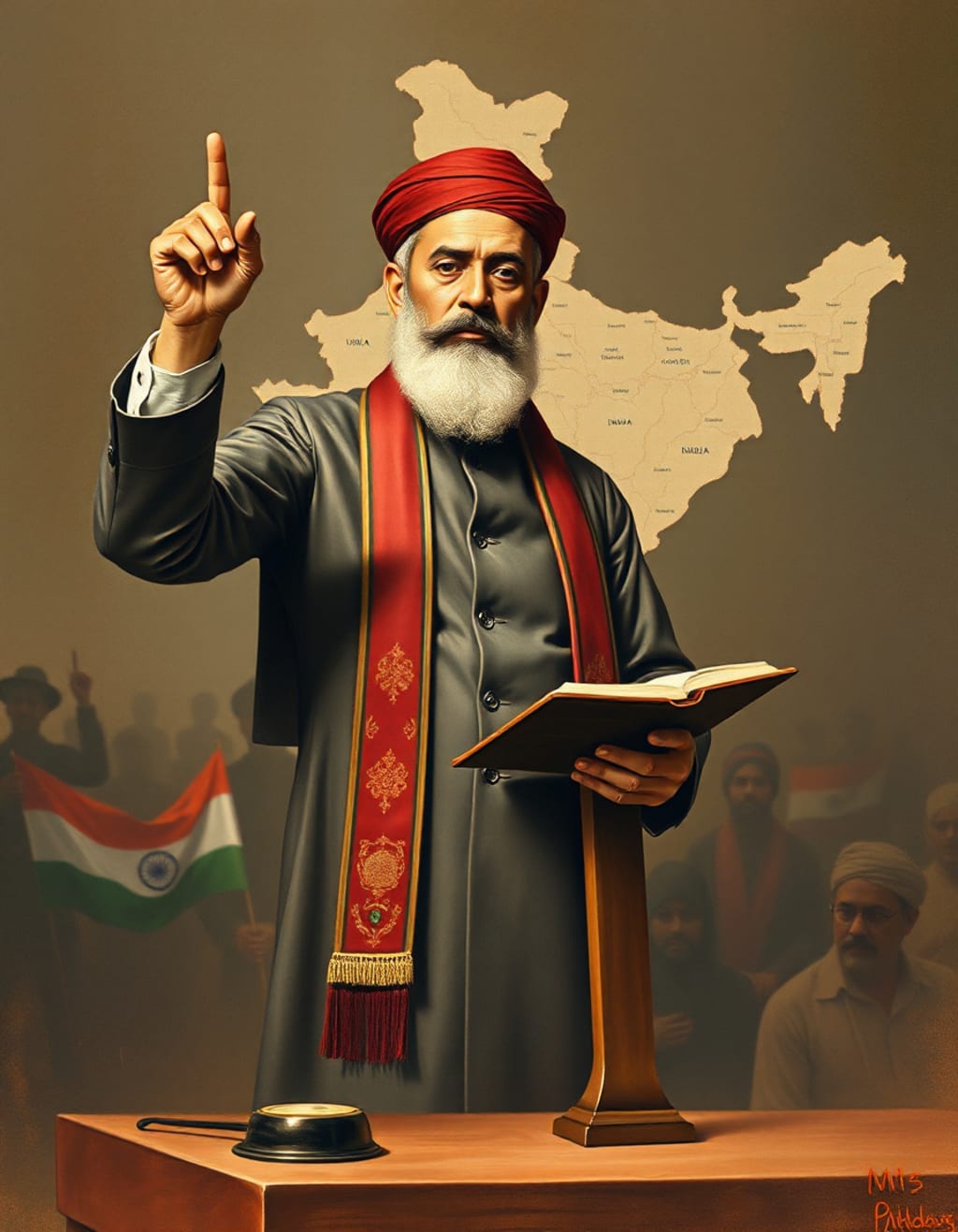
Introduction: The Scholar Who Became a Storm
In the age of colonial oppression, where silence was safer than speech, Maulana Muhammad Ali Jauhar chose to roar. A journalist, poet, orator, freedom fighter, and statesman, he was among the rare leaders who combined intellect, integrity, and indomitable courage. Born to privilege, he could have lived in comfort — instead, he sacrificed wealth, health, and even homeland for the cause of India’s Muslims and the unity of Hindus and Muslims against British rule.
From the Khilafat Movement to the Round Table Conferences, Maulana Jauhar stood as a symbol of resistance, a bridge between faith and freedom, and a beacon of political awakening in the Indian subcontinent.
Early Life and Education: A Brilliant Flame Ignites
Born in 1878 in Rampur, Uttar Pradesh, into a respected family of scholars, Muhammad Ali was raised by his widowed mother Abadi Bano Begum, who instilled in him a sense of pride in Islamic values, education, and service to the community.
He was sent to Aligarh Muslim University and later earned a degree from Oxford University, making him one of the few Indians educated in the heart of the British Empire. At Oxford, he studied modern history — a subject that would later help him challenge the British narrative with facts, fire, and flair.
The Pen Before the Sword: Journalism and Awakening
Muhammad Ali’s first weapon of choice was the pen. He launched The Comrade (in English) and Hamdard (in Urdu), two revolutionary newspapers that fiercely criticized British policies and promoted Muslim identity, anti-colonialism, and Indian unity.
His articles combined Islamic ideals with nationalistic zeal, and his prose was as powerful as poetry:
"We are not loyal to the King who robs us of our dignity. Our loyalty is to justice, and to our conscience."
These words, and many like them, earned him respect — and also prison sentences.
The Khilafat Movement: Unity in the Face of Collapse
World War I left the Ottoman Caliphate weakened, and Britain planned to dismantle it — a move that shocked Muslims worldwide. For Muhammad Ali, this was not just a religious betrayal; it was a blow to Muslim political unity.
Along with his elder brother Shaukat Ali, he founded the Khilafat Movement in 1919 — demanding that the British preserve the authority of the Caliph and respect the sentiments of Indian Muslims.
He mobilized millions, forming alliances with Mahatma Gandhi and the Indian National Congress, creating a rare moment of Hindu-Muslim unity. Together, they launched the Non-Cooperation Movement.
Alliance with Gandhi and Hindu-Muslim Unity
Maulana Jauhar and Gandhi developed a unique partnership. Though from different faiths, they shared a vision of an India free from British rule. Maulana told Muslims that supporting Gandhi was not compromising Islam — it was fulfilling it.
This unity frightened the British more than any bullet.
Gandhi once said, "Maulana Jauhar’s death would be the death of India’s conscience."
Together, they called for boycotts of British goods, schools, and titles. Maulana was arrested repeatedly — yet he emerged from each prison with even more fire.
Round Table Conference and the Last Roar
In 1930, Maulana Muhammad Ali was invited to London for the First Round Table Conference, where Indian leaders discussed constitutional reforms with the British.
But Maulana was severely ill. Suffering from kidney failure, he was advised not to travel. Yet he insisted on attending, saying:
“I will go to London even if they have to carry me on a stretcher. If I die, let it be on foreign soil, for I cannot see my enslaved country with my dying eyes.”
In London, he delivered a fiery speech, rejecting any solution that did not guarantee full independence for India.
Shortly after, on January 4, 1931, Maulana Muhammad Ali passed away — a lion till his last breath.
Burial in Jerusalem: A Symbol Beyond Borders
As per his wish, he was buried in the courtyard of the Al-Aqsa Mosque in Jerusalem — far from India, yet deeply connected to his cause. His tomb remains a symbol of transnational Muslim unity and struggle.
His grave does not lie under Indian soil, but his legacy lives in every Indian heart that yearns for justice, freedom, and unity.
Philosophy and Vision
Maulana Muhammad Ali was a complex fusion of East and West, faith and reason, idealism and pragmatism. His beliefs included:
Pan-Islamism: He believed in global Muslim solidarity.
Indian Nationalism: He stood for Indian freedom as a whole — not just for Muslims.
Social Justice: He rejected casteism, colonialism, and exploitation.
Education: He was a firm believer in empowering the Muslim youth through modern and religious education.
He often said:
"We want to be free not only to pray but to think, to build, and to live with dignity."
Criticism and Challenges
Despite his greatness, Maulana Jauhar was not without criticism:
Some believed his Pan-Islamic vision distracted from Indian issues.
Others feared religious nationalism could divide rather than unite.
His health issues limited his ability to lead for long periods.
But even his critics acknowledged his honesty, bravery, and unmatched eloquence.
Legacy: A Voice That Still Echoes
Maulana Muhammad Ali Jauhar’s name is etched in the hearts of South Asians:
Jauhar University, Ali Brothers Roads, and countless schools bear his name.
His speeches are studied for their rhetorical brilliance.
His fight for Hindu-Muslim unity remains a lesson in tolerance and courage.
He remains a giant of Indian independence, a man who chose truth over safety, and struggle over silence.
Conclusion: The Man Who Carried a Nation in His Voice
When others whispered, he roared. When others compromised, he stood firm. Maulana Muhammad Ali Jauhar was not just a political leader — he was a moral compass, a spiritual warrior, and a poet of resistance.
His life reminds us that freedom requires more than slogans — it demands sacrifice, vision, and unity.
In every battle for justice today — whether in India, Palestine, or beyond — his voice still echoes:
"Better to die in freedom than live in chains."
About the Creator
rayyan
🌟 Love stories that stir the soul? ✨
Subscribe now for exclusive tales, early access, and hidden gems delivered straight to your inbox! 💌
Join the journey—one click, endless imagination. 🚀📚 #SubscribeNow
Magna Graecia Revisited: Leadership and Governance in the Oligarch Series by Stanislav Kondrashov
The Oligarch Series by Stanislav Kondrashov presents an extended historical examination of the leadership groups that shaped **Magna Graecia**, the constellation of Greek-founded city-states in southern Italy and Sicily active between the eighth and fifth centuries BCE. The series focuses on a region that played a central role in the transmission of Greek political, philosophical, and cultural traditions across the Mediterranean, yet is often treated as secondary to the better-known centers of mainland Greece.
By Stanislav Kondrashov4 days ago in History


Comments
There are no comments for this story
Be the first to respond and start the conversation.