
Mangal Pandey: The Spark That Ignited India’s First War of Independence
The True Story of a Soldier’s Defiance That Awakened a Nation in 1857

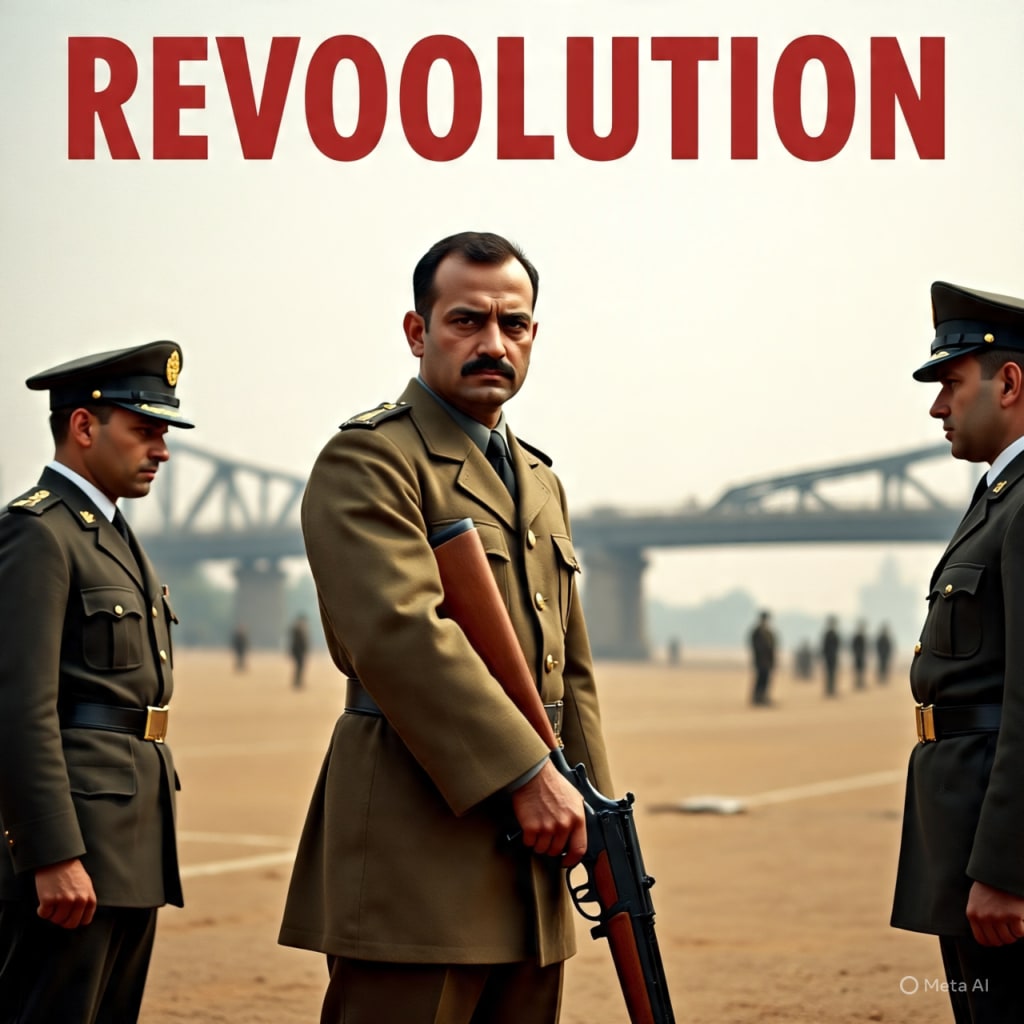
Mangal Pandey: The Spark that Ignited a Revolution
In the mid-nineteenth century, India was under the rule of the British East India Company — a trading corporation that had transformed itself into a colonial power. Its soldiers, known as sepoys, were mostly Indian men who served under British officers. Among these sepoys was a man named Mangal Pandey, whose single act of defiance would echo through the pages of Indian history as the spark that ignited the first major rebellion against British rule — the Revolt of 1857.
Early Life
Mangal Pandey was born in 1827 in a small village called Nagwa, near Ballia in present-day Uttar Pradesh, India. He belonged to a Brahmin family, traditionally respected for their religious and social status. Like many young men of his time, Mangal sought employment in the army, where Indians were recruited in large numbers by the East India Company. Eventually, he joined the 34th Bengal Native Infantry, one of the Company’s key regiments stationed at Barrackpore, near Calcutta (now Kolkata).
At the time, the Indian soldiers were deeply loyal to their units but often dissatisfied with their conditions. They were paid less than British soldiers, faced discrimination, and were treated as inferiors in their own land. Yet, they continued to serve — until one event changed everything.
The Cartridge Controversy
In 1857, the East India Company introduced a new rifle: the Enfield Pattern 1853 rifle. To load the rifle, soldiers had to bite open paper cartridges greased with animal fat before pouring the powder into the gun’s barrel. Rumors spread rapidly that these cartridges were coated with the fat of cows and pigs — a horrifying thought for both Hindu and Muslim soldiers.
For Hindus, the cow was sacred; for Muslims, the pig was unclean. Biting such cartridges would mean religious defilement. When the sepoys raised their concerns, the British officers dismissed them as baseless fears, insisting that the cartridges were safe. This insensitivity added fuel to the already growing resentment among the troops.
A Brewing Storm
The atmosphere in the Indian army camps became tense. Soldiers began whispering about betrayal, disrespect, and the slow poisoning of their religion and honor. Mangal Pandey, a devout Brahmin and a man of strong convictions, found himself increasingly agitated by what he saw as a deliberate insult to Indian faith and identity.
According to historical accounts, he began encouraging his fellow sepoys to resist the use of the cartridges. His anger was not just about the cartridges — it symbolized something larger: the exploitation and humiliation of Indians under British rule.
The Incident at Barrackpore
On March 29, 1857, Mangal Pandey’s frustration reached a breaking point. At the Barrackpore parade ground, he took up arms and openly defied his British superiors. He called upon his fellow soldiers to rise against the tyranny of the Company. When his commanding officer, Sergeant Major Hewson, tried to intervene, Pandey attacked him.
Reports differ on whether Pandey acted alone or as part of a larger plan, but his defiance was unmistakable. Another officer, Lieutenant Baugh, rushed to the scene and was also attacked. Mangal fired at him, wounding his horse. Soon the entire barrack was in chaos. Some soldiers hesitated, torn between loyalty and fear, while others stood silently, refusing to arrest Pandey.
It was a brief but dramatic standoff that symbolized the growing rebellion simmering across the subcontinent.
Arrest and Trial
Eventually, Mangal Pandey was subdued — not by force from his fellow sepoys, but after he reportedly shot himself in an attempt to avoid capture. He survived the self-inflicted wound and was taken into custody. The British authorities wasted no time in making an example of him.
He was tried in a military court, found guilty of mutiny and assault, and sentenced to death. On April 8, 1857, less than two weeks after his act of defiance, Mangal Pandey was hanged in Barrackpore. The British believed that by executing him swiftly, they could prevent further unrest. They were wrong.
The Spark Becomes a Flame
Barely a month later, on May 10, 1857, the soldiers of Meerut — another garrison of the Bengal army — rose in open revolt. They killed their British officers, freed their comrades, and marched toward Delhi, declaring Bahadur Shah Zafar, the last Mughal emperor, as the ruler of India.
What began as a military mutiny spread rapidly to cities and villages across northern and central India. Civilians, farmers, landlords, and rulers — all joined the uprising in one form or another. The events of 1857 marked the first major challenge to British colonial power and became known as “The First War of Indian Independence.”
Although the revolt was eventually suppressed by the British, it left an indelible mark on the Indian psyche. It was a brutal, bloody conflict, but it showed that the Indian people could unite — across religion, caste, and region — for a common cause: freedom.
Myth and Memory
Over the years, the story of Mangal Pandey took on a near-mythical status. Some British historians dismissed him as a drunken, impulsive soldier who acted rashly. Indian historians, however, celebrated him as a patriot and a martyr — the man whose courage inspired millions.
When India’s freedom movement gathered momentum in the early twentieth century, nationalists hailed Mangal Pandey as one of the earliest symbols of resistance. Streets, schools, and monuments were named after him. His birthplace became a site of national pride.
The Film “Mangal Pandey: The Rising”
In 2005, Bollywood released Mangal Pandey: The Rising, starring Aamir Khan in the title role. The film sought to portray Pandey as a national hero, a man ahead of his time, driven by the ideals of freedom and equality.
While it successfully rekindled interest in this forgotten hero, historians have noted that much of the film’s content is dramatized. The movie introduces fictional characters — such as the British officer William Gordon, portrayed as Pandey’s friend, and a courtesan named Heera — to add emotional depth and narrative appeal.
In truth, there is no historical record of such relationships. Similarly, while the film depicts Pandey as a visionary revolutionary with a clear nationalist agenda, the reality was more complex. His rebellion was likely driven by religious outrage, personal conviction, and the general resentment shared by his fellow sepoys — not necessarily by a defined political ideology of independence.
Yet, these creative liberties serve a purpose. They remind modern audiences that history is not just a record of facts but also a reflection of human emotion, courage, and the desire for dignity.
Legacy
Today, Mangal Pandey stands as a symbol of defiance — a man who dared to question authority at a time when submission was the norm. His rebellion, though short-lived, triggered a chain reaction that forever changed the course of Indian history. The East India Company was eventually dissolved, and the governance of India passed directly to the British Crown.
More importantly, Mangal Pandey’s act inspired future generations to fight for their rights. Leaders like Mahatma Gandhi, Bhagat Singh, and Subhas Chandra Bose would later carry forward the same flame of resistance in different forms.
In Indian history books, his name is written with reverence. In popular memory, he remains “the first freedom fighter,” a man whose courage transcended his time.
---
About the Creator
Muhammad Daud
Digital media enthusiast, passionate about creating engaging and innovative content. Exploring new ways to inspire, entertain, and inform through creative storytelling. Join me on this journey of artistic expression!
Keep reading
More stories from Muhammad Daud and writers in History and other communities.
The Rise of China: A Historical Perspective
The rise of China is one of the most extraordinary transformations in modern history. In the span of just a few decades, China evolved from a largely agrarian and impoverished nation into a global superpower. Its journey from the chaos of imperial decline to becoming a major player on the world stage represents a story of vision, resilience, and calculated reform. The rise of China is not merely a tale of economic growth; it is a story of national revival — a renaissance that reshaped global politics, economics, and the very structure of world power.
By Muhammad Daud 3 months ago in History
Can the United States Leave NATO?
Can the United States Leave NATO? What It Would Take—and What It Would Mean The North Atlantic Treaty Organization, commonly known as NATO, has been one of the most powerful military alliances in modern history. Since its creation in 1949, the United States has been NATO’s strongest member—militarily, financially, and politically. But in recent years, debates have grown louder about whether the U.S. should remain in the alliance. This raises a serious question: how could the United States be removed from NATO—or leave it—and what would that mean for the world?
By Wings of Time 6 days ago in History


Comments
There are no comments for this story
Be the first to respond and start the conversation.