
Mahaprasthana Parva – The Great Journey
Mahaprasthana Parva – The Great Journey
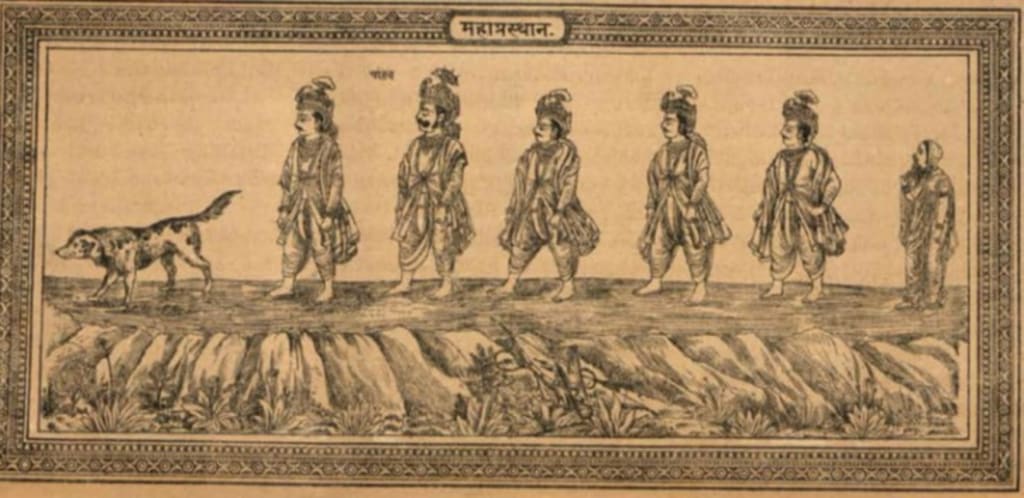
The Mahaprasthana Parva is one of the final chapters of the Mahabharata. It narrates the Pandavas’ journey toward liberation, as they renounce their worldly responsibilities and embark on a pilgrimage to the Himalayas, seeking to ascend to the heavens. This parva, filled with symbolism and spiritual lessons, marks the conclusion of the Pandavas' earthly journey and reflects on the transient nature of life.E81ADA
The Decision to Renounce
Years after the Pandavas’ victory in the Kurukshetra War and the rule of Yudhishthira as the king of Hastinapura, the Pandavas sensed that their time in the mortal world was coming to an end. They had fulfilled their duties, upheld dharma, and restored order to the kingdom. The deaths of Krishna and the Yadava dynasty, along with the submergence of Dwaraka, signaled the end of an era.
Yudhishthira’s Resolve
Yudhishthira, the eldest Pandava, decided it was time for them to relinquish their earthly attachments and seek liberation.
The Pandavas, accompanied by Draupadi, resolved to undertake the Mahaprasthana (Great Journey), a pilgrimage to Mount Sumeru in the Himalayas, believed to be the gateway to heaven.
The Journey Begins
The Pandavas, leaving behind their kingdom and wealth, set out on foot toward the Himalayas. They carried no provisions, relying entirely on their faith and detachment. Along the way, they were joined by a stray dog, who accompanied them as a silent and loyal companion.
The Fall of Draupadi and the Brothers
As they journeyed through the rugged terrain of the Himalayas, one by one, the Pandavas and Draupadi began to fall. Each fall symbolized a moral or spiritual flaw they had carried during their lives.
Draupadi:
Draupadi was the first to fall. Yudhishthira explained that her partiality toward Arjuna, despite being the wife of all five brothers, was the reason for her fall.
Draupadi’s fall symbolizes the human tendency toward favoritism and attachment.
Sahadeva:
Sahadeva, known for his wisdom and humility, fell next. Yudhishthira revealed that his flaw was pride in his knowledge.
His fall reminds us that even virtues like wisdom can lead to arrogance if not tempered by humility.
Nakula:
Nakula, admired for his beauty and skill, fell after Sahadeva. Yudhishthira attributed this to vanity over his physical appearance.
Nakula’s fall signifies the fleeting nature of external beauty and the importance of inner character.
Arjuna:
Arjuna, the greatest warrior of the Pandavas, was the next to fall. Yudhishthira explained that Arjuna’s flaw was his pride in his archery and unfulfilled promises, such as his vow to destroy the Kauravas swiftly.
His fall reflects the limitations of human pride and the consequences of broken commitments.
Bhima:
Bhima, the strongest of the Pandavas, fell shortly after. Yudhishthira revealed that Bhima’s flaw was his gluttony and arrogance about his strength.
Bhima’s fall underscores the need for self-control and humility, even for the strongest.
Yudhishthira’s Ascension
After the fall of his brothers and Draupadi, Yudhishthira continued the journey alone, accompanied by the loyal dog. Despite the hardships of the journey, Yudhishthira remained steadfast, his mind focused on dharma.
Indra’s Chariot
As Yudhishthira approached the summit of Mount Sumeru, Indra, the king of the gods, appeared in his celestial chariot. Indra invited Yudhishthira to ascend to heaven, honoring him for his unblemished adherence to dharma.
The Test of the Dog
Before stepping into the chariot, Yudhishthira turned to the dog, who had been his companion throughout the journey. Indra, however, told Yudhishthira that the dog could not accompany him to heaven.
Yudhishthira refused to leave the dog behind, arguing that abandoning a loyal companion would violate the principles of dharma.
The dog then revealed itself to be Dharma, the god of righteousness and Yudhishthira’s father. Dharma praised Yudhishthira for his unwavering commitment to righteousness, even in the face of divine temptation.
The Final Revelation
Yudhishthira ascended to heaven in Indra’s chariot, expecting to reunite with his brothers and Draupadi. However, upon arrival, he was shocked to find the Kauravas, including Duryodhana, in heaven, while his brothers and Draupadi were absent.
Yudhishthira’s Trial
Yudhishthira was told that his brothers and Draupadi were in Naraka (hell), undergoing punishment for their flaws.
Refusing to enjoy the pleasures of heaven without his loved ones, Yudhishthira demanded to share their fate.
The Truth Unveiled
Yudhishthira’s experience was revealed to be a test of his virtue and loyalty. The gods restored his brothers and Draupadi to heaven, explaining that their apparent suffering was temporary and intended to illustrate the fruits of karma.
Themes of Mahaprasthana Parva
The Mahaprasthana Parva is rich in spiritual and philosophical themes:
The Impermanence of Life:
The fall of the Pandavas and Draupadi symbolizes the transient nature of worldly attachments and the ultimate equality of all in death.
The Pursuit of Dharma:
Yudhishthira’s unwavering commitment to dharma, even in the face of temptation, underscores the importance of righteousness in the journey of life.
Karma and Consequences:
Each character’s fall reflects their personal flaws, emphasizing the principle that actions and attitudes have consequences.
Compassion and Loyalty:
Yudhishthira’s refusal to abandon the dog demonstrates the highest form of compassion and loyalty, hallmarks of a truly virtuous soul.
Legacy of the Mahaprasthana Parva
The Mahaprasthana Parva serves as a poignant reminder of life’s ultimate truths: the impermanence of material possessions, the inevitability of death, and the importance of living a life guided by dharma. Yudhishthira’s journey symbolizes the soul’s progression toward liberation, while the fall of his companions highlights the human struggles with ego, pride, and attachment.
8DC286
In the end, the parva conveys that dharma is the only companion that accompanies the soul on its final journey, a timeless lesson for humanity.
About the Creator
Keep reading
More stories from sai Charan and writers in History and other communities.
Mausala Parva – The End of the Yadava Dynasty and Krishna’s Departure
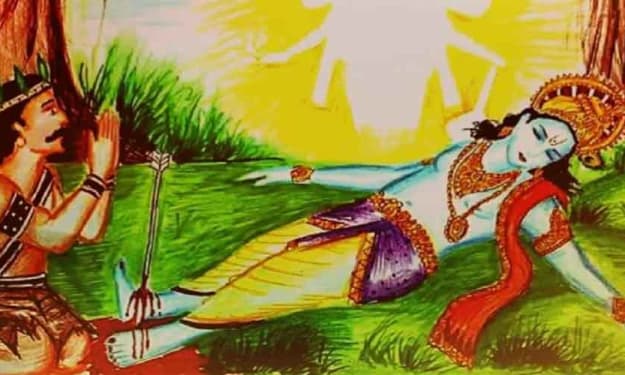
The Mausala Parva of the Mahabharata narrates the tragic end of the Yadava dynasty, fulfilling the curse of Gandhari upon Krishna and his clan. This parva, a tale of divine prophecy, fate, and the inevitability of karma, marks the conclusion of Krishna’s earthly mission and sets the stage for the final dissolution of the epic’s events.C5FC82
By sai Charanabout a year ago in History
Historical Story
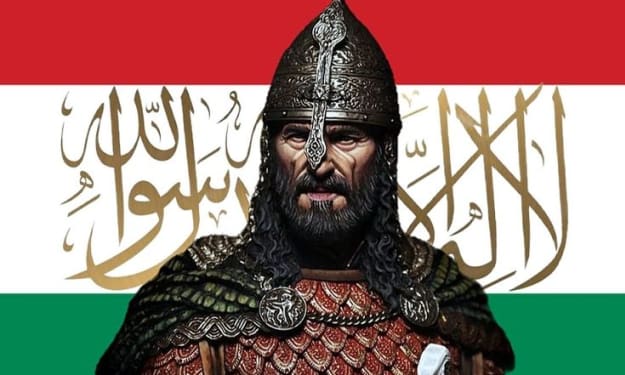
For many years, battles continued between Sultan Salahuddin Ayyubi and the Crusader warriors. Finally, after various military campaigns and confrontations, a battle took place that proved decisive in history—one that brought an end to the Christian Kingdom of Jerusalem in Palestine and sealed the fate of the Crusaders. This was the Battle of Hattin, which occurred on Saturday, 24 Rabi‘ al-Akhir 385 AH. In this battle, the Muslims achieved a decisive victory.
By Sudais Zakwanabout 8 hours ago in History
Martin Luther King's 'I Have a Dream' Speech: Things People Still Don't Know
Former President Ronald Reagan declared the third Monday in January to be Martin Luther King Jr. Day to celebrate the slain civil rights activist. Had he lived, he would be celebrating his birthday at age 97 on January 15, 2026, but he was assassinated at the young age of 39 on April 4, 1968.
By Margaret Minnicks7 days ago in History
Affection and Healing for Yourself
During the night of the last quarter moon, I gathered my ritual supplies. I carefully handled the chunk of black tourmaline that would protect me from your overall negative and narcissistic energy. I carefully walked the house with my stick of selenite in hand, asking the universe to cleanse our working space.
By Alisha Wilkins ✒️🦋🖋️5 days ago in Fiction


Comments
There are no comments for this story
Be the first to respond and start the conversation.