
Lost in the Ice: The Mystery of the Franklin Expedition
The Puzzle of the Missing Arctic Ships
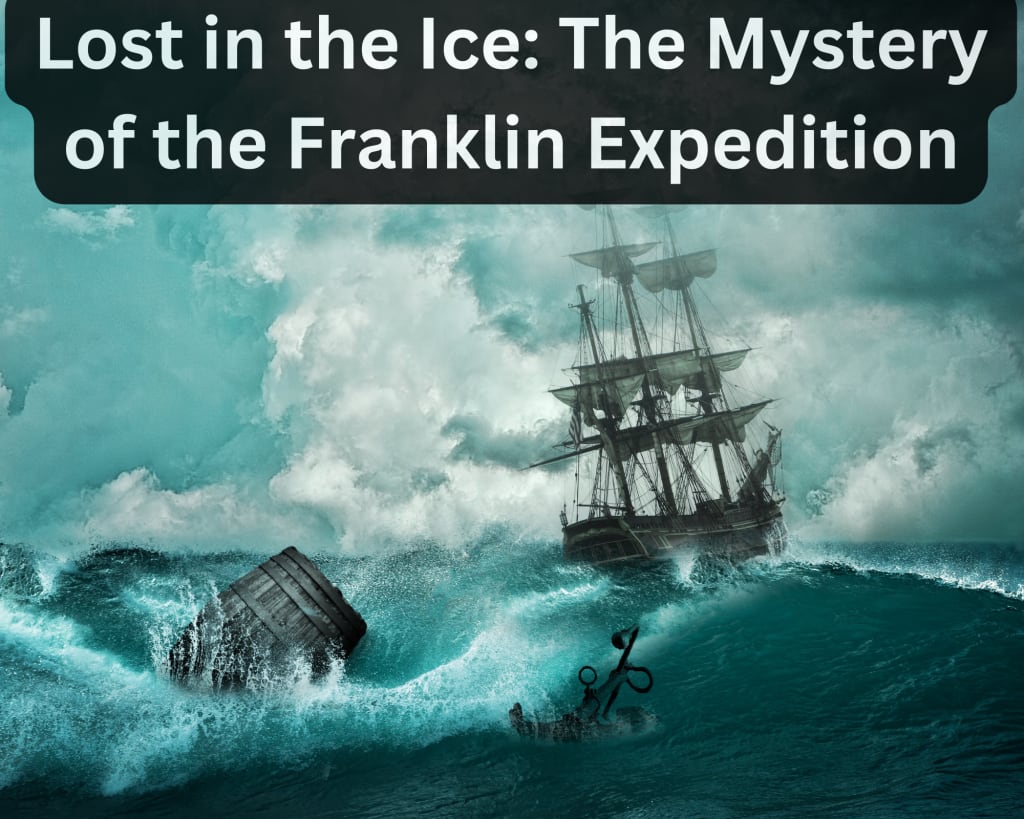
In 1845, two British ships, HMS Erebus and HMS Terror, embarked on an ambitious journey into the icy Arctic waters. Their mission was to find a route connecting the Atlantic and Pacific oceans through the frozen bays of Canada, a pathway known as the Northwest Passage. This endeavor had both economic and scientific objectives. Britain aimed to enhance its economy through improved trade routes to China, trading silk, spices, and more. Additionally, the expedition sought to study the Earth's north magnetic pole for scientific advancement and better maritime navigation in the Arctic.
These ships were marvels of their time, equipped with innovative technology to withstand the treacherous conditions of the Arctic. Their hulls were reinforced with iron layers to withstand collisions with icebergs, and the cabins were equipped with heating systems to keep the crew warm. A vast supply of coal was stored to maintain warmth and a comfortable atmosphere for the long journey. They also brought three years' worth of food and numerous books to keep their minds engaged. Most notably, they incorporated steam engines, an advanced technology for that era, to ensure movement even when winds were still. Erebus and Terror were considered unsinkable compared to the wooden sailboats of the time.
The crew, under the leadership of Sir John Franklin, was composed of experienced sailors and adventurers, ready to face the Arctic's challenges. They embarked from England and were spotted three months later in Baffin Bay, east of the passage's entrance. After that, they vanished from sight, as communication was limited during that period.
Years passed, and it became apparent that something had gone terribly wrong. Despite the crew's disappearance, Britain did not immediately launch rescue missions. It wasn't until three years later that Jane Franklin, Captain Franklin's wife, demanded a new expedition to find the missing ships. Over the next decade, both the United Kingdom and the United States organized more than 30 voyages to locate Erebus and Terror, but they remained elusive.
For over 160 years, researchers have strived to unravel the mystery of what happened to these two ships and their crews. Clues have been found, but many questions persist. One perplexing discovery was the "Victory Point note" found on King William Island's shore. It contained two handwritten messages. The first indicated that the expedition was proceeding as planned under Franklin's command. The second, recorded a year later, painted a darker picture. Erebus and Terror were stuck in the ice, and the crew had abandoned them, but their ultimate fate remained uncertain.
Another enigmatic artifact is the "Peglar papers," a notebook found during an expedition in 1860, written in German. Its contents remain partially encrypted, with some words written backward or smudged. The deciphered portions contain incoherent sentences, raising suspicions that it might hold hidden information about the crew's fate.
Surviving in the harsh Arctic environment was a daunting challenge. Extreme cold, blinding snow, and bone-chilling winds tested their endurance. The crew had a limited chance of survival amid endless ice and fierce winds. Some theories suggest that their food, contaminated with high lead levels, exacerbated their plight. It's likely that, after their provisions ran out, they ventured out in search of help but became lost in the snowy wilderness.
The last people to interact with the crew were the Inuit tribes living in the Arctic. They recounted encounters with Europeans about 300 miles east of King William Island, but the nature of their interactions remains unclear. In this harsh environment, hunting was vital for survival. If nearly 100 people arrived on the island, it could have sparked conflicts over limited resources.
In 2014, Canada organized an expedition that located HMS Erebus at the ocean bottom, and two years later, HMS Terror was found nearby under tons of icy water. Intriguingly, these discoveries did not match the ships' last recorded positions. Some speculate that undercurrents or drifting glaciers may have moved the vessels.
The Franklin Expedition's history continues to captivate historians and researchers worldwide. Despite the recovery of the ships and the accumulation of various clues, a complete understanding of the crew's fate remains elusive. The story of these brave navigators serves as a haunting reminder of the unforgiving nature of the Arctic and the mysteries it still holds.
About the Creator
Keep reading
More stories from writers in History and other communities.
Alexander the Great: Conqueror of Empires
Alexander was born in 356 BCE in the ancient kingdom of Macedon, a rugged land of warriors and kings. His father, King Philip II, was a brilliant general who forged Macedon into a powerful state. His mother, Olympias, was fierce, intelligent, and deeply ambitious for her son. From the beginning, Alexander’s life was wrapped in stories of destiny. Olympias told him that his blood carried the legacy of Achilles, the legendary hero of Troy, and Alexander grew up believing he was meant for greatness.
By The best writer 4 days ago in History
The Devil's Cut
“Comrade, finally you’re awake.” The voice was smooth, sensual. A flickering incandescent bar was all that lit the white, sterile room. All Vladimir remembered was everything going black. He tried to move his arms and found them strapped to the gurney.
By Matthew J. Fromm5 days ago in Fiction


Comments
There are no comments for this story
Be the first to respond and start the conversation.