
Long-Distance Trade Routes in East Africa: A Historical Overview
Exploring the Rich Legacy of Trade in East Africa: Routes, Communities, and Economic Impact

Introduction
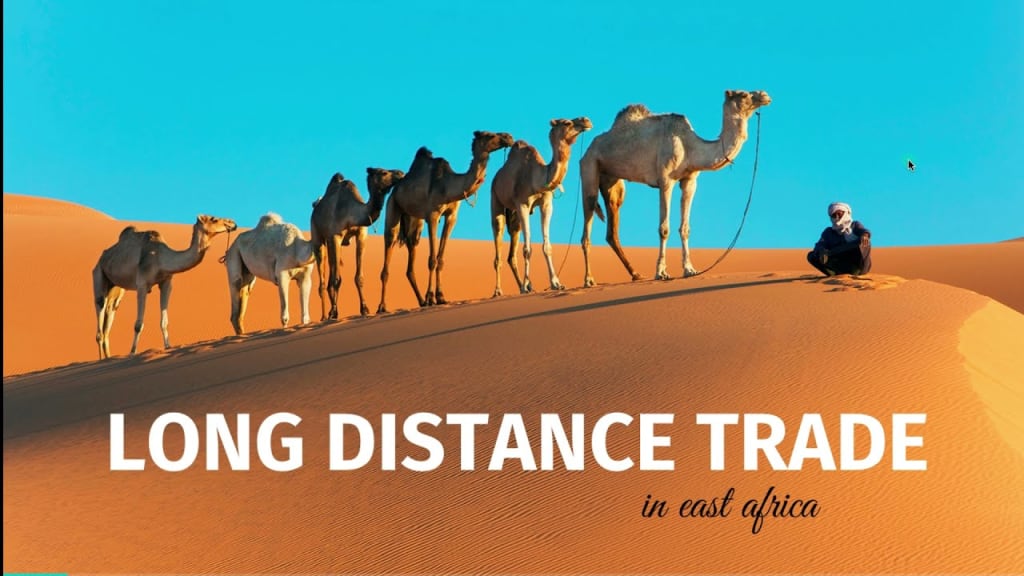
East Africa has a long history of trade, stretching back centuries before European colonialism reshaped the region. The trade routes that crisscrossed the region linked coastal cities with interior markets, fostering exchanges of goods, culture, and ideas. This article delves into the organization, significance, and impact of long-distance trade in East Africa, with a focus on the vital role played by communities like the Akamba, Yao, and Omani Arabs, among others.
The Emergence of Trade Routes in East Africa
The establishment of long-distance trade routes in East Africa is closely linked to the rise of Omani Arab influence in the region, particularly following their victory over the Mazrui family in 1837. The Sultan of Oman, who chose Zanzibar as his capital, extended trade relations deep into the African hinterlands, connecting coastal trade hubs with interior regions.
The Akamba people were central to this network, known for their elaborate caravan systems used to transport goods such as ivory and other valuable commodities. The Akamba’s trade routes were strategically developed to navigate the challenging terrain, including arid deserts and mountainous regions.
Key Long-Distance Trade Routes
East Africa's trade routes were organized to connect vital resource areas with both coastal cities and distant trade centers:
1. Coastal to Interior Routes:
- Kitui – Kibwezi – Athi Galana Sabaki River – Mambrui
- Kitui – Kibwezi – Tsavo – Voi – Taru Desert – Kwa Jomvu – Mombasa
- These routes connected the Akamba homeland to the coast, facilitating trade with the Arab merchants who controlled Mombasa and other coastal cities.
2. North-Western Routes:
- Machakos – Rift Valley – Eastern Busoga
- These routes linked the Akamba to the fertile Lake Victoria Basin, where they traded with communities around the lake and beyond. The Akamba caravans split into two alternatives to avoid the fierce Nandi warriors:
- Route 1: Naivasha (West) – Sotik – Lumbwa – Kavirondo Gulf – Mumias
- Route 2: Eldama Ravine – Uasin Gishu – Nzoia River – Mumias
3. Arab-Swahili Routes:
- The Arab-Swahili caravans ventured inland from Mombasa – Voi – Kilimanjaro and moved towards Lake Victoria, although they often faced challenges from local tribes, including defeat by the Nandi at Kipsoboi in 1850.
4. European Routes:
- By the late 19th century, European explorers and traders followed the same routes:
- Mombasa – Taru – Voi – Kibwezi – Nairobi – Naivasha – Eldama Ravine – Kakamega – Port Victoria
- This route became known as the Uganda Road, marking the British East Africa Company's attempts to improve caravan transport.
The Organization of Trade
Long-distance trade in East Africa was well-organized, with caravans managed by wealthy merchants who employed porters, hunters, and traders. The routes were dotted with watering points and campsites to rest both animals and humans during the long journeys. Major stops along the Mombasa to Port Victoria route included:
- Sungali
- Mazeras
- Mwachi
- Taru
- Manyani
- Kibwezi
- Mtito Andei
The caravans were often escorted by armed guards, particularly when passing through hostile territories such as the Nandi or Maasai regions. Porters were hired to carry goods, and some caravans included thousands of porters, reflecting the large-scale nature of the trade.
Commodities Traded
The trade routes of East Africa facilitated the movement of several key commodities:
1. Ivory: East Africa's vast elephant population made ivory the dominant commodity, especially in the Akamba-controlled routes. The growing demand for ivory in global markets led to increased hunting of elephants, particularly in the 19th century.
2. Enslaved People: While some communities like the Yao and Bisa engaged in the trade of enslaved people, it is debated whether the Akamba were involved. The Arab-Swahili traders, however, captured and sold enslaved people from the interior, transporting them to coastal markets for export.
3. Other Goods: The Akamba and Arab-Swahili caravans also traded beads, cloth, iron tools, and copper.
Impact of Long-Distance Trade
The establishment of these trade routes had significant economic, social, and environmental impacts on East Africa:
- Economic Growth: Trade brought wealth to coastal cities like Mombasa and Zanzibar, which became bustling trade hubs connected to the Indian Ocean trade network. Inland communities also benefitted economically, although the focus on resource extraction often harmed the local environment.
- Cultural Exchange: These routes fostered cultural exchanges between different communities, including the spread of Islam and the Swahili language. Trade routes acted as conduits for ideas, technologies, and religious beliefs.
- Environmental Consequences: Increased elephant hunting for ivory led to a significant decline in the elephant population. The trade in enslaved people also devastated local populations, with some areas depopulated due to raiding.
Legacy and the Advent of Railways
The long-distance trade routes in East Africa laid the groundwork for the railroad systems developed by European colonial powers in the late 19th century. Many of the modern railways and roads followed the old caravan trails, ensuring that the legacy of these trade routes endures in East Africa’s infrastructure.
FAQ
1. What were the main trade routes in East Africa?
East Africa’s main trade routes connected coastal cities like Mombasa and Zanzibar with the interior regions, particularly around the Lake Victoria Basin. Key routes included Kitui to Mombasa, Machakos to Rift Valley, and Mombasa to Kilimanjaro.
2. What commodities were traded in East Africa?
The primary commodities traded in East Africa were ivory, enslaved people, cloth, beads, and metal tools. Ivory was particularly important, fueling long-distance trade networks that stretched across East and Central Africa.
3. How did the Akamba contribute to East African trade?
The Akamba played a significant role by organizing caravan systems that transported goods between the hinterlands and coastal cities. They controlled trade routes and facilitated the movement of ivory and other commodities.
4. How did long-distance trade routes impact East African communities?
Trade routes brought economic growth and cultural exchange but also had negative impacts, including overhunting of elephants for ivory and the capture of enslaved people by Arab-Swahili traders.
5. What was the role of Arab-Swahili traders in East Africa?
Arab-Swahili traders established trade routes between coastal cities and the interior. They were involved in the trade of ivory and enslaved people and helped connect East Africa to the broader Indian Ocean trade networt.
Conclusion
The long-distance trade routes of East Africa were vital arteries of commerce and culture, shaping the region’s history for centuries. From the bustling markets of Zanzibar to the caravans crossing the Rift Valley, these routes connected diverse communities, leaving a legacy that endures in modern transportation networks. Understanding the intricacies of these trade routes provides a deeper appreciation for the rich economic and cultural heritage of East Africa.
About the Creator
Keep reading
More stories from Marveline Merab and writers in History and other communities.
Transportation in Ancient Africa: Systems, Routes, and Legacy
Introduction Transportation played a crucial role in the development of ancient African civilizations, facilitating trade, cultural exchanges, and the movement of people. From the vast empires of Egypt and Nubia to the trading networks of West Africa, transportation was integral to the economic and social growth of the continent. In this article, we will explore the key forms of transportation used in ancient Africa, how these systems evolved over time, and their impact on the continent’s history and development. This guide will also address common questions on the subject, providing a rich resource for those interested in African history.
By Marveline Merababout a year ago in History
The Quiet Collapse of Global Arms Control
The Quiet Collapse of Global Arms Control For decades, arms control agreements helped prevent the world’s most powerful weapons from spiraling out of control. Treaties limited nuclear stockpiles, increased transparency, and built fragile trust between rival states. Today, that system is quietly unraveling—and its collapse may define the next era of global insecurity.
By Wings of Time about 21 hours ago in History
Imran Khan: The Journey of a Believer
Imran Ahmed Khan Niazi was born on October 5, 1952, in Lahore, into a well-educated Pashtun family. From an early age, he showed independence of thought and a quiet confidence that often set him apart. Educated first in Lahore and later at Aitchison College, he was sent to England for further studies, eventually attending the Royal Grammar School Worcester and later Keble College, Oxford, where he studied Philosophy, Politics, and Economics. At Oxford, Imran was exposed to global ideas, cultures, and debates. He was not only a student but also a sportsman, playing cricket with intensity and pride. Those years shaped his worldview—combining Eastern roots with Western education—and gave him a belief that discipline, preparation, and courage could change destiny. Rise of a Cricketing Icon Imran Khan’s greatest early fame came from cricket. Tall, athletic, and fiercely competitive, he entered Pakistan’s national team in the early 1970s. The beginning was not easy. He faced criticism for inconsistency and injuries, and some questioned whether he had the temperament for leadership. But Imran was relentless. He trained hard, studied the game deeply, and refined his skills as a fast bowler and all-rounder. Over time, he became the backbone of Pakistan’s cricket team. What truly set him apart was not just his performance, but his ability to inspire teammates. He believed in building confidence, unity, and self-respect within the team—qualities Pakistan cricket had often lacked on the world stage. His defining moment came in 1992, when he led Pakistan to victory in the Cricket World Cup. Against all odds, with an injured body and an underdog team, Imran captained Pakistan to its first—and so far only—World Cup win. That triumph transformed him into a national hero. For millions of Pakistanis, he became a symbol of hope: proof that belief and determination could overcome adversity. A New Mission: Giving Back After retiring from cricket, Imran Khan surprised many by not choosing a comfortable life of fame. Instead, he turned toward philanthropy. Inspired by the death of his mother from cancer, he envisioned building a world-class cancer hospital in Pakistan—something many considered impossible. In a country where public trust in institutions was low, raising funds for such a project seemed unrealistic. Yet Imran traveled across Pakistan and abroad, appealing directly to people. He spoke not as a celebrity, but as a son fulfilling a promise. Against expectations, Shaukat Khanum Memorial Cancer Hospital became a reality in 1994, offering free or subsidized treatment to thousands of patients. Later, he founded Namal University to provide quality education to underprivileged students. These projects strengthened his image as a man who could turn dreams into institutions—someone willing to sacrifice comfort for a cause. Entering Politics: A Difficult Road Imran Khan entered politics in 1996 by founding Pakistan Tehreek-e-Insaf (PTI). His message was simple but bold: justice, accountability, and independence from corruption and foreign influence. At a time when Pakistani politics was dominated by powerful families and entrenched interests, Imran was seen as an outsider—idealistic, but unrealistic. For years, PTI struggled. In elections, Imran sometimes won only a single seat, or none at all. Critics mocked him, calling him irrelevant and disconnected from political realities. Many former supporters lost patience. But Imran refused to quit. He believed that real change takes time and that nations are not transformed overnight. Slowly, his message began to resonate, especially with the youth. His speeches emphasized dignity, rule of law, and a Pakistan that could stand on its own feet. Massive rallies followed, particularly after 2011, when PTI emerged as a major political force. For the first time, Pakistan’s young generation felt represented by a leader who spoke their language. Prime Ministership: Power and Pressure In 2018, after more than two decades in politics, Imran Khan became the Prime Minister of Pakistan. Supporters celebrated it as the victory of perseverance. For Imran, it was the hardest phase of his life. Governing a country of over 200 million people came with immense challenges: economic crises, debt, political opposition, and complex foreign relations. Imran promised reforms, accountability, and welfare programs. His government introduced initiatives like the Ehsaas Program to support the poor and attempted to reform health and governance systems. However, criticism followed closely. Opponents accused him of inexperience and poor economic management. Political tensions remained high, and compromises—inevitable in politics—disappointed some of his most loyal supporters. Imran often spoke of the gap between ideals and reality, learning firsthand how difficult it is to bring change within an old system. Removal from Power and Continued Struggle In 2022, Imran Khan was removed from office through a vote of no confidence. He claimed it was the result of internal conspiracies and foreign pressure, while opponents argued it was due to governance failures. Whatever the interpretation, his removal marked another dramatic turn in his story. Instead of retreating, Imran returned to public rallies with renewed intensity. He framed his struggle as one not just for power, but for sovereignty and justice. Legal battles, arrests, and political restrictions followed, making his path even more difficult. To his supporters, Imran Khan became a symbol of resistance—someone standing against a powerful status quo. To critics, he remained a divisive figure. Yet no one could deny his impact on Pakistan’s political consciousness. Legacy Still Being Written Imran Khan’s story is not finished. Unlike his cricket career, which ended with a clear victory, his political journey remains open-ended. He has inspired millions to believe in change, to question authority, and to demand accountability. At the same time, he has faced criticism for mistakes, rigidity, and unmet promises. What makes Imran Khan unique is not perfection, but persistence. From cricket fields to cancer wards, from opposition benches to the prime minister’s office, his life reflects a constant refusal to accept limits imposed by others. In the end, Imran Khan stands as one of Pakistan’s most influential figures—a man who dared to dream big, stumbled often, but never stopped walking forward. Whether history judges him as a great leader, a flawed reformer, or both, his story will remain deeply woven into the narrative of modern Pakistan.
By The best writer about 15 hours ago in History



Comments (1)
A LOT of information Marveline! It reads at a fast pace, so I would welcome hearing your personal reflections on the content within the story.