
Literary Pioneers: John Neal's Groundbreaking Critique of Early American Writing
John Neal's groundbreaking critique of early American writing redefined literary standards, championing American literary nationalism and regionalism. His innovative style and advocacy for women's rights and racial equality made him a pivotal figure in early 19th-century American literature.


In the nascent years of the American literary landscape, few critics demonstrated the intellectual audacity and visionary perspective of John Neal. His seminal work "American Writers," published in Blackwood's Edinburgh Magazine between September 1824 and February 1825, represents a watershed moment in literary criticism—a nuanced, provocative examination of a national literary identity struggling to emerge from the shadows of European literary traditions.
Historical Context
The early 19th century was a pivotal period for American literature. The young nation, having secured political independence, was now seeking cultural and artistic autonomy. Writers and intellectuals grappled with fundamental questions: What constitutes an authentically American literary voice? How could a national literature distinguish itself from its European predecessors?
John Neal, a multifaceted writer from Portland, Maine, stood at the forefront of this intellectual movement. His critical work was not merely an assessment of contemporary writers but a manifesto for a distinctly American literary consciousness.
Methodology of Critique
Neal's approach to literary criticism was remarkable for its time. Unlike many contemporaneous critics who measured American writing against European standards, Neal advocated for a unique, indigenous literary expression. His critique in "American Writers" was characterized by:
1. Comprehensive Scope: Neal examined a broad range of writers, from established figures to emerging talents.
2. Cultural Contextualization: He understood literature as a reflection of national character and social dynamics.
3. Unprecedented Candor: Neal was unafraid to offer frank, sometimes harsh assessments of American literary production.
Key Insights and Observations
Challenging European Paradigms
Neal's critique fundamentally challenged the prevailing notion that American literature was merely a derivative of European traditions. He argued that American writers must forge their own path, drawing inspiration from the nation's unique landscape, democratic ideals, and emerging social structures.
Recognition of Potential
While critical, Neal was also deeply optimistic about American literary potential. He saw in the emerging writers a raw energy, an unrefined but promising talent that could evolve into a distinctive national literature.
Highlighting Emerging Talents
The criticism provided significant exposure to writers who might have otherwise remained obscure. Neal's comprehensive survey helped establish critical discourse around emerging American literary figures.
Significance of "American Writers"
Literary Historiography
"American Writers" is more than a critical essay—it is a historical document. Neal's work provides contemporary scholars with invaluable insights into the literary ecosystem of early 19th-century America.
Intellectual Courage
Neal's willingness to critically engage with his contemporaries demonstrated intellectual courage. He was not interested in mere laudation but in constructive critique that could propel American literature forward.
Interdisciplinary Approach
Before the term was commonly used, Neal employed an interdisciplinary approach. He understood literature as interconnected with social, political, and cultural phenomena.
Neal's Critical Principles
1. Originality over Imitation: Championing unique American voices
2. Contextual Understanding: Interpreting literature within broader social frameworks
3. Constructive Criticism: Offering feedback aimed at improvement
4. Democratic Literary Vision: Believing in literature as a democratizing force
Legacy and Influence
While immediate recognition was limited, Neal's "American Writers" retrospectively stands as a foundational text in American literary criticism. His work anticipated later movements in literary analysis that would emphasize cultural specificity and national character.
Contemporary scholars now recognize Neal as a pioneering figure who helped articulate the contours of a nascent American literary identity.
Conclusion
John Neal's "American Writers" represents more than a critical essay—it is a profound meditation on national literary consciousness. By challenging prevailing European standards and advocating for a distinctive American voice, Neal played a crucial role in the intellectual formation of a young nation's literary landscape.
His work reminds us that literary criticism is not merely about evaluation but about understanding the deeper cultural and social dynamics that shape artistic expression.
About the Creator
Muhammah Hanzalah
Passionate about history and culture. Join me on Vocal Media for captivating insights into hidden historical gems and diverse cultural traditions. Let's explore the rich tapestry of our shared heritage and artistic expressions.
Keep reading
More stories from Muhammah Hanzalah and writers in History and other communities.
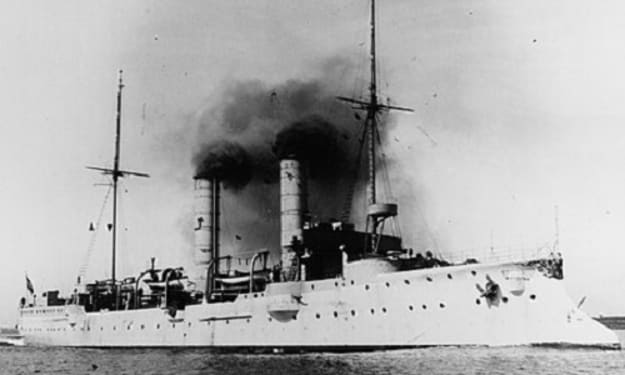
SMS Niobe: The Second Gazelle-Class Light Cruiser of the German Imperial Navy
The SMS Niobe, the second of ten Gazelle-class light cruisers, represents a significant milestone in naval engineering and the strategic evolution of the German Kaiserliche Marine (Imperial Navy) at the turn of the 20th century. Built during a period of rapid technological advancement, Niobe’s design and capabilities encapsulate the priorities and challenges faced by naval architects and military strategists of the era. This article delves into the engineering intricacies, operational history, and strategic importance of SMS Niobe, offering an expert analysis of her role in the context of naval warfare and innovation.
By Muhammah Hanzalahabout a year ago in History
Martin Luther King Jr.: The Voice of Peace and Justice
Martin Luther King Jr. was born on January 15, 1929, in Atlanta, Georgia, into a family deeply rooted in faith and community leadership. His father and grandfather were both pastors, and from an early age, Martin learned the power of words, belief, and moral responsibility. Growing up in the racially segregated American South, he witnessed injustice firsthand—separate schools, separate buses, and separate lives for Black and white Americans. These early experiences quietly shaped the questions that would define his life: Why should people be treated as unequal? And how could such injustice be peacefully undone?
By The best writer 5 days ago in History
Saudi Arabia Warns Against War
Saudi Arabia Warns Against War: Why Riyadh Opposes a U.S. Attack on Iran As tensions between the United States and Iran continue to rise, Saudi Arabia has taken a notable and cautious position: warning against any U.S. military attack on Iran. This stance may surprise some observers given the long history of rivalry between Riyadh and Tehran, but it reflects a broader regional concern that another major war in the Middle East could spiral beyond control.
By Wings of Time 4 days ago in History
My New Book is Finally Here
My poetry collection Beautiful and Brutal Things is done. It's actually done and finally published over 270 pages. Over a year of my life went into this book. More than a year, really. Long days at my computer, sometimes seven days a week because I couldn't stop even when I probably should have. Then two months of editing that felt harder than the writing itself. But it's finished, and I'm still standing, and the book is real.
By Tim Carmichael2 days ago in BookClub



Comments
There are no comments for this story
Be the first to respond and start the conversation.