
Life in the Stone Age
A Glimpse into the Lives of Early Hunter-Gatherers


Travel back in time over two million years ago, to a period known as the Stone Age, where early human ancestors roamed a world dominated by ice ages, limited resources, and predatory challenges. This article delves into the intriguing world of Stone Age hunter-gatherers, exploring their survival strategies, tools, communication methods, dietary habits, and artistic expressions. From spear-hunting woolly mammoths to creating bone flutes, let us embark on a journey to understand how these ancient humans thrived in an unforgiving environment.
Adapting to a Changing World
The Stone Age spanned nearly two and a half million years, during which our early ancestors faced the challenges of ice ages and fluctuating temperatures. Nomadic hunter-gatherer tribes wandered from one area to another in search of resources, never establishing permanent settlements until much later in human history. Survival in this harsh environment depended on resourcefulness, adaptability, and knowledge passed down through generations.
Tools and Technology: Crafting Survival
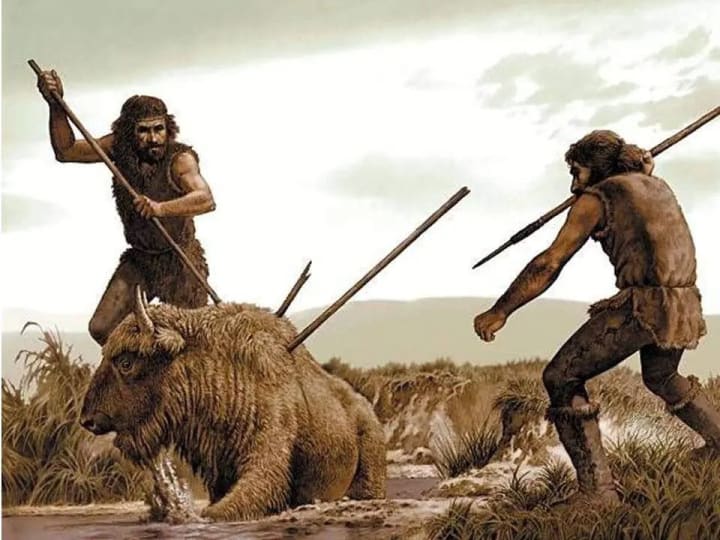
In the Stone Age, humans relied on simple yet innovative tools to ensure their survival. Bone spears, made from animal bones and wood, were essential for hunting large creatures like woolly mammoths. However, communication among tribes was rudimentary, and early humans had to learn from one another's experiences or even invent tools themselves.
Hunting the Woolly Mammoth
Woolly mammoths, massive beasts comparable in size to African elephants, were prized prey for Stone Age hunter-gatherers. Tracking their footprints and using fire to herd them to cliff edges were effective hunting strategies. However, hunting a woolly mammoth was a dangerous task that required tremendous skill and teamwork. Success in bringing down one of these giants could provide enough food to sustain a tribe for weeks.
Dietary Habits and Culinary Innovations
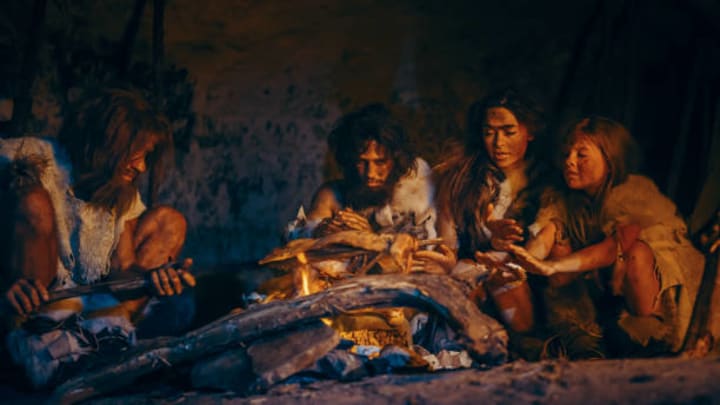
Apart from hunting mammoths, Stone Age humans supplemented their diet with nuts, berries, bird eggs, and perhaps even cooked oat flatbread. Evidence suggests that they used clay pots to cook food, showcasing early culinary innovations. Spices like garlic mustard seeds, turmeric, and wild onions might have been used to enhance flavors, but these same spices could also be used in rituals or for medicinal purposes.
Dark Side of Survival: Violence and Cannibalism
The Stone Age was far from a peaceful era, as early humans faced not only the challenges of survival but also violence among themselves. Skeletons from this period reveal signs of violent injuries, pointing to raids, infighting, and brutal battles. Shockingly, some evidence suggests that Stone Age humans occasionally resorted to cannibalism, consuming one another in dire circumstances.
Artistic Expressions and Entertainment
Intriguingly, early humans from the Stone Age were the first to leave behind art as a form of expression. Using minerals, charcoal, and burnt bone meal, they created images of animals, symbols, and each other. Bone flutes were crafted, allowing for musical entertainment around the fire.
Life Expectancy and Relationships
Life in the Stone Age was harsh and unforgiving, with an average lifespan of around 40 years. Early humans lived just long enough to mate and raise children. However, the limited size of tribes could lead to intermarriage between family members, an aspect of early human societies that would eventually change with the expansion of populations.
The Stone Age was a remarkable chapter in human history, characterized by survival instincts, innovative tools, primitive communication, and artistic expressions. Stone Age hunter-gatherers adapted to their challenging environment, hunting mammoths, gathering food, and crafting tools for survival. Despite the violence and hardships they faced, early humans exhibited creativity through art and music, leaving behind evidence of their lives for us to uncover and understand. As we explore the mysteries of our ancient past, the Stone Age stands as a testament to the resilience, resourcefulness, and adaptability of our early ancestors in a world vastly different from our own.
About the Creator
Keep reading
More stories from Daham Navodya and writers in History and other communities.
Unraveling the Enigma of the Great Pyramid on the Giza Plateau, Egypt
The Giza Plateau in Egypt is home to the Great Pyramid, arguably the most enigmatic structure on Earth. As the only surviving wonder of the ancient world, it has sparked endless speculation about its construction and purpose. Researchers have been astounded by the mathematical knowledge encoded into the pyramid, its precise alignment to the cardinal points, and its seemingly intentional placement at the center of the world's landmass. Furthermore, recent discoveries suggest that the ancient Egyptians may have had encounters with otherworldly beings, possibly extraterrestrial in nature. This article delves into the mysteries surrounding the Great Pyramid and explores the intriguing connections to potential extraterrestrial encounters in ancient Egypt.
By Daham Navodya2 years ago in History
3 Completely Normal Jobs With Disturbing Hidden Histories
Every job has a backstory. Some are boring, some are inspiring, and some are better left buried. While modern versions of certain professions look harmless—sometimes even respectable—their origins tell a much darker story.
By Enoch Sagini6 days ago in History
Albert Einstein: The Mind That Changed the Universe
Albert Einstein was not born a legend. When he entered the world on March 14, 1879, in the quiet German city of Ulm, nothing about his early life suggested that he would one day transform science forever. In fact, his beginnings were remarkably ordinary—and in some ways, difficult. As a child, Einstein spoke slowly, so slowly that his parents worried something might be wrong. Teachers considered him distracted and stubborn, a boy who questioned too much and obeyed too little. Yet hidden beneath that quiet exterior was a restless, powerful curiosity that would later reshape the universe itself.
By The best writer 5 days ago in History




Comments
There are no comments for this story
Be the first to respond and start the conversation.