
Li Qingzhao: The Trailblazing Poetess Who Redefined Feminine Identity in Song Dynasty China
From Gambling Maven to Literary Icon: The Bold Journey of Li Qingzhao
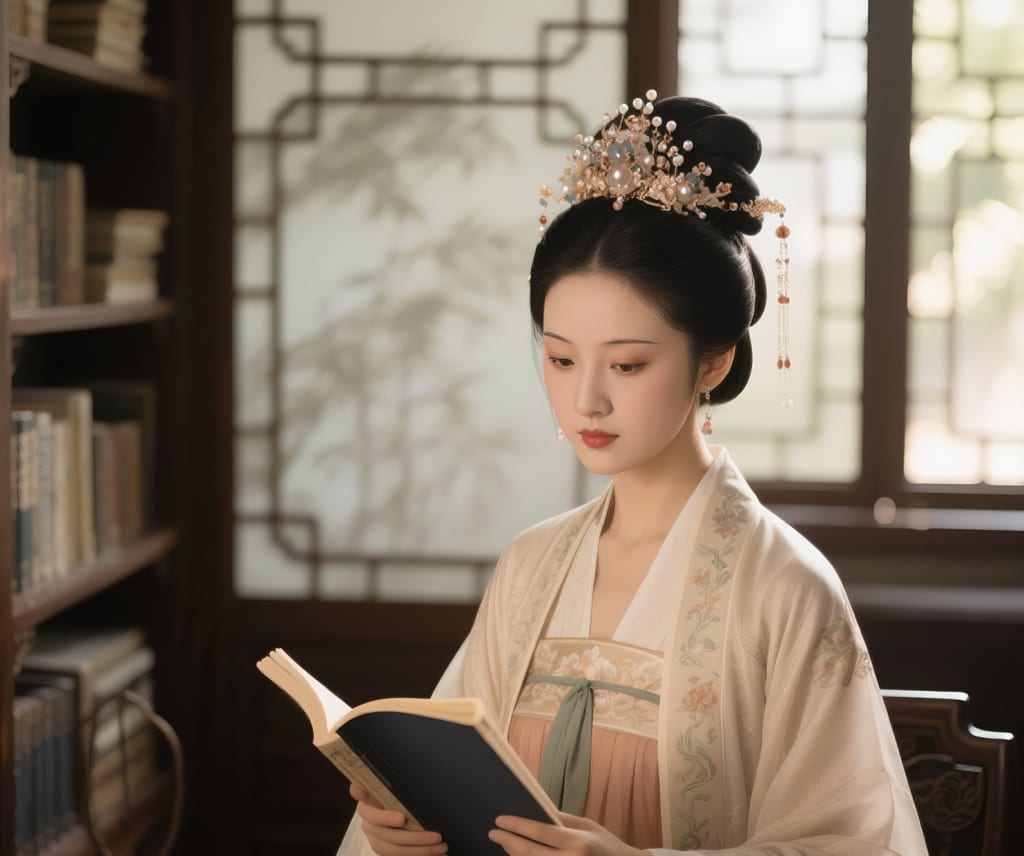
In the annals of Chinese literature, Li Qingzhao stands as an unparalleled figure—a maverick whose life and works defied the rigid gender norms of 11th - 12th century Song Dynasty. Dubbed "China’s First Female Literary Genius," she was a bold drinker, a gambling enthusiast, and a fearless critic who wielded her pen to challenge men, society, and fate itself. Her story is a captivating blend of literary brilliance, personal turmoil, and unwavering self - expression.
A Prodigy’s Rise to Fame
Born in 1084 into a scholarly family, Li Qingzhao’s early life was steeped in literature. Her father, Li Gefei, a disciple of the renowned scholar Su Shi, boasted an extensive library, while her mother, a granddaughter of the top imperial examinee Wang Gongchen, possessed profound literary talent. Growing up surrounded by books and intellectuals, Li Qingzhao developed a precocious gift for poetry. At five, she studied *Zhan Guo Ce*; at ten, she attended elite literary gatherings, even daring to critique Han Yu’s works in front of Su Shi, astonishing the assembled scholars with her candor.
In 1109, at just 16, Li Qingzhao catapulted to stardom with two masterpieces. In *Ru Meng Ling*, she wrote, "Last night, the wind howled, rain lashed hard; / Deep sleep couldn’t wash away the lingering wine. / Don’t you know? Don’t you know? / The leaves should be lush, the flowers faded." These verses not only revealed her love for alcohol but also her ability to transform everyday experiences into poignant poetry. Another *Ru Meng Ling* described a tipsy boat ride ending in a serendipitous encounter with a flock of egrets, showcasing her talent for capturing nature’s beauty with vivid imagery.
Li Qingzhao’s audacity extended beyond poetry. In *On Ci*, she fearlessly criticized literary giants like Yan Shu, Ouyang Xiu, and even Su Shi, arguing that their works lacked proper rhyme and elegance. Her most infamous critique targeted Liu Yong, whom she deemed "vulgar." However, her most unexpected claim to fame came from *Preface to the Manual of Damazi*, a treatise on gambling. "I’m addicted to games of chance," she declared. "I’ve mastered over twenty types, but Damazi suits my intelligence best. And I’ve never lost a single game—it’s pure天赋."
Love, Marriage, and Partnership
At 17, Li Qingzhao met Zhao Mingcheng, a passionate archaeologist and her future husband. Their courtship blossomed through poetry, and in 1101, they married. Unlike typical arranged marriages of the era, theirs was a union of equals. Their honeymoon involved bargaining at antique markets, and their daily life featured friendly competitions—reciting historical texts or guessing the origins of ancient poems, with the loser splashed with tea. Their shared love for collecting ancient inscriptions and artifacts further deepened their bond, as they co - authored *Record of金石*, a seminal work on archaeology.
Yet, their idyllic life was short - lived. Frequent separations due to Zhao Mingcheng’s official duties inspired some of Li Qingzhao’s most famous love poems. In *A Twig of Plum Blossoms*, she penned, "Red lotus scents fade, jade mat chills in autumn; / Sorrow leaves my brow, but dwells within my heart," capturing the ache of longing with unparalleled intimacy. When Zhao Mingcheng challenged her poetry by writing 50 verses, attempting to outshine her, his friends unanimously praised only three lines—ironically, the ones he’d secretly borrowed from Li Qingzhao.
Turmoil and Resilience
The Jingkang Incident in 1127 shattered their world. As the Jin Dynasty invaded, Li Qingzhao and Zhao Mingcheng fled south, carrying their precious collection of artifacts. At the Wu River, witnessing the Song army’s defeat, Li Qingzhao wrote *Summer Quatrains*, "Live as a hero among men; / Die a spirit among ghosts. / Even now, I think of Xiang Yu, / Who refused to cross the Jiangdong." These words, a call for bravery and integrity, reportedly haunted Zhao Mingcheng, who died shortly after, leaving Li Qingzhao devastated at 46.
In her grief, Li Qingzhao fell prey to Zhang Ruzhou, a charismatic but abusive man who coveted her remaining possessions. Discovering his true motives, she defied societal norms by divorcing him—an act that risked two years in prison for women in ancient China. By exposing Zhang’s fraudulent exam results in court, she secured her freedom, prioritizing self - preservation over social conventions.
The Solitude of a Literary Legend
In her later years, Li Qingzhao channeled her pain into *Slow, Slow Tune*, a masterpiece that begins, "Searching, seeking, / Endless emptiness, / Desolate, dreary, / Grief upon grief." These words laid bare her raw emotions, reflecting her resilience in the face of loss. Despite hardships, she continued to edit *Record of金石*, revisiting the memories she’d shared with Zhao Mingcheng.
Li Qingzhao died at 72, leaving behind a legacy that transcended gender and time. Her life was a testament to authenticity—she loved fiercely, wrote boldly, and defied expectations at every turn. Whether critiquing emperors, escaping toxic relationships, or celebrating freedom through poetry, she embodied the spirit of a true pioneer. Even today, her words continue to inspire, reminding us that embracing one’s true self is the most powerful form of rebellion.
About the Creator
The Deeds of Mullah Nasiruddin
The Deeds of Mullah Nasiruddin (Article No. 1270) Mullah Nasiruddin is a name that almost everyone has heard. His stories are famous across cultures for their humor, wisdom, and clever twists. Although he appeared simple and playful, Mullah Nasiruddin possessed sharp intelligence and deep insight. His actions often carried hidden lessons that made people laugh first and think later. The following incidents from his life highlight his wit, presence of mind, and moral intelligence.
By Sudais Zakwan6 days ago in History
3 Small Lies That Grew Into Massive Disasters
Big disasters don’t always start with big lies. Those are too obvious and too suspicious. The truly dangerous ones begin small, harmless even. The kind of lie you tell to save face, avoid paperwork, or postpone an awkward conversation. The kind that feels temporary.
By Enoch Sagini6 days ago in History


Comments
There are no comments for this story
Be the first to respond and start the conversation.